October 17, 2026

Instruction

greenside bunker opener

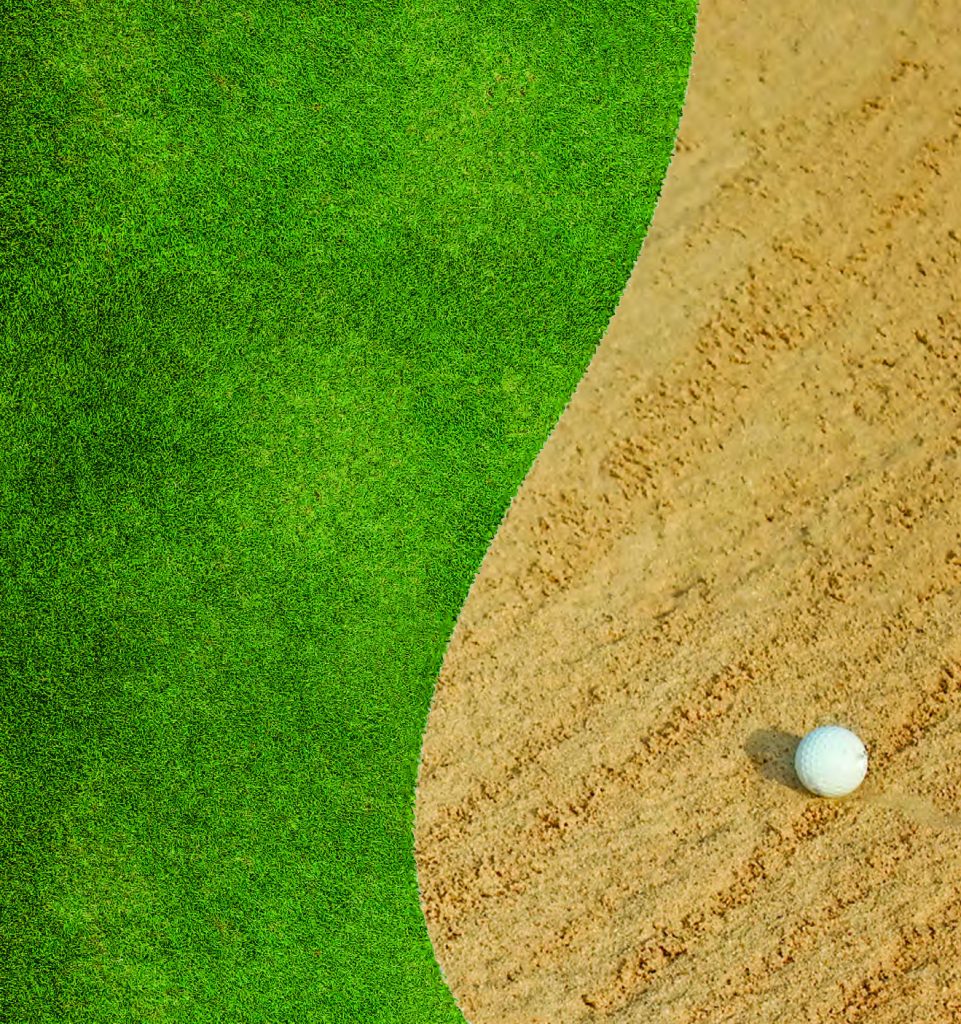
The greenside bunker shot doesn’t have to be scary. In fact, it should be one of the easiest shots in golf, because you don’t have to strike the ball at all, just the sand underneath it. Here’s my three-step method for becoming a great bunker player: FACE, BASE AND PACE.

So just what is a bunker?

Rules: USGA Rule #12

The definition of the Bunker: A specially prepared area of sand which is often hollow from which turf or soil has been removed. Bunkers are one of the five defined areas of the course. There are a few things you are not permitted to do when your ball is in a bunker. These include testing the condition of the sand, touching the sand right around you ball and making a practice swing that touches the sand.

In other words:

  • You can remove loose impediments (natural and artificial objects) from the bunker.
  • You can set your clubs down in the bunker and rake the bunker
  • You cannot test the sand around your golf ball.
  • You can’t ground your club or touch the sand (except to remove loose impediments) around the ball.

Here’s how to get out of the sand every time — and stay within the rules.

range to golf course

As coaches, all too often we engage in the following conversation when a player’s skills seem to get lost from range to golf course:

Coach: “How did you play?”

Player: “Rubbish, but I don’t get it, I hit it so well on the range.”

The question: “Why didn’t my range game transfer over to the course?” Fortunately, the Game Like Training team gets it. In fact, we thought out this series of tips to provide you with practice tasks that will help you transfer that spectacular range game to the golf course so that you never ask that question again.

Before we do this, it is important that you understand why the above is the most asked question in golf.

The key to having your best ball striking show up when you need it the most (i.e. in a Sunday match or the club championship) is to add context to your practice.

By practicing on the golf course, you are exposed to interference. Bunkers, water, trees, and varying lies provide environmental interference. Through making your practice “game like,” you are exposed to psychological interference as you are competing for a score or to complete a level. This means that your practice will look real, feel real, and provide a higher chance of your best swing showing up on the course as you learn to deal with the contextual interferences that golf provides.

Let’s put it like this: If you decided you wanted to become an Olympic swimmer and were presented with the following options, which would you choose?

Swim daily in your bath tub and perfect your stroke.

Go to the pool and learn to race against other swimmers.

I am sure that most of you reading this article would obviously select option 2. However, when it comes to golf, most players select the equivalent of learning to swim in the bath tub, aka, the golf range.

It’s not that the golf range doesn’t serve a purpose. Understanding that it is just one part of the process to improving is vital — and, in fact, it is often something that golfers fail to understand as they become content re-peatedly hitting their favorite club down the range. While this may feel nice and produce a sense of confidence, at some point a player must step out of this comfortable environ-ment and test their swing in context.

So here it is.

golf milestones featured

It’s high summer, and now is the time to start measuring your progress toward achieving your Golf Milestones. How close are you to breaking through a milestone? Are you one or two strokes away? Did you start thinking about your scores too soon before the round is complete, believing you had a chance to break through?

Let’s explore some ways you can shave a couple strokes off your score to break through your next Milestone.

MARK YOUR GOLF MILESTONES PART 1

MARK YOUR GOLF MILESTONES PART 3

milestones 1 opener

Our lives are filled with milestones — significant dates and events within our lives that mark your coming of age. Whether it be the day you married, the birth of your first child, the wedding of a son or daughter, or the day you retire, milestones play a significant part in each person’s life. With the arrival of each milestone comes a new goal, a new adventure. And milestones provide us all the inspiration to continue our life’s journey.

As a golfer, milestones are part of your life too. The day you break 100, your first birdie, your first hole-in-one, and the day you shoot your age are all simple yet very important milestones in your experiences as a golfer. Yet, the milestones that mark your maturation of scoring sometimes seem too distant to reach.

Each milestone you meet and exceed requires a plan. Beginning with this issue, Golf Tips Magazine plans to help you build your plan to reach your golfing milestones.

MARK YOUR GOLF MILESTONES PART 2

MARK YOUR GOLF MILESTONES PART 3

matthew wolff fist pump

This story on Matthew Wolff was updated July 7, 2019

While the PGA Tour is far more loaded with look-alike swings than it was even a decade ago, once in a while a truly unusual move will come into view. Latest case in point? The big-bashing, left-foot-raising, way-past-parallel swing of Oklahoma State phenom Matthew Wolff, who just won his first PGA tournament, the 3M Open in Blaine, Minnesota, by outlasting fellow rookie Collin Morikawa and veteran Bryson DeChambeau with an eagle on the final hole of TPC Twin Cities.

We recently asked Golf Tips’ Top 25 Instructors to analyze the young man’s homemade action, overseen by iconoclastic Southern California teaching guru George Gankas.

DALE ABRAHAM

I like his swing.  Too many people and coaches are rating and looking at swings only through the lens of aesthetics.  His backswing is unusual, makes me wonder if he grew up playing racquet ball, but his downswing is great.  He has tons of power moves and has proven he can perform under pressure.  If you can repeat it and it hold up under pressure then it will work.

WARREN BOTTKE

Matthew is like the others out there, the Dalys, Barbers and Furyks. We’ve all learned that what happens at impact is the moment of truth!
 
If we cut off the top of the body from the belt up, and focus only at impact, we probably won’t be see much difference. 
 
Compensations can be a funny thing! 

ALISON CURDT

The ball only knows impact, so what happens in the backswing can be deceiving. His unique move in the backswing sets up an awesome moment at impact allowing him to maximize distance and ensure accuracy. Fun to watch for sure!

MIKE DIFFLEY

Matthew Wolff has incredible speed plus clubface awareness, otherwise he wouldn’t control the ball. The name of the game is controlling the ball. It’s not “good,” “pretty” or “standard,” but he controls the ball.
 
The open mindedness of the modern Coach/Teacher is to let players express themselves athletically but to have the important skills.
 
That’s want counts: function over form. 

BARRY GOLDSTEIN

Personally, I love it … the only goal of the golf swing is to repeat under pressure so you can shoot good scores and win golf tournaments. When my daughter was playing for the LSU Tigers she had a teammate with a very funky swing who is a great player. I thought to myself, how many people probably tried to change that swing over the years, much like Jim Furyk. And I bet people with unique swings feel like they looks totally normal. I cringe when I hear teachers say a flying right elbow is a bad thing. Sure worked for Jack Nicklaus and Fred Couples. I like watching this kid’s golf swing — he hits it hard and straight.

GAIL GRAHAM

His motion is “unorthodox” by the standards we, as instructors and coaches, follow — however, it is HIS. He gets back to impact with flair but his swing speed and the quality of his ball striking proves that a unique swing motion is not a bad thing — it just is his. 

#jimfuryk #leetrevino #bubbawatson 

BOB GRISSETT

Matthew Wolff has been successful at every level that he’s played. Throughout the history of golf we’ve seen many successful unique swings on the tour. Some that come to mind are Jim Furyk, Gay Brewer, Miller Barber, Calvin Pete, and Ed Furgol to name a few. All of these players one major championships and had very successful careers. 

One of the things that I like most about Matthew is his routine. I’m a big believer in the importance of having a consistent routine. He begins his swing the same way every time. It looks a bit nervous, but he is just breaking up any tension. It is unique and it works. I see nothing wrong with unique.

The goal in golf is to shoot the lowest score. The last time I looked the score board has no space to write how. It doesn’t reward you for pretty. In this game the rewards go to the players who shoot the lowest scores. 

Today’s game is also a power game, and there’s no question he has that to spare. I give his instructor George Gankas a lot of props for not trying to rebuild Matthew’s swing but rather work on enhancing pieces to match up with his natural motion. 

If Matthew has the career I expect, the big winner will be the game we all love. Great golfing, Matthew. All of us here with Golf Tips Magazine wish you nothing but the best! 

JOHN HUGHES

This is not the first unique swing we’ve seen on tour, and will definitely not be the last. Although unique, so long as impact repeats, what does it matter what the swing looks like?

According to Wolfe, the swing is homemade, made to get the club face to work for him each and every swing.  His set-up does the same, allows his unique capabilities to repeat, while staying in dynamic balance. And according to FlightScope, the numbers are as good if not better than most when it comes to a solid impact position.

Nothing wrong with unique, especially when it continues to advance your career and your increase your achievement list.  I hope he remains his own person, drowns out the noise of critics, and shows that nonconformity has its privileges.

ROB LABRITZ

There’s many ways to get it done especially when you are young and flexible. It will be interesting to see the longevity of the body more than the swing. As you get older, your body breaks down and changes. The question is how will the body hold up with the forces being put on the frame, joints, ligaments over time and if there will be any injuries. It’s great to see different players get it done with different techniques. Keeps us all employed … and learning.

CINDY MILLER

Matthew Wolff’s golf swing may be different. If you notice, he loops it back to the inside, then the clubhead returns to the same place it started. Does it really matter how he does it? I think not. Good for him for doing what works.

TOM PATRI

Genius comes in many forms — Chi Chi, Gay Brewer, Arnie, Furyk, Daly, Bubba, Ho-Sung Choi, Azinger, Calvin Pete and Hubert Green, just to name a few. Keep in mind I just rattled off the winners of 15 majors, well over 100 victories and countless wheel barrows full of cash! 

Young Mr. Wolff, although still an unproven commodity as a professional, certainly thus far carries a resume’ that would imply there are promising times ahead.

JIM ROY

I too am looking forward to watching Matthew get started with his career. I really like watching his swing. I love the consistency of his routine. You get the impression that during his routine he’s totally into his target and not worrying about his swing. I love how he slings that club with no fear!

TOM STICKNEY

First of all I cannot give George Gankas enough credit for NOT pushing this fine young player into a specific mold or swing model that many teachers have!  Of course we all have our thoughts on positioning that makes more sense for certain swing types, body types, practice times, and coordination levels, but when it comes to the scratch and better players you must work with what they have already done so successfully.  In my opinion Wolff has the mental freedom and full belief in what he is doing mechanically and that is the buy-in that any teacher needs to help a player at this level reach his full potential.

Certainly, George is helping him tighten a few things up, but in addition he is continuing to make Matthew believe he is moving in the right direction — and like Butch Harmon what only matters in instruction is what you do that makes the player play better — not what his swing looks like overall.

TINA TOMBS

Unique, individual and successful!

DEB VANGELLOW

Swings don’t win tournaments…people do! With this being said, I am excited to see this young man succeed as he has at every level he has played, with his individual/unique golf swing motion that produces such good speed … this long hitter has a wonderful pivot that allows him to “throw the clubhead” into the ball as if he is skipping a stone. Personally, I love his order of movement and feel like everything he does works great for him! Different is OK … and good … and proven over and over again with tournament winners on all the Tours.  He’s fun to watch. #StepAndThrow!

Photo: pgatour.com/Getty Images
big breaking putts 1-3

One of the hardest things for people to understand when faced with big breaking putts is that there are and infinite number of “lines” you can take based on the speed you choose.

Sometimes certain putts require a more delicate approach while others necessitate a more direct route to the hole.

Regardless of the one you choose you must be mindful of both, and all the lines in between, in order to become a great putter under the gun.

Here at Punta Mita you must understand this fact as our Jack Nicklaus greens here tend to have some exaggerated movement to them, especially if you hit it in the incorrect portion of the green.

big breaking putts 1-3As you can see in Photo 1 I have a long putt with a ridge in the middle of the green as well as a sizable slope from left to right.

There is a range of “lines” we can take. One would be the highest line with the least amount of speed and the other would be the lowest possible line with more speed but not so much that it runs way past the hole.

The two balls in Photo 2 represent the highest and lowest possible line that you can take to this particular pin above. So which line is correct?

First you must ask yourself what type of putter you normally are, and what type of green speeds to you tend to play on in general.

If you play fast greens with some slope, you will tend to be more of a “die” putter where you play the ball at the apex and allow the gravity to pull it down to the hole.

If you play slower and flatter greens you will tend to be more of a firm-putter who plays less break and hits the ball harder.

The second thing you must consider is what the putt itself is asking you to do and what are the consequences of either speed. Because both can be incorrect choices.

Think of a putt you have that is super fast.

The higher and more break you try to play the faster the ball will come down the slope, leaving you with a longer comeback putt.

Now consider the short putt that has some movement to it; it might be easier to jam it into the back of the hole, taking out the break.

This this is where practice and experience comes in — helping you to make the best choice for your personality, nerves, and overall shot selection.

Sometimes it’s better to hit it harder and other times it’s better to hit it softer.

So, how do you learn how to play either putt? You must fine-tune your feel!

The best drill for fine-tuning your feel is to hit putts as I did above, finding the highest and softest line, as well as the lowest and most firm line you can take without the ball running way past the hole. Now mark these spots on the green with a tee. Your job is to practice the extremes — the high and then the low — to help you “feel” your speed control.

Now hit putts in the middle of these two spots and see if you can find that speed as well. You can spend as much time as you need finding differing lines that you can use.

From there you will have a better chance to imagine what the best line would be for the next big breaking putt you have.

From a mechanical standpoint the only thing you must remember on longer putts is to make sure that you hit the ball solidly and maintain quality impact alignments. I always want to maintain a bent rear wrist post-impact to ensure that I hit the ball with the correct amount of loft (Photo 3). Flip at it and you’ve turned your putter into a chipper — and you will leave the ball short of the hole every time.

If you don’t fine tune your feel or don’t understand the high and low point, you will never have the many options on the greens that the professionals on Tour have.

The key is to use your imagination, your feel, and your speed control to select the best line for the putt at hand. Take your time to fine-tune your feel and you will have no problem getting down in two regardless of where you are on the green.

Tom Stickney, PGA, is Director of Instruction at Punta Mita Resort, Riviera Nayarit, Mexico. Visit him at www.tomstickneygolf.com

keep your head down vangellow
clubhead and ball vangellow
Deb Vangellow at impact.

We have all heard it. The well-intentioned advice of “keep your head down.” Keeping your head down in a static sense is an unnatural and tense position, so let’s say “watch the clubhead and ball collide” instead.

This is because keeping your head down rigidly restricts the free swinging motion of your body through the ball. You could easily wind up hitting at the ball rather than swinging through it.

Again, strive to “watch the collision” of the clubhead and ball. This thought will help keep your spine angle constant and your focus of attention on the ball. When the weight shifts and the rotation of the body occurs, the right shoulder passing under your chin will help your head come up after impact so that you can follow the flight of the ball, getting to the optimal balanced finish position.

Remember, impact occurs during the swing, not at the end of it. Let the ball get in the way of the swing by watching the collision, not by keeping your head down. We want to look at that great shot after we hit it, not while we are hitting it.

LPGA Master Professional Deb Vangellow teaches at Riverbend Country Club in Houston, Texas. She is the 2012 LPGA National Teacher Of The Year, a US KIDS GOLF Top 50 Master Kids Teacher and a GRAA Top 50 Growth Of The Game Professional

u.s. open brooks koepka

It’s the U.S. Open, it’s Pebble Beach, it’s time to poll the Golf Tips Top 25 Instructors on the man they see hoisting the national championship trophy come Sunday evening.

Dale Abraham: ““It’s wide open as Pebble Beach doesn’t favor the long bomber as much as some of the previous U.S. Open set-ups have. Players like Kuchar will have more of a chance, but it comes down to how Tiger, DJ and Koepka play.”

Warren Bottke: ““My pick is: “Brooks Koepka again!”

Alison Curdt: “I think Phil has a good chance. He typically plays well at that course and he’s ready for a win! Just take a look at his calves!”

Mike Diffley: “Tommy Fleetwood, flying under the radar but a superb iron player who can put the ball on the part of the small greens where he can make some putts. Uphill ones!”

Wayne Flint: “I feel like Jordan Spieth is rounding into form with his ball striking and we all know what can happen if his putter heats up. Only time will tell.”

Jane Frost: “Koepka…the master of majors.”

Barry Goldstein: “I picked Tiger to win the Masters. I’m gonna pick Tiger again to win to US Open… Why? Because its Pebble Beach, Tiger and the U.S. Open. My favorite course in the world. I just think it’s gonna happen again for Tiger.”

Gail Graham: “My money is in Brooks. Nuff said.” 

Bob Grissett: “I’m going with Tiger — playing well, plays Pebble well, can handle the pressure.” 

John Hughes: “Sentimental pick is Phil to complete the Slam. Previous success says he has a chance. Previous success also shows Snedeker, Tiger, DJ as front runners. Cantlay, Scott, and Stenson as the dark horses.”

Rob Labritz: “Phil. Many reps there. Could use the money… ”

Cindy Miller: “Brooks.”

Tom Patri: “It’s a toss-up for me between my gut favorite Tiger, based on experience at Pebble, the positive vibe from past history there and the fact he is he is simply Tiger, and my dark horse Kevin Kisner. Straight ball, decent short game and putter , and gutsy. Gonna be a great Open if the USGA stays in Far Hills, New Jersey.”

Jim Roy: “I like Tiger, Snedeker and Cantley.”

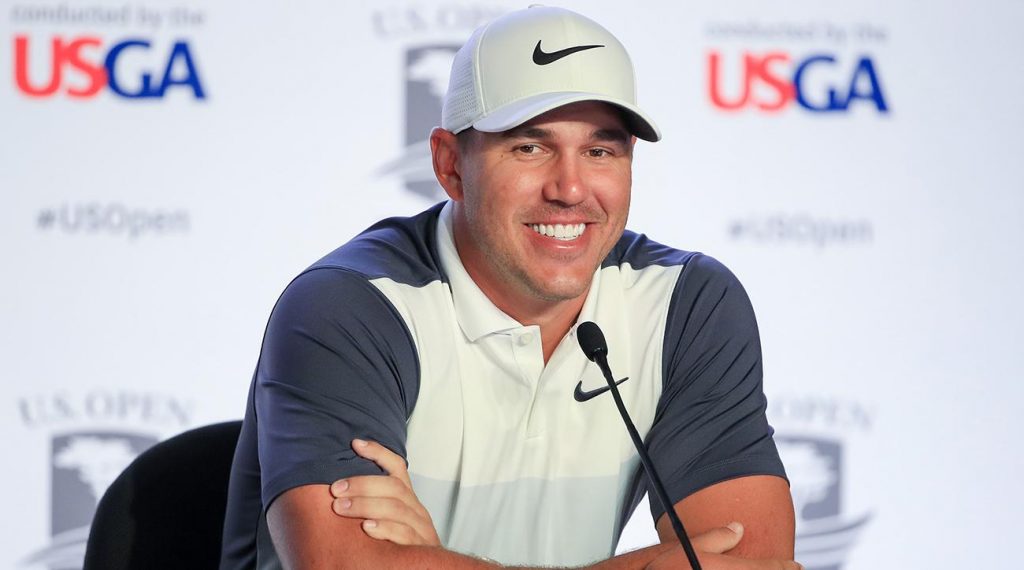
Tom Stickney: “Brooks…and he still won’t be interviewed by the press for some reason.”

Brandon Stooksbury: “I’d like to bet on Tiger but I’m just not feeling it…would be far too ‘poetic.’ As much as I hate to say it, Rory would be awfully hard to bet against given last week’s performance in Canada!”

Deb Vangellow: “Tony Finau. Complete Player: Power and Grace. That is all. Gonna be a great Open!”

Jordan Young: “DJ is under the radar, loves Pebble Beach, he is my pick. Tiger loves Pebble Beach as well, but will finish Top 5. Rory will have tough time matching last week’s success, but will make some noise. Too many great players to win back-to-back events, seems much tougher these days. Brooks is already building a big chip for on his shoulder for this week, or at least the media is … he will most certainly be in the mix!”

master professional brown stepney
master professional brown
Richard Brown III with youth students.

The PGA of America has announced that Richard Brown III, PGA Director of Instruction at Quail Valley Golf Course in Missouri City, Texas; and Anthony G. Stepney, Executive Director of APEX Development Partners in Orlando, Florida, are the first two African-Americans to earn PGA Master Professional status, the highest educational designation that can be obtained by a PGA Member.

Brown III, a 14-year PGA Member; and Stepney, a 12-year PGA Member, joined an esteemed group of just 428 PGA Professionals in the history of the PGA of America to have earned PGA Master Professional status. Currently, just one percent of the nearly 29,000 PGA Professionals have achieved the PGA Master Professional designation.

Brown III is the first-ever African-American to achieve PGA Master Professional status, with a focus in Teaching & Coaching, while Stepney is the first African-American to achieve PGA Master Professional status in Player Development. 

The PGA Master Professional Program (MPP 2.0) is available to any of the PGA of America’s PGA Professionals who have achieved advanced certification through the PGA Certified Professional Program, which was launched in 2004. The curriculum is comprised of an extensive project based on the specific certification previously acquired by the PGA Professional.

master professional stepney
Anthony Stepney, PGA

Upon approval of the project and successful completion of a presentation, a PGA Member will earn the prestigious PGA Master Professional status. To be eligible, the program requires a minimum of eight years of PGA Membership.

“The PGA of America is proud of Richard Brown and Anthony Stepney for accomplishing the highest education achievement a PGA Member can earn in becoming PGA Master Professionals,” said PGA President Suzy Whaley. “They are both leaders in the game and industry, and the example they are setting for their peers and the next generation of PGA Professionals is a tremendous standard of accomplishment.”

Brown, a member of the Southern Texas PGA Section, who earned PGA Certified Professional status in 2017, has been recognized as a U.S. Kids Top 50 Junior Instructor. He credits Calvin Peete, Lee Elder, Charlie Sifford, Jim Dent, Ted Rhodes, John Shippen and Bob Johnson for paving the way, allowing him the opportunity of becoming a PGA Professional. Brown III operates the Richard Brown School of Golf, where he offers a full lineup of player development programs for kids and adults.

“This achievement is a highlight of my career, but, it does not define my career,” said Brown III. “Yes, this accomplishment places me in rarified air, but I will continue to stay humble and hungry trying to be the best PGA Professional that I can be, to make the game better, one player at a time.”

Stepney, a member of the North Florida PGA Section, is the Executive Director of APEX Development Partners, an Orlando, Florida-based consulting firm that supports the broad-based developmental needs of organizations, including several golf companies and facilities throughout the country seeking strategic growth and increased profitability.

In 2015, Stepney earned PGA Certified Professional status in Player Development. A year later, he was selected for the inaugural PGA LEAD Class, the Association’s leadership development program that identifies, mentors and progresses PGA Members from diverse backgrounds, who aspire to assume leadership positions in the Association.

“Achieving the prestigious PGA Master Professional designation is a pinnacle career accomplishment,” said Stepney. “I consider it an honor to be among the approximately one percent of the PGA of America’s 29,000 Professionals—and among only seven PGA Members who specialize in Player Development, including PGA President Suzy Whaley.”

Stepney’s Master Professional thesis focused on “Making the Business Case for Diversity, Equity, and Inclusion in the Golf Industry.” Themes from his final project demonstrated proven and pragmatic ways to grow and broaden the golf consumer base including: helping golf be more accessible and welcoming to a broader population; increasing the number of women, minorities and other underrepresented populations in the golf industry; and guiding members of the golf industry to think more broadly and be mindful of the varied dimensions of difference, among others. 

The PGA Master Professional Program (MPP 2.0) was established in 1969, to recognize PGA Members who have made a significant effort to improve as golf professionals and maintain the highest degree of excellence for themselves and their operations. As part of its Member education curriculum, the PGA MPP 2.0 program was designed to ensure PGA Professionals are prepared to meet the growing demands of the marketplace.

The PGA of America is one of the world’s largest sports organizations, composed of PGA Professionals who daily work to grow interest and participation in the game of golf. For more information about the PGA of America, visit PGA.org, follow @PGA on Twitter, and find them on Facebook and Instagram.

short game henderson 1

Most of us are guilty of moving elements of our full swing into the short game. Quite frankly because that information has been handed down for what is now generations: “the small swing is the same as the full swing.”

Always, as in life, it is not quite that straightforward. The goals of full swing are much different from those of the short game.

In the full swing, maximum speed is important, while the bounce of club and added effective loft are often harmful.

In the short game, speed must be well managed, softness has a value and so does controlling the ground interaction of the club’s bounce.

Standing up and hitting a driver as far down the fairway as we can is a different skill from being able to hit the ball 15 feet with a controlled spin rate. The caveat is that in playing the game of golf we would like to be relatively skilled at both.

Here’s how to make that happen.

0
0
Your Cart
Your cart is emptyReturn to Shop