


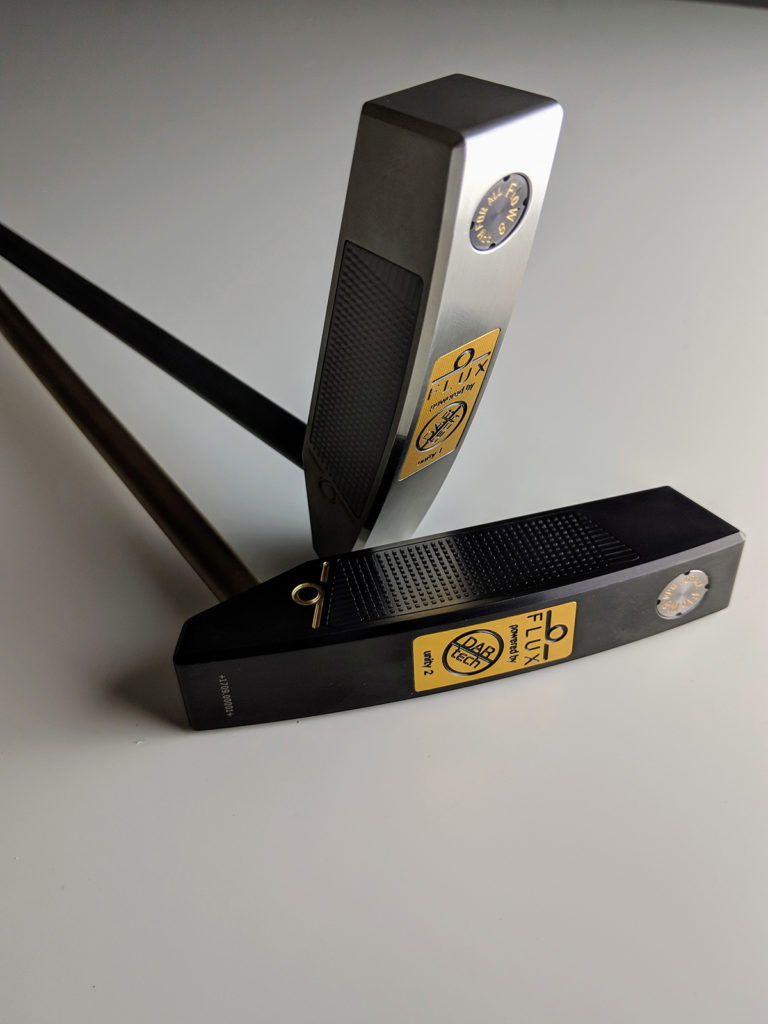
The Directed Force putter is a center-shafted, uniquely shaped putter that debuted a couple years ago with its original Reno model, but the revolutionary “lie angle balance” technology behind it still stands alone in the broad and competitive world of wands.
While most club manufacturers concentrate on face balanced and counterbalanced putters, Directed Force’s approach to club balance purports to get rid of unwanted head rotation and torque once and for all by increasing the putter head’s ability to stay square through the ball during the putting stroke without any adjustments from your hands.
The result — the body’s smaller and less reliable muscle groups relax, allowing a player’s stronger muscles to maintain control over swing speed and path. Lie-angle balancing creates a “pendulum-like” stroke with unmatched stability, ball direction and distance control.
Putters ship fully assembled with a “PressGrip,” which features integrated forward press technology. The putter shaft travels through the grip’s elliptical shape off-axis by 3 degrees, not through the center of the grip as found on most putters. This unique shaft alignment creates the forward lean players are looking for to hit up through impact without increasing the loft of the putter. All are mechanically forged from 6061 aircraft aluminum and heat treated to eliminate any natural inconsistencies in the metal.
Every Directed Force putter is custom fit for every golfer, from shaft length to lie angle. The proprietary formula and head design ensures a consistent center of gravity for every club regardless of a player’s unique specifications.

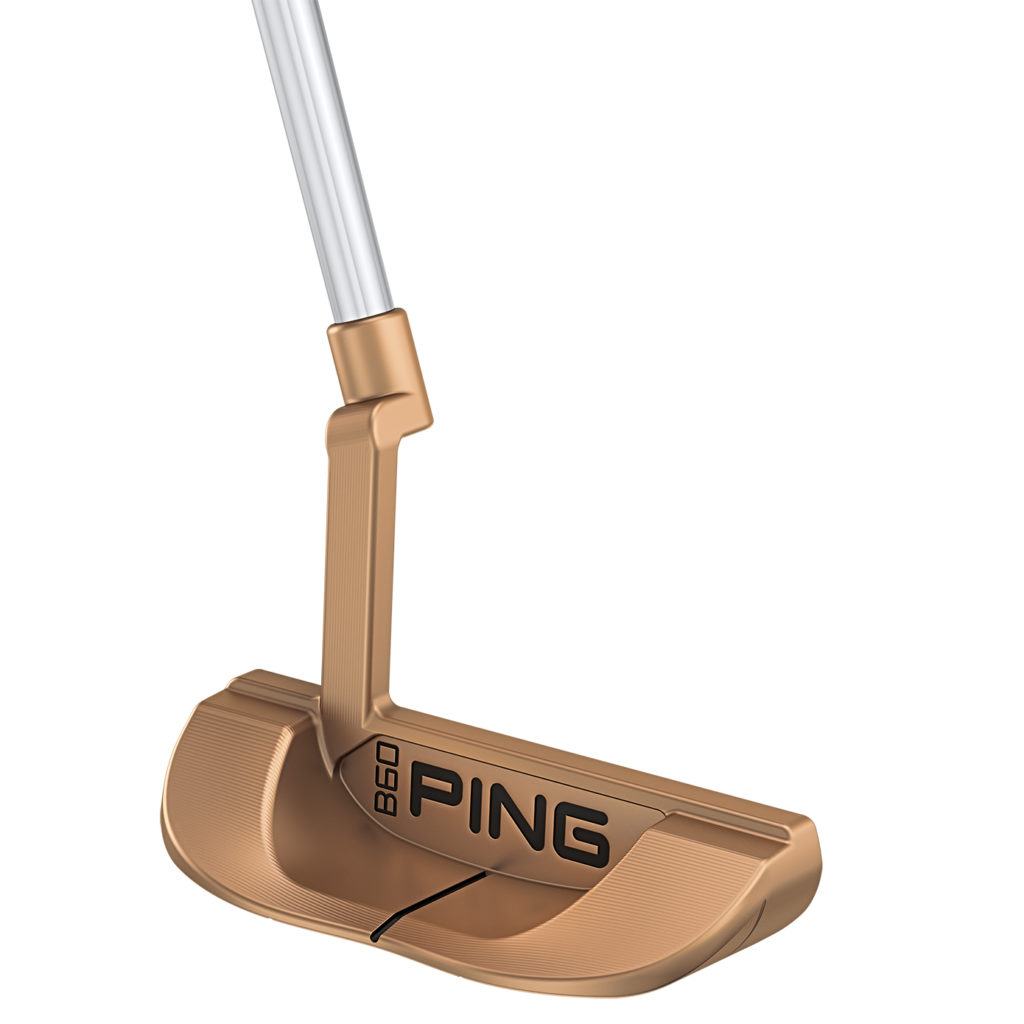
 Ping Vault 2.0 putters are the next generation of 100 percent-milled flat sticks crafted and engineered to provide tour-caliber touch and performance through proven innovations like precision-milled, patented True Roll Technology (TR), plus a new custom-weighting system. The new system offers sole weight options in steel (standard weight head), tungsten (15 g heavier than standard) and aluminum (15 g lighter than standard) to match a golfer’s feel and balance preferences.
 Precision-milled TR technology ensures full-face forgiveness for consistent speed off the face. The individually milled face pattern varies in depth and pitch across the face, which speeds up off-center impacts, improving consistency and ultimately leading to fewer three-putts.
 All the models are fit for stroke and designed with varying alignment aids to fit a golfer’s preferred look and alignment style. As part of the custom building process that ensures optimal balance, putters between 34 and 36 inches in length are built with steel sole weights; models 34 inches and shorter feature tungsten weighting; putters built 36 inches and longer use aluminum weights.

 In 2016, Golf Tips made no secret of its love-at-first-putt, near-obsession with Florida-based Cure Putters. One editor put the CX2 in his bag and there it remains, still leading the way to more made eight-footers than previously imagined possible. And he’s not alone; several Cure models are showing up on The PGA Champions Tour and gaining traction on the regular tours as well. Why? Because they simply, efficiently get the ball rolling on line, with virtually no twisting at impact.
 Fifty years after its original introduction to the golf equipment market, The Toney Penna Golf Company returns with a full range of product offerings including the Jupiter Tour Limited Edition Putter. This is big news for anyone who appreciates classic names from golf’s rich past: The revival of the Iconic Toney Penna brand of golf equipment and accessories. A division of Harpen Brand Holdings, LLC, Toney Penna is bringing back a brand originally established in 1967 in Jupiter, Florida by the legendary player and Club designer. The original company became a mainstay on the PGA tour and were used by many of golf’s most prominent players. Produced from 304 Stainless Steel in a stunning Pearl Satin finish, each putter features a 100% Milled face and has an increased head weight of 360g. Only 500 putters will be produced with each being numbered on the hosel. A spe-cial Toney Penna Limited Edition Head cover is included.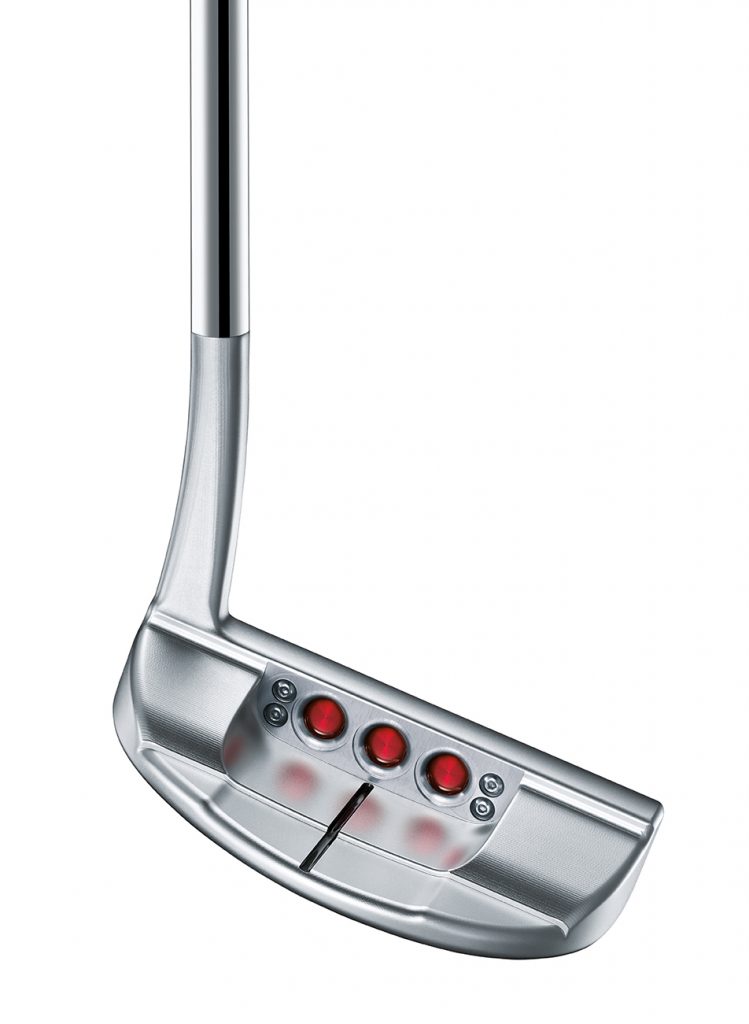
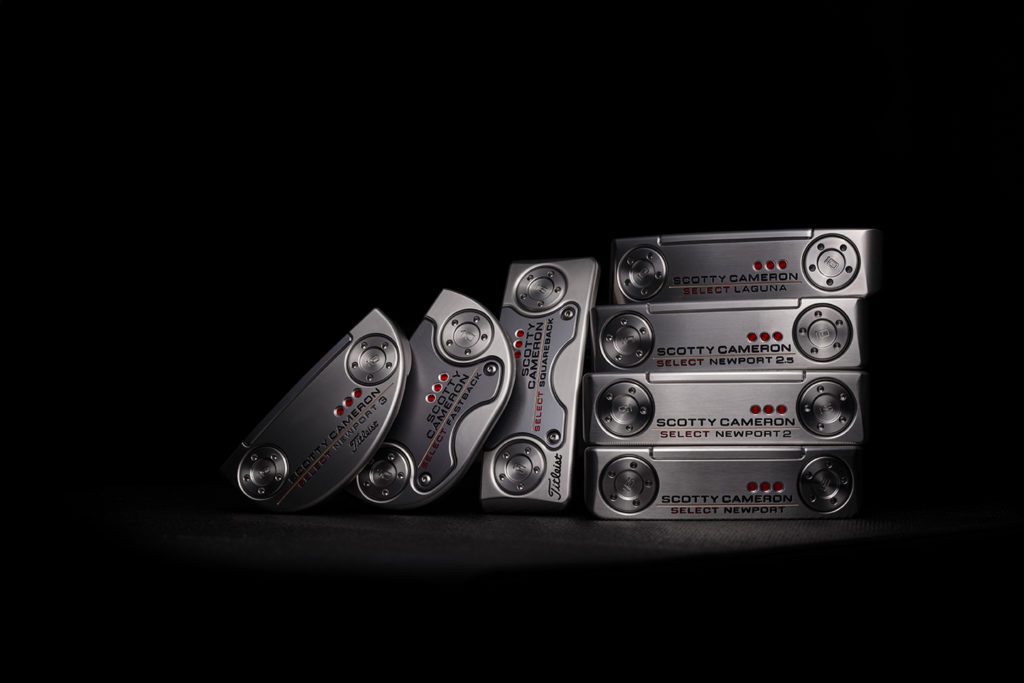
 With the Scotty Cameron Select Newport 3 Putters, Titleist/Acushnet has added a new teardrop-shaped, heel-shafted mid-mallet to the Scotty Cameron Select line. Select Newport 3 is designed for players seeking a smaller round mallet with additional toe flow and forgiveness. “When you look at the entire Select family, the Newport 3 is the perfect, curvy small mallet that just fits in conceptually between the Newport 2 Notchback and the mallets,’’ Cameron said. “We’ve extended the methodology of our proven multi-material technology to include the aircraft grade aluminum inlay, which allows me to design more of the weight into the sculpted back flange, as well as get the sweet feel the inlay produces. The result is an extension to the Select family that pulls together the entire line.” Like every putter in the Select line, Cameron said the Newport 3 features advanced stability weighting with two removable, customizable stainless steel heel-toe weights, a stepless steel shaft engineered for optimal flex and performance, and a Red Matador mid-size grip developed to offer the comfort of a larger grip while maintaining responsiveness and feel.
 A multi-piece face technology inspired by the soles of athletic shoes and advancements to Ping’s True Roll Face Technology have led to what the company calls “significant improvements’’ in feel and overall putting performance in the new Ping Sigma G putters. “The Sigma G putters represent an exciting new technology that continues our long-standing commitment to engineering putters that feel and look great but perform even better,” said Ping Chairman John A. Solheim. “Golfers will make more putts than ever.’’ Why? Solheim said the Pebax elastomer, a material commonly used in the soles of athletic shoes for its elasticity properties, is a lightweight, high-energy return compound that delivers a soft yet responsive feel. The new True Roll Face Technology covers the entire face to provide confidence and full-face forgiveness. Impact stability in every Sigma G model, according to Solheim, is increased as a result of the larger face insert cavities that allow weight savings to be re-distributed farther toward the perimeter to increase the MOI. Optimally placed CG positions help reduce skid and initiate forward roll. A variety of blades, mid-mallets and mallets are available including Ping’s classic Anser design.


