One of the most prevalent issues that I see with my students is sliding the left hip (right-handed golfer) too far toward the target in the downswing.
Most of us, when we first started playing the game, were told to hit against a firm left side. When the left hip moves well past the left foot, there isn’t a whole lot of firmness. There isn’t a whole lot of rotation. And without rotation, power is dramatically reduced.
Here is an analogy that might help put you back on track: Maybe you have a fenced-in back yard with a gate. If you don’t, humor me and just pretend that you do. If the post that the gate is attached to is straight up and down, the gate opens and closes perfectly. If the post is tilted, good luck with the gate.
Same with your golf swing. At impact, if the left hip is over the left knee and left ankle and forming a straight, vertical line, your right hip will rotate perfectly, just like the gate. If the left hip slides past the left foot, rotation is diminished – along with power and accuracy.
Here is a drill to help you get the hang of it: stand in a doorway with the outside of your left foot touching the door jamb. Cross your arms across your chest. Make a backswing turn and then a through swing turn. During the latter, allow your left hip to move laterally, just enough to make contact with the jamb. That amount will put you in a vertical left leg position, the perfect place for maximum hip rotation.
Hip rotation translates to more power, which we all want.
John Marshall, PGA, has been voted one of the top instructors in Georgia, is a two-time American Long Drivers Association super senior national champion and five-time RE/MAX World Long Drive finalist.
One of the most common full swing mistakes amateur golfers make is leaving the right side (trail side) of the body “behind” through impact and the follow through, with no release. This is why many players feel the need to strengthen their grips in order to square the clubface and hit straight golf shots, even though the results are usually poor.
Here’s why: the squaring action of the club face has to be performed by the turning and pivot action of the whole body as opposed to “throwing” your hands at the ball. This is also why, no matter how strong a player might grip the club, he or she can slice the ball terribly by sliding on the downswing. And if body releasing does happen to occur, the dreaded duck hook is the result.
The first thing to do is to make your grip more neutral by letting both hands face each other when you grip the club, as I’m doing above. You want to see a 2.5-knuckle grip of the front hand, and a two-knuckle grip of the back hand.
The key here can be equated to the simple act of walking. Think about the physical act of advancing with your feet and legs: you simply impulse your body weight without stopping it. You let it go. If you do not do this, then you are not moving dynamically. It would be like walking on stones to cross an arroyo, making sure the next stepping stone is firm enough for secure footing. This is not dynamic. You don’t walk on pavement like that, right?
The golf swing is no different. You have to let go with that same “free-transporting-ride” from the top of the swing all the way through to the finish. And the key is the rounded motion of the trailing knee, hip and shoulder.
A good check point is to get onto the big toe of the trail foot with no effort, in one single motion, from the top of the backswing to the finish.
If you focus on the rounded motion of your right side, you can now swing as far left as you want from the top of the backswing and fully release the club with confidence. You will find your body performing the much-desired “forward body weight shift” in the correct way.
Antonio Reynante is Head Golf Professional at Quivira Los Cabos in Mexico. Visit the resort at www.quiviraloscabos.com.
One of the most difficult things for golfers to do is making a proper golf swing turn.
Players tend to move either laterally (side to side) or vertically (away or toward the golf ball) as they swing the club. This additional movement in the swing creates imbalance, inconsistency, and slows down your club head speed.
I like using a spine board by Ted Sheftic (you can also use a chair, golf bag, or wall) to help feel what your lower body should be doing in the golf swing.
Get into your good set up, with your rear touching the spine board, as I’m doing in Photo 1.
As you start your turn back, your right hip should turn back as your weight transfers to your right foot, pushing into the ground (Photo 2). This coil created by your turn generates a rubber band effect, helping you to mirror the move through the ball (Photo 3).
Your left hip turns through as your weight transfers to your left leg for a full follow-through (Photo 4).
Keeping your rear on the spine board while you turn helps to maintain your spine angle throughout your swing, as well as lateral movement off the ball.
Vickie Goetze-Ackerman is a two-time Women’s U.S. Amateur champion and Director of Instruction at Buckhorn Springs Golf & Country Club in Valrico, Florida.
Good ball strikers do two things consistently in the full swing.
No. 1, they have good extension.
Take a good look at Photo 1, and look at my right arm. It almost looks as though it’s “chasing” after the ball down the target line.
Photo 1: YES—‘Chase’ after the ball
Look at how fully extended my arms are. Poor strikers of the ball lack this look. I’ll always remember the great Johnny Miller, saying he felt like he chased the clubhead after the ball down the target line. And the legendary Sam Snead used the exact same terminology. Try and copy the long right arm that you see in the photo.
No. 2, they close the club face at and after impact.
Think about it: Ninety percent of golfers slice. That’s a lot. And it means they’re leaving that club face wide open at impact. This is more of a swing thought than an actual action, but it reaps huge benefits.
What you want to feel is that you’re “wrapping” the toe of the club around the ball at and just after impact, as I’m demonstrating in Photo 2. It’s a FEEL — technically it doesn’t really happen, but the feel, the idea in your head, is powerful.
Photo 2: YES—‘Wrap the toe’ around the ball.
I have seen this tip assist more open face slicers than just about any “feel” tip out there. Most slicers feel as though the heel is leading into impact, and indeed the face is wide open. I’m showing this flaw in Photo 3.
Photo 3: NO—Don’t lead with your hands.
By suggesting a feel that the toe of the club wraps around the ball, they immediately begin to release the club more effectively.
So, make sure to release the golf club, again so the toe of the club feels like it “wraps around” the ball.
I’m confident this will assist all golfers to be a good ball strikers!
Barry Goldstein is Director of Instruction at Inverrary Country Club in Lauderhill, Florida
In a golf lesson, nothing is more important to achieving success on the lesson tee than clear, concise communication between a student and his or her coach. And that includes letting a student know when he or she achieves a square clubface.
In life we use various media to communicate in a learning environment. We can verbalize, we can demonstrate, we can physically touch or move a person into a particular position.
In the golf swing, the most important juncture of communication in space and time is that instant when the club face comes in contact with the ball. That “moment of truth,” as the great teacher of the game, Dr. Gary Wiren, describes it, is only a blip in time.
That said, during that instant the face is attached to the ball, it in fact tells the ball what to do. It communicates a variety of commands instantly. They hopefully include a properly delivered loft, center-face contact, and face direction.
[ngg src=”galleries” ids=”11″ display=”basic_imagebrowser”]Now, of course, other things are occurring (angle of attack, path, shaft lean), but the previously mentioned face-related transmissions are certainly critical to helping you achieve a successful on line golf shot.
To be successful delivering a great face condition at The Moment of Truth, one of the junctures I look at with great care with each of my students is the club face at the top of their golf swing. If the face of the club is flawed at the top, there is very little chance they will be able to manipulate it either successfully or consistently in the split second we call a downswing.
Many moons ago the late, great Jim Flick, one of golf’s legendary teachers shared with me a simple device that has become one of my all-time favorite training aids.
Through the years the Swingyd has helped hundreds of my students hit better golf shots. In particular it has taught each student how to control his or her club face throughout the swing. This has led to a much tighter-online ball flight pattern.
The Swingyd is extremely easy to use. It comes with great directions and it’s a no-brainer. Almost overnight you’ll gain a sense for exactly what it feels like to have a square club face at every critical juncture of your golf swing, particularly at the top.
Below you’ll find a great training aid resource to purchase your Swingyd. If you go online to this site to purchase one, use my last name, “Patri,” when they ask for a promo code during checkout and you’ll get a discount.
By the way, Golf Training Aids is a great resource for thousands of different training aids ! Use my name “Patri” as your Promo Code every time during check out and receive a discount.
If after you purchased your Swingyd and you have any questions at all feel free to email me directly at tpatri@mindspring.com . I’d be happy to help you any way I can.
You are now on the way to better contact and certainly straighter golf shots.
Tom Patri is a Golf Tips Magazine Top 25 Instructor in America and a Contributing Editor. Tom is also a former Met PGA as well as South Florida PGA Teacher of the Year. Tom is the Director of Instruction at The Hawthorns Golf and Country Club in Fishers , Indiana, May-October, and November-April he is based at The Esplanade in Naples, Florida. You can reach Tom via email tpatri@mindspring.com Text 239-404-7790 Visit him at www.tompatri.com
The legendary Mike Austin, whose 515-yard drive was the longest in competitive golf history, had a unique but very effective way to describe a square clubface, which he demonstrated to me in his front lawn many years ago. It had to do with shaft rotation.
We went to the edge of his driveway which he used as the target line (I instead us an alignment stick in the photos here). Then he set the club so that the toe of the club was at the edge of the target line, as I’m doing in Photo 1 at right. Then he said “the clubhead is closer to the target line than the shaft, right?” I agreed.
The key, he said, is that it should remain closer to the target line than the shaft throughout the swing. When this happens there is an absolute minimum of shaft rotation on the way back and on the way through, as I’m demonstrating in Photos 2-4 below. And when shaft rotation is reduced, accuracy increases in a big way.
Remember this simple drill the next time you hit the practice tee.
Georgia-based John Marshall, PGA, is just one of just five Golf Channel Swing Fix instructors selected to teach at the Tour Championship. He is a two-time American Long Drivers Association super senior national champion and five-time RE/MAX World Long Drive finalist.
Most golfers are aware that swinging the club on the proper plane is important. When the plane is correct, especially on the downswing, the club head approaches the ball from slightly inside the target line, which leads to more golf swing power and potentially more accuracy as well.
Here is an effective way to control your plane: control the position of your left elbow (for right handers). Most everyone knows that Jim Furyk’s shaft is virtually vertical in the backswing. That’s because his left elbow is pointed at his toe line. During his downswing the shaft plane flattens because his left elbow is now pointed at the ball target line.
To simplify your swing (don’t we all want to do that?) get the left elbow pointing at the target line during your takeaway until your left arm is parallel to the ground halfway back, like Louis Oosthuizen is doing in the photo above. On the through swing have the right elbow aimed at the target line until the right arm is parallel to the ground, like he’s doing in the photo below.
Before you know it, you’ll be striping it down the middle well past your buddies.
Georgia-based John Marshall, PGA, is just one of just five Golf Channel Swing Fix instructors selected to teach at the Tour Championship. He is a two-time American Long Drivers Association super senior national champion and five-time RE/MAX World Long Drive finalist.
Are you an arm swinger? Does your swing sometimes feel as though you are chopping wood with a heavy axe in your hands? Do you ever feel like you are swatting at the ball? Do you want to hit the ball further? If the answer to any of these questions is yes, then it sounds as though you need to learn how to use the big muscles of your body as the engine for your good golf swing, making it easier to repeat the movement and allowing you to create more clubhead speed.
I love this “Airplane Drill” because it helps you make a full shoulder turn and feel the rotation of both the upper and lower body both in the backswing and through impact to your finish.
Gail Graham is an LPGA Teaching Professional at Esplanade Golf & Country Club in Naples, Florida. She is a member of the Canadian Golf Hall of Fame member, 17-year veteran of the LPGA Tour and and 1997 Australian Masters champion. Reach her at gailgrahamgolf@gmail.com
We’re often told that a closed club face is a bad thing, and it is sometimes.
Then again, it can be a good thing if other swing conditions fall into place. Let’s take a look at wrist action during the swing and what happens when you change conditions from address to the top, and how it affects the club face.
The average golfer should play from a more square condition at the top rather than one that is radically shut (i.e., Dustin Johnson). Not that the average player could not play from a slightly shut condition, but remember, compensations have to occur if you get much past slightly shut.
However, there has been a growing number of better players who have had some wonderful success playing from conditions at the top that range from slightly shut to super-shut. Think about the swings of John Rahm, Brooks Koepka, Tony Finau, and, of course, DJ.
Now let’s examine this clubface position at the top using Hack Motion’s Wrist Sensor, which I’m wearing here (see page –), so you can see how the wrist action changes, with this type of position, during the swing.
I took a few sample swings with the new modern swing: A slightly stronger grip working into a flexed lead wrist at the top, which causes the shut face at the top like DJ. Here is what we saw.
We have all heard it. When getting information about aim and alignment, we often hear to “finish your swing facing your target.” Don’t do it — you will likely hit a shot that will not end up on line. You need to finish your swing facing LEFT of the target.
Look at all the Tour pros out there, including Jessica Korda (above): They are clearly facing well left of their target at the finish, and that goes all the way back to proper set-up and address. Here’s how to put it all together:
AIM AND ALIGNMENT
First, place your hands on the grip, keeping the clubface square.
Then, aim the square clubface to the target on the line you established from behind the ball. The leading edge of your golf club will be at a right angle to the target line.
Next, align your body (checking feet, thighs, hips, and shoulders) parallel and left of the target line, addressing the golf ball.
If you feel as if you are really left of your target, you will be aligned correctly. Do not align your body to the target…aim your club at the target and align your body left of the target! (For left-handers — right of the target)
Last, with confidence, trust your aim and alignment and make your best effort to create the shot. Even if you do not hit it perfectly, it will likely be on line, heading towards the intended target—a great miss!
COMPLETE YOUR SWING
Ariya Jutanugarn at the 2017 KPMG Women’s PGA Championship. Photo: Ben Harpring, womensgolf.com
This is accurate information: Left is “Right” (correct) at address. However, finishing with your belt buckle facing the target line is stopping short of the full completion of the swing circle.
When you finish a good golf swing, your belt buckle will actually be facing LEFT of your target if you have completed the swing circle. The ball will track towards the target on the line you established in your pre-shot routine, but your body will not finish facing the target. If it does, it could result in a shot that leaks to the right of the intended target.
Think in terms of the two lines at address that might help you understand this critical piece of information relating to the completion of your golf swing motion.
Imagine that the target line is the “ball target” and the parallel line you have lined up your body on is the “body target.” The two lines are parallel at address and remain so during the swing motion, but it is just the golf ball that (hopefully) ends up on the “ball target” line you established.
Ideally, you will end up in a balanced finish position, facing the “body target” line you set at address, clearly left of the ball target line. The swing circle motion has been completed, allowing both the operator and the equipment to hit a shot “on line” to the target!
Understanding this very thing has been instrumental for improved aim, alignment, and result with my students. See if this perception change alters the directional reality of your golf shots.
As my students and I often say about these actions that improve your motion and game, “If you can, you MUST!”
LPGA Master Professional/PGA Honorary Director Deb Vangellow holds both a BA and a Master Of Science Degree in Health/Physical Education/Coaching and Educational Leadership/Psychology from the University of Northern Iowa and Miami (Ohio) respectively. She currently is the LPGA Master Teaching Professional at Riverbend Country Club in Houston, Texas. Deb is the 2012 LPGA National Teacher Of The Year, an LPGA, Golf Digest Woman, and Golf For Women Top 50 Teacher, a Golf Digest and Golf Magazine Top Regional/Best in State Teacher, a US Kids Golf Top 50 Master Kids Teacher, a GRAA Elite Top Growth Of The Game Professional, and a Golf Tips Magazine Top 25 Teachers In America. She served as the National President of the LPGA Teaching And Club Professionals and is a longtime lead instructor in the LPGA Global Education Program in the U.S. and Asia. An educator/coach who offers wellness based developmental programming integrated into her student-centered philosophy, Deb can be reached at 281.682.7714, debbievange@mac.com, or www.debvangellowgolf.com.


 One of the most prevalent issues that I see with my students is sliding the left hip (right-handed golfer) too far toward the target in the downswing.
 Same with your golf swing. At impact, if the left hip is over the left knee and left ankle and forming a straight, vertical line, your right hip will rotate perfectly, just like the gate. If the left hip slides past the left foot, rotation is diminished – along with power and accuracy.


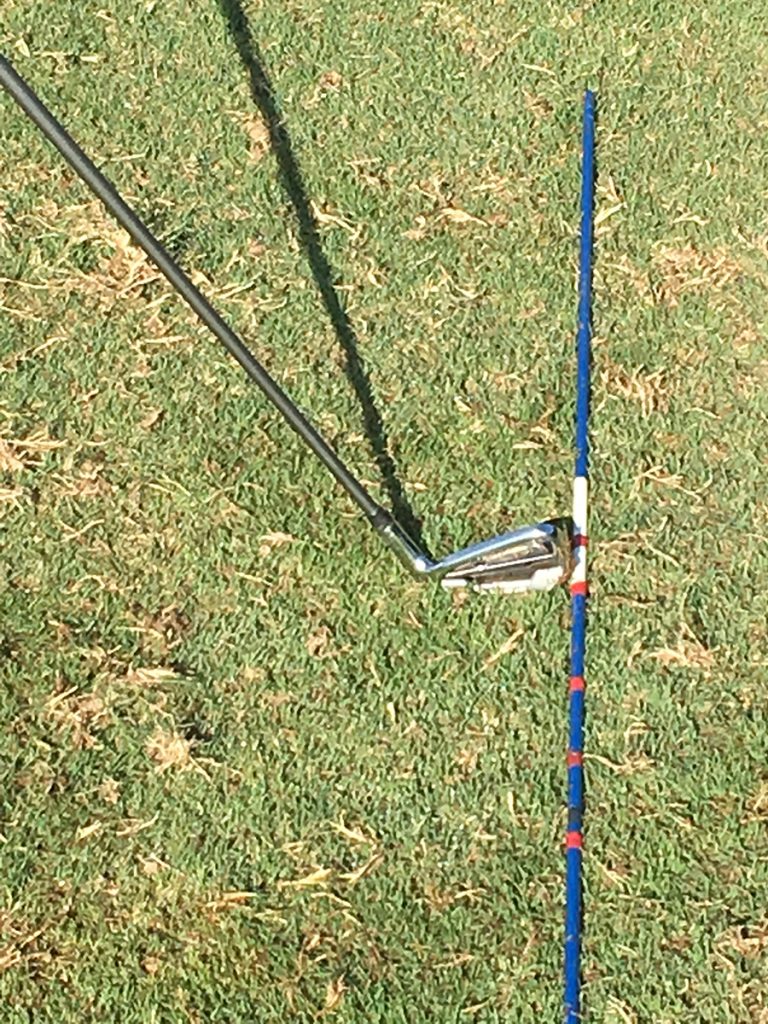
 The legendary Mike Austin, whose 515-yard drive was the longest in competitive golf history, had a unique but very effective way to describe a square clubface, which he demonstrated to me in his front lawn many years ago. It had to do with shaft rotation.


 We’re often told that a closed club face is a bad thing, and it is sometimes.




