The Performance Golf RS1 Putter Review
In my 32-plus years as a Golf Professional, if I had a dollar for every putter that promised to single-handedly “cure” a golfer’s stroke, I’d have retired a long time ago. We see a lot of grand claims come across the editorial desk here at Golf Tips Magazine. But every now and then, a piece of technology makes you stop, grip the club, and take a serious look. The RS1 Putter from Performance Golf is exactly that kind of club. Designed by Chris McGinley—a man who has spent 30 years in club design, helping build equipment for 11 World No. 1 players—the RS1 takes a direct swing at a mechanical flaw found in 95% of putters: rear-weighting that causes “face drift.” I recently put the RS1 to the test to see if its bold “pull it back, let it fall” claim actually translates to fewer putts on the scorecard.

The Details: Features & Benefits
Forward Axis Weighting (The Game Changer)
In a standard putter, the bulk of the mass sits behind the shaft axis. This naturally encourages the face to drift open during the backstroke, forcing the player to use perfect timing to square it back up at impact. Performance Golf flips the script by placing 75% of the 360g head weight in front of the shaft axis. This shifts the center of gravity forward, allowing gravity to actively pull the putter face square. It fights your natural tendency to manipulate the face with your hands.
10-Piece “Hammerhead” Construction
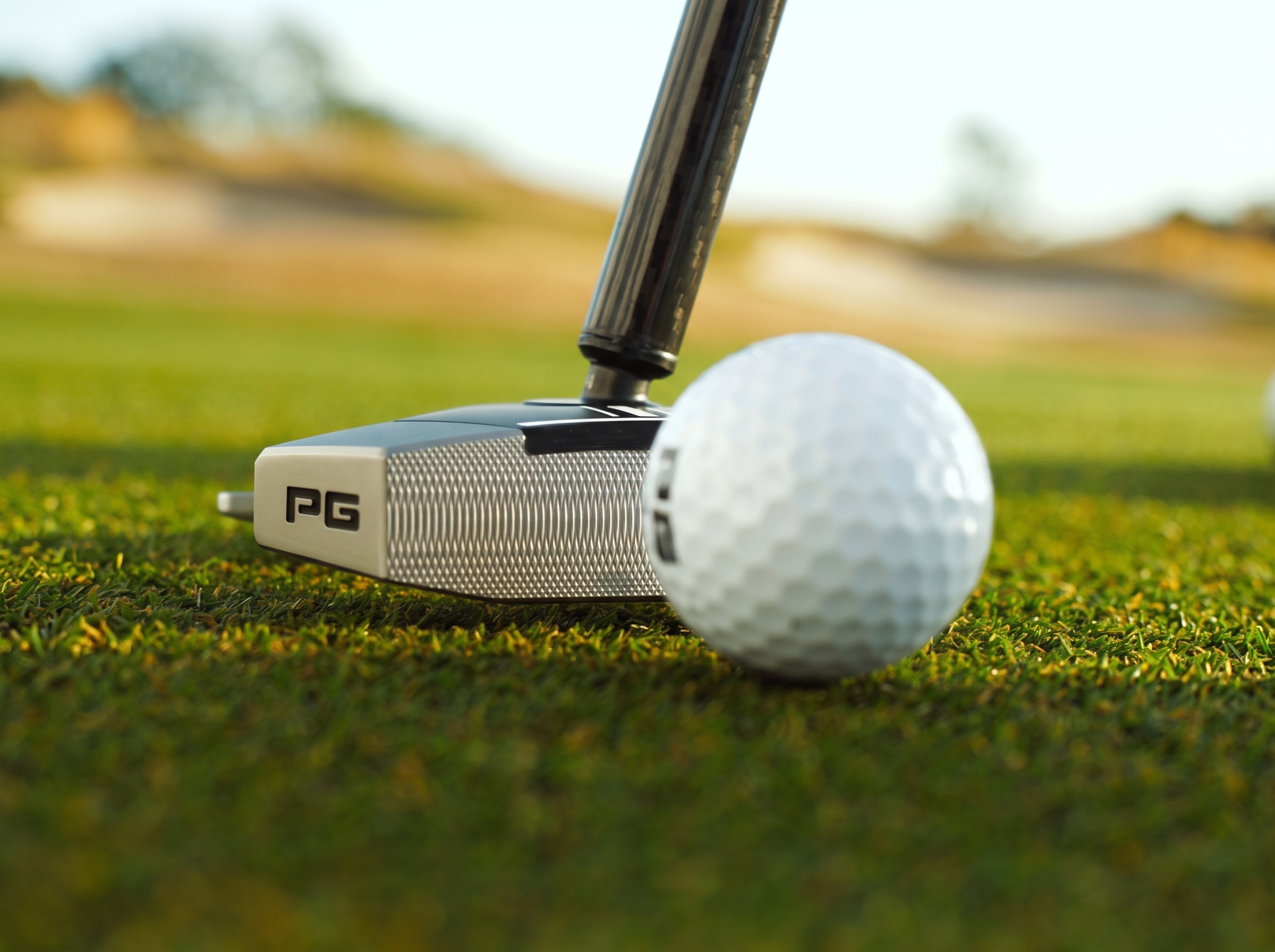
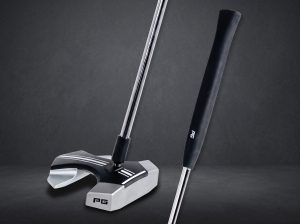
Every gram matters in this design. The RS1 utilizes a CNC-machined steel face for premium feel, matched with a lightweight carbon composite crown and an aluminum “T-Wing” tail. This multi-material approach strips weight from the back of the putter and packs it directly behind the sweet spot where it drives performance.
Upright 74° Lie Angle
Most standard putters sit around a 70-degree lie angle. The RS1 is built at a highly upright 74 degrees. This subtle 4-degree shift forces you to stand a bit taller and closer to the ball, which naturally reduces the arc of your stroke. Less arc means less face rotation, keeping the putter moving straight back and straight through.
Patented Dual Pistol Grip
Grip pressure is the enemy of a smooth stroke. The RS1 features a unique Dual Pistol grip with a flat top and bottom, alongside large curved sides. It’s specifically contoured to quiet your wrists and hands, regardless of whether you use a conventional, claw, or cross-handed grip.
(Note: The standard RS1 ($399) comes with a stepless steel shaft and rubber grip. For players seeking a slightly lighter overall weight and softer feel, the RS1+ ($429) swaps in a 15mm low-torque graphite shaft and a polyurethane grip.)
Pros & Cons
The Pros:
- Self-Correcting Stability: The gravitational “Face Down Balance” is incredibly noticeable. You can genuinely feel the putter wanting to stay square on the takeaway.
- Unobstructed Alignment: The “Face Forward” design places the shaft behind the face. You get a completely clear, 100% unobstructed view of the striking surface and the T-Trac alignment lines.
- Premium Feel: The CNC-milled steel face delivers a highly satisfying, active sound and a remarkably true roll right off the face.
- Quiets the Hands: Between the upright lie angle and the Dual Pistol grip, this putter effectively neutralizes the “handsy” manipulation that plagues most amateur strokes.
The Cons:
- Aesthetic Adjustment: With the shaft sitting behind the face and a multi-material profile, traditional blade purists will need a practice session or two to get used to the look at address.
- Unique Grip Shape: While fantastic for locking in the wrists, the pronounced shape of the Dual Pistol grip might feel slightly foreign initially if you are used to a standard pistol or oversized cylindrical grip.
- Premium Price Point: Starting at $399, it is an investment—though it sits right in line with today’s top-tier milled putters.

The Editor’s Verdict
After spending time with the RS1 on the practice green and putting it in play for a few rounds, my overall thoughts are overwhelmingly positive. Performance Golf hasn’t just built a putter; they’ve engineered a mechanical fix built directly into the equipment. The biggest revelation is how it feels during the transition from the backstroke to the forward stroke. Usually, this is the exact moment where amateur golfers manipulate the clubface, leading to pushed or pulled five-footers. With the RS1, McGinley’s Forward Axis Weighting simply takes over. When they say, “Pull it back, let it fall,” they aren’t exaggerating. You can feel gravity guiding the putter head smoothly back to the ball. If you are consistently bleeding strokes on the greens due to an inconsistent arc or an open face at impact, the RS1 is a serious tool for serious improvement. It’s not a gimmick; it’s physics working in your favor. It has absolutely earned its spot as one of the most innovative game-improvement putters I’ve reviewed this year.
Ready to start rolling it straight?
Click to secure your Performance Golf RS1 Putter today.
About the Author