October 17, 2026

Opinion

Why your partner needs a cheerleader, not a swing consultant.

Golf is billed as the “ultimate game for a lifetime,” but for couples, it’s basically an outdoor escape room where the only way out is through four hours of testing your partner’s sanity. Played well, it’s a scenic rolling date; played poorly, it’s just a very expensive way to walk four miles in angry silence. If you want to keep your relationship out of the literal and metaphorical bunker, you have to stop worrying about the scorecard and start worrying about making it to the 19th hole in the same car.

Be a Partner, Not a Pro

The golden rule? Your job is to be a cheerleader, not a swing consultant. When your partner sends a ball screaming into the neighboring zip code, your role is to provide a sympathetic “Tough break, you’ll get the next one” or a very optimistic “Well, at least it’s findable!”

The fastest way to turn a sunny afternoon into a cold war is unsolicited advice. Even if you can clearly see their swing looks like a person fighting off a swarm of bees, do not try to “fix” it on the 6th tee. Instead, be helpful with the boring stuff: rake the sand, hunt for their lost ball in the weeds, and keep the snacks coming.

Why the “Spouse Lesson” is a Death Trap

It’s a tale as old as time: a husband tries to fix his wife’s grip, and suddenly they’re arguing about something that happened in 2014. The emotional baggage of your marriage makes “keep your head down” sound like a personal attack. However, when a PGA Pro says the exact same thing, it’s “brilliant expertise.”

Save your marriage and hire a professional. A pro offers:

Look, unless your last name is Leadbetter, you have no business telling your spouse how to rotate their hips. Trying to coach your partner is the fastest way to end up eating dinner in separate rooms. Do yourself a favor and outsource the criticism to a professional. A Golf Pro isn’t just a coach; they’re a highly-trained marital mediator with a bucket of range balls.

Here is why paying a stranger to judge you is the best investment you’ll ever make:

The Emotional Shield (An Objective Eye): A pro doesn’t have skin in the game. They don’t care that you left the wet towels on the floor or that your mother is coming to stay for a week. When they tell your spouse their swing is “a bit over the top,” it’s a technical correction. When you say it, it sounds like you’re questioning their entire lineage. A pro provides a “Safe Zone” where a slice is just a slice, not a symptom of your failing communication skills.

The Great Equalizer (Neutral Ground): Taking a joint lesson turns you back into a team. Instead of one person playing the “Wise Sensei” while the other seethes with resentment, you both get to be clueless novices together. There is something strangely bonding about watching your partner also struggle to hit a stationary object while a guy in a polo shirt patiently sighs at both of you. It’s much harder to be smug when you’re both chunking it into the same bunker.

The “No-Cry” Zone (Customized Growth): Professionals have seen it all—the tears, the thrown clubs, the broken spirits. They know how to give you drills that actually work without triggering a mid-round existential crisis. They can tailor the torture to your specific physical limitations, ensuring you both progress at your own pace without one person feeling like they’re the “project” while the other is the “pro.” Plus, you’re much less likely to snap, “I’m trying, Linda!” at a man you’re paying $80 an hour.

Make it an Actual Date

Unless there’s a green jacket on the line, stop playing like it’s the Masters. Use the “9 and Dine” strategy: play nine holes (or until you’re tired of each other’s jokes) and head straight to the clubhouse for margaritas. If one of you is a stick-striker and the other is a dirt-shoveler, play a Scramble. Both of you tee off, pick the ball that didn’t hit a house, and play from there. It turns the game into a team effort rather than a competition. You can even add stakes: the loser of the putting contest picks the movie, or the person who hits the most trees has to load the dishwasher.

Ultimately, couples golf is about the walk, the gossip, and the shared trauma of losing six balls in one pond. Leave the coaching to the pros and the ego in the trunk. The fairway is a great place to grow closer—as long as you stay out of each other’s swing path.

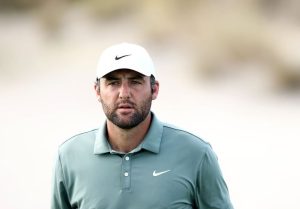
Analyzing the redemption of Justin Rose and Jon Rahm, and whether Tiger Woods can make one more miracle run at age 50.

As the gates of Magnolia Lane swing open for the 90th time, the 2026 Masters Tournament arrives with a sense of historic inevitability and a landscape forever altered by the events of the previous year. Scheduled for April 9–12, 2026, this edition of golf’s most prestigious invitational carries a weight far heavier than the typical spring tradition. The narrative is dominated by Rory McIlroy, who returns to the hallowed grounds of Augusta National not as a tortured soul chasing a ghost, but as a defending champion finally unburdened by the career Grand Slam he completed here just twelve months ago. Yet, his path to a repeat is blocked by a formidable titan in Scottie Scheffler, whose ball-striking remains so historically dominant that it has redefined the modern standard of excellence.

This landmark anniversary tournament promises a collision of eras and allegiances, featuring a field that bridges the divide between PGA Tour loyalists and resurgent LIV Golf heavyweights. Against the backdrop of blooming azaleas and the echoes of Amen Corner, the world prepares to witness if McIlroy can build a dynasty, or if the sheer clinical precision of Scheffler will reclaim the throne in what is shaping up to be the most competitive field in the history of the major.

The Expected Favorites

The betting markets and expert analysis for 2026 are dominated by two names, followed by a surging group of younger challengers. Here’s a breakdown beginning with the World No.1 player.

Scottie Scheffler

Scottie Scheffler (+280 to +350): The undisputed World No. 1 is the heavy favorite to win his third Green Jacket. Scheffler won two majors in 2025 (PGA Championship and The Open) and has not finished outside the top 20 at Augusta in six appearances.

Rory McIlroy

Rory McIlroy (+650 to +750): As the defending champion, McIlroy enters 2026 without the immense pressure of the career Grand Slam. While repeat winners are rare—only three players have ever done it—his current form makes him a primary threat.

Ludvig Åberg

Ludvig Åberg (+1200 to +1400): After a runner-up finish in his 2024 debut and consistent contention in 2025, Åberg is widely viewed as the next young star destined for a major.

Bryson DeChambeau

Bryson DeChambeau (+1200 to +1400): Representing LIV Golf, DeChambeau remains a top favorite due to his driving dominance and strong major record over the last two seasons.

Past Disappointments & Redemption Arcs

While Augusta National is celebrated for rewarding course knowledge and veteran savvy, its hallowed grounds can just as easily become a theater of recurring heartbreak for those unable to conquer its psychological demands. The 2026 Masters serves as a critical crossroads for several elite players seeking to rewrite their personal histories with the Green Jacket.
Justin Rose stands at the center of this narrative; after finishing as the runner-up in a gut-wrenching playoff during the 2025 tournament, he returns with a “now-or-never” intensity to finally secure the win that has eluded him for nearly two decades. Similarly, Jon Rahm is under immense pressure to find his redemption after a lackluster 2025 major season that saw him struggle to maintain his status as the world’s most feared competitor.

For others, like Joaquin Niemann, the tournament is a chance to shed the “underperformer” label that has followed him after several high-profile collapses on the weekend. In the shadows of the pines, these redemption arcs provide a poignant contrast to the favorites, proving that at Augusta, the scars of past disappointments often serve as the greatest motivation for future glory.

Jon Rahm

Jon Rahm: Despite winning in 2023, Rahm’s major performances in 2025 were considered below his elite standard, leading to a “crucial year” in 2026 to reestablish his status as a top-tier contender.

Justin Rose

Justin Rose: A three-time runner-up at Augusta, Rose suffered a heartbreaking playoff loss to McIlroy in 2025. Fans and media are watching to see if the veteran can finally secure the win in his late-career prime.

Joaquin Niemann

Joaquin Niemann: Despite high expectations, Niemann has been described as a “no-show” in past majors, struggling to translate his LIV Golf success to the biggest stages.

2026 Masters Predictions

As the 2026 Masters approaches, analysts are anticipating a heavyweight showdown between established icons and a handful of surging sleepers. Scottie Scheffler enters the week as the consensus favorite to win; his ball-striking remains historically dominant, and experts believe that if his putting remains at the elite levels seen throughout 2025, he will be nearly unbeatable at Augusta National.

While the spotlight remains on the leaders, Justin Rose has emerged as the top sleeper pick for the green jacket, bolstered by his early 2026 victory at the Farmers Insurance Open and a career defined by elite course history at this venue. Among the newcomers, Ryan Gerard is the standout name to watch for Top Debutant honors, having secured his invitation through a grueling 10,000-mile journey to crack the world’s top 50.

Finally, with Augusta maintaining its notoriously strict field of under 100 players, the cut line is predicted to land at +2 or +3, though this will ultimately be dictated by the spring weather conditions in Georgia.

The Overall Outlook: What to Expect

Ultimately, the 2026 Masters represents a convergence of legacy, rivalry, and the relentless pursuit of perfection. For the fans, all eyes remain fixed on the practice green as Tiger Woods, now 50 years old and recovering from back surgery, weighs a historic 26th appearance that would once again electrify the gallery. While the players recognize that the friction between the PGA Tour and LIV Golf has settled into a quiet competitive tension, the presence of heavyweights like Brooks Koepka and Cameron Smith ensures the field remains the most formidable in the sport.

The media narrative will undoubtedly pivot between Rory McIlroy’s quest for a rare back-to-back defense and Scottie Scheffler’s methodical march toward his own career Grand Slam later this summer. As the field of approximately 86 players—bolstered by new qualifying exemptions for international champions—prepares to walk these hallowed fairways, the stage is set for a tournament that promises to honor Augusta’s storied past while defining the future of the game.

How Golf is Redefining Women’s Wellness and Wealth

Learning to play golf offers women a unique blend of physical health, career advancement, and personal empowerment. Whether you’re interested in the social “Wine and Nine” scene or the strategic networking opportunities, the game serves as a powerful tool for growth. Here’s just some of the reasons:

The Power of Women in Golf

Empowerment & Confidence: Mastering the technical challenges of golf fosters resilience and patience. Many women find that the confidence built on the course spills over into other aspects of life.

Career Advancement: Golf is a “game of business.” It provides informal networking time with decision-makers that can lead to promotions and partnerships.

Health & Longevity: Golfers live an average of five years longer than non-golfers. A typical 9-hole round involves walking roughly three miles, which boosts cardiovascular health and mental acuity.

Enjoy a round with your “B-e-s-t-i-e”….You might find it makes for a healthier you!

Overcoming the “Fear of Embarrassment” – The biggest hurdle for beginners is often the fear of looking bad.

Refocus on Pace, Not Performance: Most golfers don’t care if you’re “bad,” but they do care if you’re slow. If you’re struggling, pick up your ball and move to the next hole—it’s a standard and respected move.

Embrace the “Surprise” Mindset: Shift from feeling embarrassed about a bad shot to being “surprised” it didn’t go as planned, then immediately move on.

Laughter is a Tool: Making light of a “duffed” shot immediately eases tension for you and your playing partners.

Current Trends: Fashion & Social Play

Wine and Nine: This popular format combines social drinking with a relaxed 9-hole round. It’s a low-pressure way to enjoy the game with friends or a partner.

Fashion Forward: Modern golf wear has moved toward athleisure, featuring vibrant hues (hot pink, electric blue), tailored skorts, and performance dresses that transition easily from the course to brunch.

Women’s Leagues: Joining a league provides a supportive environment with peers of similar skill levels, often including social perks like mid-season BBQs or awards ceremonies.

Modern golf wear has moved toward athleisure, featuring vibrant hues (hot pink, electric blue).

How Golf Benefits Your Relationships

Quality Time: Golf offers 2–4 hours of uninterrupted conversation away from screens, making it ideal for deep bonding with a spouse or partner.

Shared Growth: Participating in a Couples’ League can strengthen a partnership through healthy competition and shared learning.

Look for an instructor who offers group clinics. The LPGA has some of the best teachers in the world!

Steps to Get Started

Pick the Right Professional: Look for instructors who offer group clinics specifically for women to ease into the game with others. Ensure they focus on “feel” and “fun” rather than just complex mechanics.

Gain Knowledge Comfortably: Use resources like the PGA of America’s Female Beginner Guide to learn etiquette and basic rules.

Start Small: Don’t feel pressured to play 18 holes immediately. Begin at the driving range, then move to a “Wine and Nine” event to keep the experience enjoyable.

Joining the game of golf offers women significant advantages that extend from physical health to the highest levels of corporate leadership. As of 2026, women and girls remain the fastest-growing demographic in the sport, driving a cultural shift toward a more inclusive and social environment.

Boost your earnings all while having fun. Women who golf earn an average of 17% more than those who don’t

Professional & Career Benefits – Golf is often described as the “boardroom on the greens,” providing a unique professional advantage.

Access to Decision-Makers: A four-hour round offers a relaxed, informal setting to build rapport with influential executives who may be otherwise difficult to reach in a formal office environment.

The “Grass Ceiling”: Research indicates that women who play golf can earn an average of 17% more than those who do not. Furthermore, 80% of Fortune 500 executives say golf has helped their careers.

Skill Demonstration: On the course, women can Tangibly demonstrate leadership qualities such as strategic thinking, resilience under pressure, and integrity—traits that are highly valued and transferable to executive roles.

Health & Personal Well-being – Golf provides a holistic “brain and body” workout that is particularly beneficial for women’s long-term health.

Physical Longevity: Golfers have a 40% lower mortality rate and live an average of five years longer than non-golfers. Walking a 9-hole round typically involves about three miles of cardiovascular exercise.

Bone Health: The low-impact nature of walking and the “gentle yet sustained loading” of the skeleton during a swing can improve bone density, making it an excellent ally for women during and after menopause.

Mental Clarity: Time spent in green spaces (often called a “Zen window”) reduces stress hormones, alleviates symptoms of anxiety, and sharpens cognitive function through strategic planning.

Score isn’t everything! Sometimes laughing at a bad round can be a good thing

Social & Community Empowerment – The social structure of the game fosters deep personal connections that traditional networking cannot match.

Supportive Environments: Women’s leagues and organizations like the LPGA Amateurs or Women on Course provide judge-free spaces to learn and share small wins.

Building Trust: Spending several hours together allows for “open and candid conversations” beyond work, naturally building the trust required for deep friendships and successful collaborations.

Confidence Booster: Overcoming the technical challenges of the game provides a sense of accomplishment that empowers women to take on new challenges in all other areas of their lives.

Spark a new passion, find your “tribe” of like-minded women

In conclusion: Forget the scorecard—golf is your new secret weapon for living your best life. It’s about claiming your space on the green and realizing that you belong exactly where the action is. Whether you’re looking to spark a new passion, find your “tribe” of like-minded women, or simply enjoy a beautiful afternoon with a glass of wine in hand, the game meets you exactly where you are. Don’t let the fear of a “bad shot” hold you back; every pro started with a swing and a miss, and the golf community is more welcoming now than ever before. It’s time to trade the sidelines for the fairway, embrace the laughter that comes with learning, and invest in a hobby that pours back into you. The course is calling—grab some clubs and discover the confidence you never knew you had!

Join us for your next round at golftipsmag.com/register

The fairway is officially the new frontier for the 25-34 demographic

Golf is aggressively shedding its reputation as a “grandfather’s pastime.” It’s no longer just about dusty blazers, rigid rules, and six-hour rounds; it has evolved into an essential wellness retreat, a powerful networking hub, and a flexible social playground for young professionals navigating the high-pressure landscape of the mid-2020s. For this generation, the value proposition has flipped. They aren’t adopting the sport despite its traditions; they are adopting it because they can redefine those traditions. They are bringing their own tech, their own threads, and their own focus—prioritizing a holistic experience over a perfect scorecard.

As we dive deep into the 2026 season, here is the culture code for the modern golfer: a look at what’s driving this massive youth resurgence and how they are changing the game, one performance jogger at a time.

The Wellness Swing

For today’s young professionals, golf is less about the scorecard and more about the “digital detox.” Nearly 47% of millennial golfers now rank mental health and self-care as their top reasons for playing. A single round provides a low-stress environment to hit 10,000+ steps while disconnecting from the “always-on” grind of 2026.

Tech That Talks Back

Precision is the new standard. This year’s must-have gear isn’t just about power—it’s about data.

  • The Wearable Edge: Devices like the Whoop 5.0 are now course staples, tracking strain and recovery to tell you exactly when you’re primed for a personal best.
  • Precision Optics: The ultra-compact Bushnell A1-Slope has become a favorite for its “no-frills” accuracy, fitting easily into the palm of a hand for quick, slope-adjusted readings.
  • Smart Carts: Young golfers are demanding electric carts equipped with USB charging ports, Bluetooth connectivity for music, and integrated GPS systems for seamless course management.

Style Without the Stigma

The “stodgy” look is out. In its place is “Everywear Golf”—high-performance apparel designed to transition from the 18th green to a night out.

  • Performance Joggers: The classic chino has been replaced by technical joggers featuring water-repellent finishes and 4-way stretch.
  • Dopamine Dressing: 2026 is seeing a surge in bold color-blocking and “citrus brights” from brands like Fore All and 70°, moving away from muted traditional palettes.
  • Spiked Resurgence: Due to increased rainfall trends, spiked golf shoes (like the latest from Payntr) are seeing a 19% growth as players seek better balance on wetter courses.

The Rise of “Boring” (and Effective) Golf

Younger players are getting smarter about their stats. Instead of chasing impossible hero shots, the 2026 trend is “boring golf”—focusing on eliminating double bogeys and mastering the short game.

  • Higher Lofted Woods: Many are swapping difficult-to-hit long irons for 7-woods and 9-woods (like the Titleist GT1), which offer higher trajectories and more control on approach shots.
  • Cavity Back Wedges: To bridge the gap between forgiving irons and bladed wedges, “game-improvement” wedges like the Callaway CB12 are becoming essential for consistency.


A More Social Layout

Time is at a premium, leading to a 1,220% surge in searches for 9-hole courses. Whether it’s through social leagues, glow-in-the-dark night golf, or entertainment venues like Topgolf, the game in 2026 is shorter, faster, and more inclusive than ever before.

Come join our fast growing golf community and begin seeing why we are the “Games Most In-Depth Golf Authority”. Become a “Golf Tips Premium” member today. Visit golftipsmag.com/register for more details.

Some golf professionals say that golf instruction has shifted largely from opinion-based and relying on feel to a more data-driven and technologically-supported approach over the past 30 years. Like so many other industries golf is changing fast. What was once a learn through repetition, is now fast becoming a technology driven industry. Golf Instruction is moving quickly into a new direction too. The old golf pro who stood for hours on the range teaching lesson after lesson in all kinds of conditions, is quickly being replaced with technological advancements. Everything from launch monitors to golf simulators and even golf apps providing valuable statistics only a swing coach could provide. In addition, the new golf instructors maybe AI driven and capable of handling far more differences on the lesson tee than pros of the past (cover image). Does this mean golf pros could ultimately be out of a job? Maybe! One things for sure, even they are having to keep up with the changes in order to stay relevant to the game. In this instructional article I wanted to examine some of the differences from golf instruction 30 years ago to today.

Here are some key differences:

1. Emphasis on Data & Technology:

  • Then: Instruction relied heavily on visual observation and subjective analysis. Teachers might use video sparingly, but without sophisticated data analysis tools.
  • Now: Modern golf instruction is heavily influenced by technology like launch monitors, swing analysis software, motion sensors, and even AI. This provides instructors and golfers with objective data on swing mechanics and ball flight, allowing for more precise diagnoses and tailored coaching. Think of it like an X-ray or MRI for the golf swing. AI tools can analyze swings, provide real-time feedback, and even create personalized training plans. 
Seeing data in real time will help golfers focus on problem areas of their game
More and more practice facilities will begin to look like this

2. Focus on Biomechanics and Science:

  • Then: Traditional methods often focused on replicating the swings of successful players.
  • Now: Biomechanics plays a larger role, analyzing movement patterns to improve performance and reduce injury risk. This involves understanding how different parts of the body contribute to the swing. 
Students will learn virtually on how biomechanics plays a role in learning the golf swing

3. Move Away from “One-Size-Fits-All” Methods:

  • Then: Some instructors subscribed to specific “methods” or certain swing models.
  • Now: While there are still schools of thought, there’s a greater emphasis on individualizing instruction based on data and personal needs. The goal is to optimize a golfer’s existing swing rather than forcing them into a rigid mold. 
Traditional one size fits all golf instruction is destined to become a thing of the past

4. Increased Accessibility to Information:

  • Then: Access to quality instruction might have been limited.
  • Now: Online platforms and AI-powered apps offer personalized coaching to a wider audience, democratizing access to expert advice. 

In summary, modern golf instruction is characterized by its reliance on technology, data analysis, and a more scientific understanding of the swing, leading to more personalized and effective coaching compared to 30 years ago. I don’t think golf pros necessarily need to pack up their swing trainers and weighted clubs just yet. However, I do think they need to keep up with current trends, and be mindful that the average golfer is coming to the lesson tee more informed than ever before, and we need to be ready too. Change is coming quickly. How we handle it will make the difference if we are to remain a part of it.

0
0
Your Cart
Your cart is emptyReturn to Shop