October 17, 2026

Editors' Picks And Reviews

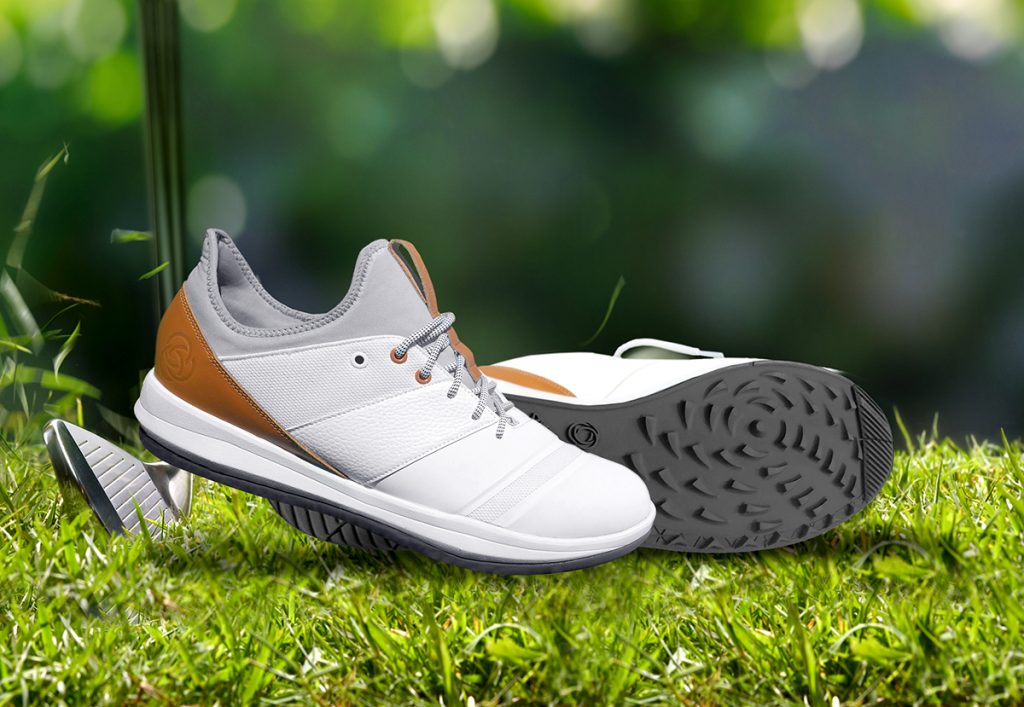
athalonz enve golf shoe

Sometimes it’s a long and tough leap into the golf business for a mainstream athletic gear company, but the Athalonz EnVe golf shoe proves that the gap can be breached, and breached well.

Known mostly for its baseball and softball footwear and other items such as practice pitching mounts, Athalonz brings a lot of design know-how to the golf shoe realm. Inspired by pro golfers and scientifically engineered using a patented technology, the lightweight, spikeless EnVe is sleek and modern and built for today’s power-centric game.

It starts with the midsole, which the company says is “tuned for maximum output,” while the “Grip & Glide” outsole works to shift the way the body engages the ground to solidify a golfer’s athletic foundation through the swing. These features were enough to attract the attention of professional long drivers Mitch McDowell and Ryan Steenburg.

We wouldn’t go anywhere near those guys’ swing speeds, but during full-round testing, Golf Tips found that the the Athalonz EnVe lives up to that power promise, stabilizing the feet from address through follow-through with a balanced and secure feel, plus extra support thanks to a thin and pliable “bootie” that extends what would be the tongue of the shoe out and above where the upper would normally end. It’s a different feel, though not confining or intrusive in any way. The shoe also aids in alignment of ankles, knees and hips, again to establish a “deeper” foundation and maximize swing speed without loss of balance — and reducing stress on the joints, as well. And when you’ve completed your swing and are facing the target with your trailing foot on its toes, the shoe’s waterproof toe box keeps the moisture out. Pure grip, no slip.

And another point: The Athalonz EnVe is as comfortable as your favorite pair of sneakers, and indeed could be worn off the course with no issues.

The company purports that its first-ever golf shoe can increase your power capabilities “by 9 percent or more.” We’re not exactly sure how to measure that assertion, but anecdotally we can report that we did notice some added distance off the tee, without extra effort. In fact, the Athalonz EnVe engendered such a solid base that getting more out of each swing took less effort.

Yes, as in any sport, the right shoes are important, and if its initial golf model is any indication, Athalonz is on its way to becoming a major footwear player on the links as well as the diamond.

$189.95 | www.athalonz.com

sqrdup golf alignment irons
SQRDUP takes the guesswork out of club face alignment

When a training aid inventor believes in his product enough to quit his high-paying gig, sell his home and move above a family member’s garage, it’s time to take notice. That’s exactly what Randy Bowman did to get his laser-powered golf alignment device, SQRDUP, into production and, finally, to market.

A gregarious former Marine with a clear love for golf and the guts to dream big, Bowman enlisted his engineer brother to help move SQRDUP from sketch pad to reality. Many months and much monetary investment later — including a spate of fundraising on the web — they had a working prototype: Four green laser lenses placed at right angles from each other inside a four-sided, plus-sign-shaped aluminum housing. After several rounds of tweaking tolerances and technical specs, the final product produces a quartet of powerful, mega-focused laser beams that, with the flip of a switch, give a golfer instant dead-straight alignment guides for every club in the bag, putter to driver. Mounted on the included Joby adjustable tripod, it can cast a beam from ground level (excellent for the range, where you want it as close to the hitting surface as possible) to several inches above the ground, where you can aim one beam at, say, a range marker 200 yards away, while the other three beams provide spot-on alignment aids for ball position, foot position, club face angle, takeaway path and more. For putting, it’s best to place it as high as possible, about 15 to 18 inches behind the ball, which allows a beam to track all the way to the target. The beams are powerful enough to be visible in bright sunlight.

sqrdup golf alignment putting
Mounted on its pliant tripod, SQRDUP provides a perfect line through the ball to the hole on any putting green.

“I spent a lot of time in our basement [working on SQRDUP], and my wife was hating it,” Bowman told Golf Tips at the International Network of Golf spring conference in Alabama last May, where he rolled out his first off-the-line device for the media. “So I took her to the putting green and set up an 8-foot putt, and showed her how you can line it up. She’s played maybe 20 times in her life, and she made 11 of 28 putts. Later she said, ‘Now I just think about that line. I really see the benefit. It helps keep me more square through the ball.”

With apologies to Einstein, there’s nothing straighter than a laser beam, which is what makes SQRDUP such a no-brainer for anyone who wants to perfect what any teaching pro will tell you is Exhibit A in a low-handicapper’s game: A reliably and repeatably square set-up. It leads to every good thing in the swing — balance, effortless power and accuracy for starters.

“A lot of people have tried it and said, ‘I really need this. It really helps. I wasn’t really getting my ball on line,’” Bowman said. “And it helps remind you of your alignment when you’re playing.”

Golf Tips tested SQRDUP on a flat surface indoors, setting it up so its “lead” beam sliced through the dead-centers of what might be the perfect practice companions — the PuttOut “pressure practice” training aid the same company’s six-foot Putting Mat. Each golf ball was placed so the laser would cut through its equator, giving us not only a bolt-straight line to the target, but a guide for the backstroke, too. If the laser stayed on top of the ball as it rolled out, we knew we’d put a solid, square stroke on it. On an actual outdoor green, the laser will instantly show the break of a putt — in four directions at once — if it’s arranged level to the surface. “You can have four putting sessions [at the same time],” Bowman said. “That’s why I think it’s a natural for high school and college golf teams. They can come up with practice competitions that will help them when their playing their matches. It builds confidence.”

sqrdup golf alignment driver
Trying to dial in proper foot position with the driver? SQRDUP is a godsend.

But you don’t have to keep SQRDUP on the square all the time, as Bowman discovered during one testing session. “I had one teaching pro show me, ‘Look, here’s a 4-degree swing path.’ He immediately recognized that you can set it up to show the path for a draw, nice, high fade, whatever. You can use it chipping, to work on foot and club face alignment. I can set it to go to the 100-yard marker, then to the 150 marker, or whatever, and line up my club face. No more moving alignment sticks or a golf club around.”

Even before he was up and running, Bowman was fielding SQRDUP pre-orders from around the world, and now he’s setting his sights not only on the American amateur consumer, but on the PGA Tour.

“I want to go to the [Waste Management] Phoenix Open, have a booth and a tent, and give a unit to each pro and amateur. I guarantee some will take it out to the putting green or range and use it, and hopefully some camera will zero in on it. We’ll see if people notice it and decide if it’s worth it.”

Let us be among the first to state without hesitation that SQRDUP is indeed “worth it.” Lasers are straight shooters, and so are we.

SQRDUP is portable, weighing just over a pound including the tripod, and charges quickly via mini-USB. Bowman is currently taking orders for delivery in December.

$199 plus shipping | www.sqrdup.com

bridgestone-jgr-driver-300x200.jpg

So, this Bridgestone outfit, they’re the golf ball folks, right? The new ones Tiger put into play last year? Well, yeah, and darned fine golf balls they are, especially the Tour B RX. But this venerable company is no slouch in the golf club department, either. In fact, the next generation of Bridgestone Tour B JGR club series — driver, fairway metals, hybrids and either the graphite-shafted, wide-soled HF1 game improvement irons and steel-shafted, low-to-mid-handicapper HF2 irons — impressed me at every level over several testing rounds in advance of their Sept. 12 debut.

As you’d expect, the Tour B JGR line is, of course, designed with the everyday, average, aspiring amateur in mind, though they’re getting some love from Bridgestone Golf staff players Matt Kuchar and Brandt Snedeker, who replaced their former drivers with the new Tour B JGR model earlier this summer. But what really blew me away were the irons, in both configurations, on an array of courses from mountainous to muni-flat, turf from tight to fluffy. After packing the same irons in my bag for a decade or more, I was prepared for some improvements in technology, and got it … and then some.

Let’s start with the driver, then roll right through the bag to the wedges.

DEEP AND STRAIGHT

bridgestone tour b jgr driverThough it probably won’t garner the notice of the “big boys” in the driver sector, Bridgestone’s new Tour B JGR driver deserves a hard look from anybody who’d love to put a few extra yards back into their tee box quivers, at a reasonable $399 retail price point. Just get a load a load of its draw bias construction, its “Power Mill Face” finish that reduces spin and stabilizes the ball at impact to max out compression time, and its “Boost Wave Crown” with external and external channels that help increase launch angle and ball speed. All conspire to produce explosive flight and control; even when I came over the top with my 9.5-degree model (it’s also available in 10.5 and 11.5 degrees) and pulled a tee shot with a slight toe strike, the ball took off on a dead, penetrating sprint and somehow didn’t go further left, attesting to the face’s stability at impact. In fact when I finally caught up to it, some 275 yards down the fairway, it was still on short grass. The clubhead offers a deep and surprisingly “compact” and classic look at address, with noticeable but not extreme bulge and roll. Its lightweight head allows a smooth takeaway and subtle, unforced set at the top, which facilitates a simple slot move into the ball, and the stock UST Mamiya Recoil 460 ES shaft (I tried the R flex) is responsive with a good load profile. In short, this beast is a pleasure to swing.

FAIRWAY FUN, HYBRID HOPE

I’ve long had a love-hate relationship with my “utility” clubs. Seems I can’t help but fight them in terms of set-up and approach — do I treat them more like an iron or a wood?

bridgestone tour jgr hybridThe three new Tour B JGR metals Bridgestone sent me — 15-degree 3-wood and 18-degree 5-wood ($229 each) and 22-degree hybrid ($219 each along with a 25-degree model) offered the same slitted crown as the driver, along with a variable-thickness face to promote better distance on off-center strikes — and helped make my  personal head game moot: They begged to be swung more like an iron, inviting me to ease into the posture of, say, a 5 or 6 — hands relatively close to the body, slightly more bend at the waist, slightly narrower stance, with the upright backswing such address angles naturally produce. That allowed me to simply get out of the way and let these black beauties do their effortless thing. Suddenly those forced cold-tops and fats were a thing of the distant past and I welled up with confidence every time I was faced with a 195- to 230-yard shot … or a lay-up tee shot, which each stick pulls off to sky-piercing perfection. One shot in particular comes to mind: A 210-yard approach on the par-5 16th at The Colorado Club outside Denver. I pulled the 22-degree, settled in, smoothly pulled the club back and just let the half-moon-shaped head fall back into the ball with no extra force. The resulting dead-straight shot landed perhaps a yard left of where I aimed it, still hole high after a soft landing. I get the same lovely result and feedback from the other two clubs; only the most off-kilter move results in the dead pull-hook I’m used to with this category of stick — usually I’m looking at sweet, slight draw (anything more than a baby fade is next to impossible). Now I can safely boot the “hate” part from the whole love-hate thing.

IRON REVELATION

bridgestone tour jgr hf2Both new JGR iron sets are also packed with innovation, combining the soft and consistent feel of classic forging with established but ever-improving modern advancements like thin, high-flex faces and cavity backs that range from near-hybrid-deep in the HF1 to shallower, can’t-see-’em-at-address shallow in the HF2.

The latter model’s ultra-thin face promotes exceptional distance, while the heads include a rubber polymer insert to enhance feel, reduce vibration, and ensure crisp sound at impact. As a 10-handicapper experiencing alarming age-driven distance loss through the bag, I found the HF2 a pure gift from the golf gods, even with the somewhat TrueTemper XP 95 shaft on board. I consistently got 5 to 8 yards more out of each club compared to my old irons (160 yards with a 7-iron, for instance, compared to the average 152 I’d become accustomed to), with pleasingly and consistently soft and responsive feedback at impact. I could feel my bugaboo toe strikes immediately, yet marveled as the ball still traveled close to the distance I’d asked of it. The spin these babies produce is something to behold, even on hard greens; pulling the string like Philly Mick is doable again. And, with the hybrids, I simply couldn’t produce a slice with them. That put pure confidence back into the equation, meaning less stress, meaning many, many more smooth passes, more greens in regulation and more short-range putts for par or better.

bridgestone tour jgr hf1For higher handicap players, the HF1 irons feature a thick, hollow cavity design — essentially a hybrid that provides easy launching distance in an extremely low COG forged head (you won’t believe the moon shots these clubs will pull off). The same variable face thickness of the HF2s provides responsive feedback on hits across the face. The standard UST Mamiya Recoil graphite shafts just add to the soft feel at impact and give slower-speed swingers the extra oomph they need to keep up with their lower-handicap buddies.

One thing to remember about the HF1: Bridgestone has taken the modern tendency to pump up “standard” lofts to very generous levels, and gone close to an extreme. While it’s an obvious confidence boost, this practice takes some getting used to — the 5-iron is really a standard 4-iron (almost a 3-iron, really), the 9-iron is an 8-and-a-half-iron and the pitching wedges are split into “P1” and “P2” versions with lofts of 38 and 44 degrees (rather than the old school 46 or 47). Even after making note of your new prodigious distances on the range, it could take a few holes of real combat to make the mental and strategic adjustments, lest you’ll find yourself airmailing many a green. But they are an absolutely joy to swing, especially for players prone to a big curve in either direction. They tend to guard against the extreme hook or slice thanks to serious stability at impact and smooth and shock-free response from the graphite shaft.

The HF1 is sold standard in 6 iron through A wedge (5-iron sold separately) for $849 per set; the HF2 is $899 for 5-iron through A-wedge (4-iron sold separately).

My biggest challenge moving forward? Which iron set to put in my bag on a more permanent basis. The older, slower swinger I’ve become pushes me toward the more forgiving H1, but so far I find the H2s are treating me just fine, thank you very much. It’s a great problem to have — and a welcome throwdown from a Bridgestone bunch who has clearly had a ball building these clubs.

www.bridgestonegolf.com

father’s day 2018 swing caddie

For avid golfers who struggle to make time for down-and-dirty practice on the range, the Swing Caddie is a fun and easy-to-use godsend and a true bargain when you consider its capabilities. Rather than attach a variety of widgets to your club and depend on a smartphone app to capture and display the numbers we all want and need to measure progress, Swing Caddie uses doppler radar to do its thing — all it takes is turning it on, turning it to “Practice” mode, setting it about a yard directly behind your strike-line, choosing the club you’re hitting and firing away no matter where you are. About the size of a phone, it’s ultra-portable.

There’s plenty of hype when it comes to personal swing monitors’ efficacy, but this gadget works as advertised, or even better. Practice mode is very helpful and informative; toggle between total carry and distance in the air “carry”; measures swing speed, ball speed, smash factor, with adjustable loft angle for driver from 8 to 12 degrees via a handheld remote — fairway metals are from 17 to 24 degrees in two- or three-degree increments; hybrids (“utilities”) go from 20 to 26 degrees in two-degree increments, with irons given standard lofts (26 degrees for 5-iron, for instance, and “SW” adjustable from 52 to 60 degrees in one-degree increments.

“This is the hottest thing we sell these days,” says Neville Hong, CEO of Voice Caddie, the company behind Swing Caddie. “You can pull this out of your golf bag, you don’t have to connect it to anything. It gives you carry distance, swing speed, ball speed, and smash factor. It really helps with distance control for each club. The screen is outdoor visible. You just pull it out and start swinging away. It gives you immediate feedback.”

Interacting with the device is a snap thanks to the included remote. Just press the button for whatever club is in your hand and the device automatically dials in its standard loft Then you just start hitting balls as the pleasant female voice calls out carry or full distances, depending on the setting.

Along with Practice mode, SwingCaddie offers “Target” mode, displaying distances from 40 to 200 yards — a big help in dialing in average distance for each club — and an “Approach” mode for practicing short game shots by randomly producing target yardages from around 40 to 95 yards, then displaying your results.

www.swingcaddie.com | Check the price on Amazon!


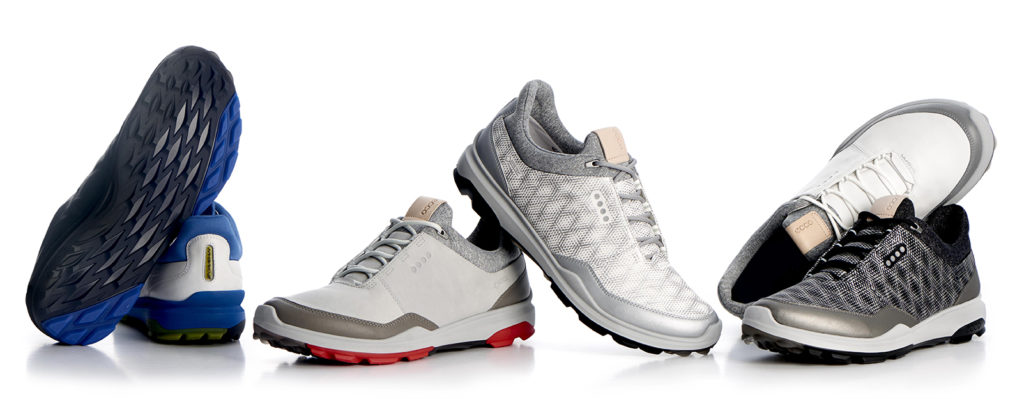
ecco biom hybrid 3 2018

Who doesn’t love Christmas in July? OK, don’t answer that, but when a new pair of Ecco golf shoes show up on my doorstep in the heart of golf season, I’m like a kid on a certain late December morn. The Ecco Biom Hybrid 3 is my third pair from this European company, and it’s the best, most comfortable model yet. Just ask my dogs, and my scorecard.

Sure, technology has a lot to do with it. The Biom line has been around for a while and picked up its share of accolades, but the Hybrid 3 raises the bar in several ways. What struck me is how quickly and beautifully its all-new “Tri-Fi-Grip” outsole molded to my foot after a few moments of “uh-oh, these babies are tight” apprehension. By the time I had hit a few balls on the range and made my way to the first tee for their virgin round, the Yak leather uppers hugged every contour of my size 10s (or 43 in Euro numbers), with no pinch spots or loose areas. And even as temperatures soared toward the century mark, my feet stayed — well, not cool, but somehow well-ventilated even though Bioms also boast Gore-Tex waterproofing.

How is this possible? Through the magic of modern materials that work seamlessly together — a footwear version of the nervous, muscular and skeletal systems supporting and supplementing each other in a human body. The upper — available with either classic or BOA lacing — moves with the foot but doesn’t yield too much in any direction, which, of course, would lead to lack of stability over the ball. The spikeless sole is mega-stable yet pliable enough to absorb and support every movement through the swing, while the insole further absorbs the ups and downs of a golf course, balancing downward pressure through the heel and balls of the feet with just enough upward pressure through the arch. Ecco calls this trio of material and design triumph the “three zones of performance,” and I ain’t arguing with that. The Biom Hybrid 3 doesn’t just perform, it creates a close relationship between it and your overstressed, otherwise-fatigued foot. If that’s not cause for a little Christmas cheer any time of year, I don’t know what is.

CHECK THE PRICE ON AMAZON!


two guys with balls

two guys with ballsUsed golf ball outfits are a dime a dozen these days. OK, maybe not a dime, but far less than retail. Get a couple of divers or scroungers, gather up as many wayward dimpled orphans as you can, run through a quality control regimen to see which are salable, package them up and open an online shopping cart. Simple, right? Sure, but what separates the pretenders from contenders is the customer experience. In that regard, the fairway of success gets a lot tighter, but Two Guys With Balls knocks it right it down the middle in every metric we appreciate, from ease of ordering through their robust yet simple website, to packaging, to the quality of the gently-used balls themselves.

Their inventory covers every major brand — Titleist, Bridgestone, Callaway, TaylorMade, Srixon, Top-Flite, Maxfli, Pinnacle, Slazenger — and a few up-and-comers like Vice … even Costco’s hard-to-find Kirkland brand. Golf Tips ordered two dozen Titleists (12 Pro V1s, 12 of the excellent but now-discontinued NXT Tours), navigating through the site’s purchase process in seconds. A couple days later they were on our doorstep, ready for action, with a coupon for 10 percent off our next order.

Sam Hogan, one of Two Guys’ founders, came up with a three-tiered grading system for their balls. Eagle is top of the line, Birdie is slightly blemished but very playable, and Par is still in the ballpark but with more visible marks from previous owners. Prices start at $5.99 per dozen depending on make and quality; Eagle-quality Pro V1s go for $23.99 or lower if you catch them on sale. And shipping is free for orders over $69, or if you become a TGWB VIP member for $69 per year, which includes 10 percent off every order and a free year swing analysis with the company’s teacher partners via the popular V1 video app platform. Whether or not you become a member, Hogan and company donate a portion of every purchase to the Arnie’s Army Charitable Foundation.

The verdict? Two Guys With Balls are straight shooters with staying power in a competitive market. They’ll set you up with the battle-tested ammo you want and save you a bundle doing it.

www.twoguyswithballs.com

ben hogan irons edge

Today’s Ben Hogan irons are a reflection of the legend himself: Stylish in their own way, quietly powerful, sourced and built with the same exacting attention to club-to-club quality that Hogan himself invested in his swing.

The man also designed his own clubs both during and after his competitive playing days. He started his original Fort Worth, Texas-based club company with an eye toward producing golf weapons that blended tradition with technology. His run as a clubmaker probably hit its zenith in the 1970s; I still have an old mid-decade “butter knife” Apex 1-iron that, when called upon, can drill a tee shot 230 yards down the middle if the player treats it with a mix of gritty rhythm and respect for that tiny but rewarding sweet spot.

The rebooted Ben Hogan Golf Company keeps that philosophy very much in play with its two newest iron models, the Edge and Ft. Worth Black. Both are forged to produce that soft, crisp feel. Both are beautiful in the bag and at address, both perform up to the standards one would expect from the Hawk’s namesake outfit. Both were an absolute blast to test head-to-head — 6-irons and 9-irons — on a practice range under “normal” golf conditions, with a light breeze blowing from left to right.

ben hogan irons edge

EDGE: GAME EN-SMOOTH-MENT

After warming up with a couple new Hogan Equalizer wedges — look for my review soon — I grabbed the Edge 9-iron and took dead aim at the range’s 150-yard stick, know that, at my high desert elevation of 4,500 feet, that was closest to my idea average distance with this stick.

In terms of head size, flange width and “comforting,” slightly offset look at address, the Edge definitely falls into the game improvement realm but it’s by no means a “don’t bother unless you’re an 18-handicapper” club. I’m an 11-and-change guy who has played everything from Miura blades to old Ping ISIs over my decades in battle, and the Edge fit perfectly into my go-to range in terms of forgiveness and feedback. If I managed to catch one close to the middle of the face after a nice, rhythmic move, I’d get that buttery report at impact, followed by a dead-straight or baby fade into my target’s 10-yard radius. If I strayed to my typical toe-hit, the Edge would still produce a shot of serviceable distance, this time with the expected pull-draw.

That’s the benefit of perimeter weighting, by no means a recent invention but Hogan engineers found a way to advance the process, using two separate forged parts. The hosel and back frame are forged first, then the forged face is laser-welded into place to create exceptional perimeter weighting inside the club head. This allows the thickness of the club face to be varied from club to club. The longer irons with stronger lofts have a very thin yet strong face for exceptional distance, even on shots struck on the toe or heel, while the mid and short irons’ progressively thicker face provides for a solid feel on scoring shots.

The sample Edge 6-iron illustrated this feature quite nicely, conjuring the same soft feel as the 9-iron, coupled with the higher ball flight average players like me need to hold more greens. It exceeded my distance predictions, too, consistently clocking in near 175 yards, a good 10 more than I’m used to and in line with Ben Hogan’s assertion that, as a set, the Edge out-blasts the company’s PTx irons by 12 percent. Both designs put Hogan’s V-Sole technology into play — high bounce leading edge, low bounce trailing edge to assure better contact on all turf types.

In sum, I’d put the Edge into my bag tomorrow and set my sights on regaining that single-digit handicap status I lost a few years ago. They retail for $735 per 4-iron-through-pitching wedge set.

ben hogan irons ft. worth black

FT. WORTH BLACK: SLINGIN’ BLADE

Were I already in the single-digit zone with my sights on scratch (not bloody likely but a man can dream), I’d seriously consider the newest version of a gorgeous, sleek Ft. Worth iron that was introduced in 2015.

Boy, do these throwback-style heads look great at address, with their Tour-thin top line, smaller face a Diamond Black Metal finish that contrasts well with the ball to help alignment while eliminating any chance of glare on even the sunniest day.

Ft. Worth irons also incorporate V-Sole technology, though the narrower sole demands more precision through the hitting zone. The reward for that precision is great distance via a lower, more “boring” ballflight, more explosive launch angles off impact with the longer clubs (like the 6-iron, whose trajectory resembled that of my regular 4-iron) and pleasing softness with the shorter ones. It took the most relaxed swing I could muster to coax the same mix of distance and soft feel from the 9-iron, but when I caught it flush — boy, what a lovely sound to the ears and vibration (or lack thereof) through the hands.

The Ft. Worth Black isn’t a blade, per se — a “Depression Cavity” of ever-increasing depths from shorter to longer clubs tells that story. And even with their reduced hitting area and lower profile, Hogan’s PreciseLoft system assures true lofts through the bag, allowing more predictable distance control than even the Edge irons. That’s exactly what your better player (and those like me who aspire to more rounds in the 70s on the board) are looking for. And at $700 for a 7-club set, they are a comparative bargain.

So, which new Hogan irons takes the honors? The day-to-day side of me says the Edge edges out Ft. Worth, but the part of me who truly appreciates the classic beauty of throwback designs gives the nod to Ft. Worth.

Here’s a tip: Test them both, as I did, and break the tie in your own way. Somewhere The Hawk is watching and waiting for the verdict.

www.benhogangolf.com

father’s day 2018 short par 4

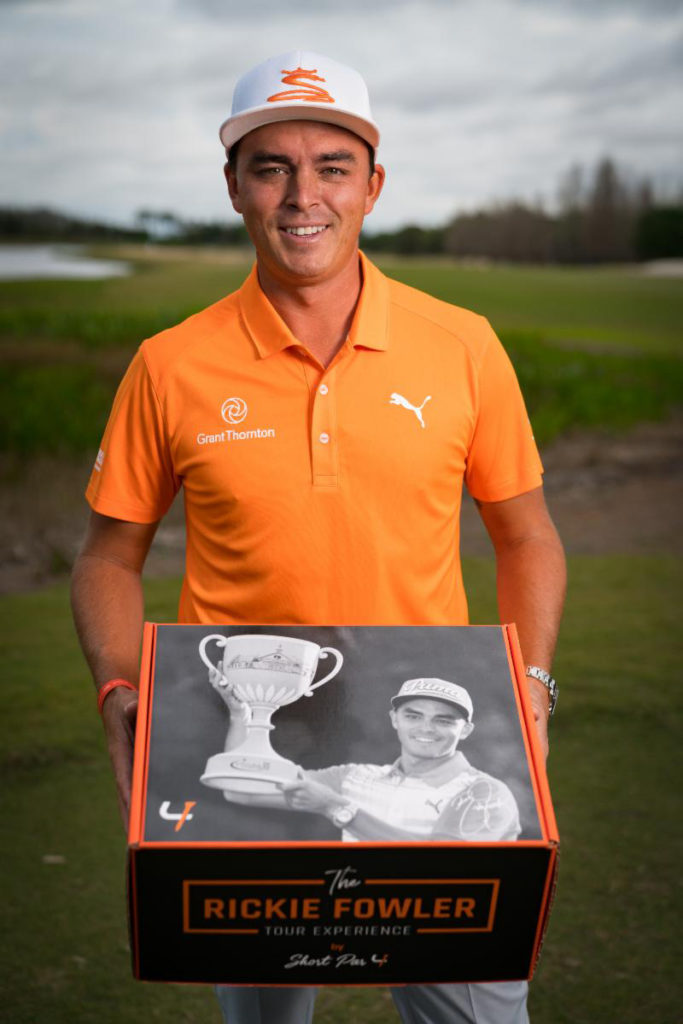
father’s day 2018 short par 4Short Par 4, a golf inspired box subscription service that ships hand curated, top quality, branded golf apparel, footwear and accessories directly to golfers, presents the Rickie Fowler Tour Experience collection compiled for July.


This irreplaceable collection set for July’s delivery features apparel and accessories directly from Rickie Fowler’s logoed Tour sponsors but hand selected and hand signed commemorative items like a golf flag, perfect for an office or man cave, emblazoned with Shinnecock Hills’ iconic logo and Rickie’s autograph are included.

A special message from Rickie to his members

“Rickie is fully engaged with his Short Par 4 members. He uses his own social channels to communicate with them. In fact, he launched the campaign before the company. This video is just a small window to his commitment. We are thrilled with involvement and his members will be thrilled with July’s delivery,” said Short Par 4 CEO, Bobby DiMeo.

The Rickie Fowler Tour Experience by Short Par 4 was developed for customers who are inspired by Rickie’s style and want to look and feel like him on and off the golf course. This very high value box will only be delivered to Rickie’s existing members and the first 500 members to sign up. To participate, visit the company website.

This membership includes his Tour outfits, accessories, and premium gear from his own sponsors like Puma. Tour shirts, hats and outwear from Puma with Rickie’s partner logos, as he wears on tour. This is a unique offering because this is not available anywhere else.

The Rickie Fowler Tour Experience ships every month directly to their member’s doorstep for $125 which includes free shipping.

“I have always stood out from the crowd a little in the way I dressed. I grew up riding and racing dirt bikes, and enjoying action sports. The styles and love of color in that culture clearly had an impact on me. As an adult my style has evolved, but still feel most comfortable living in my own lane. It is cool that there are people out there that show up at tournaments or just at their local course to play nine dressed like me. Now, these same people can buy the same Tour outfits I wear from Short Par 4. I am excited to introduce The Rickie Fowler Tour Experience to my fans and more,” said Rickie Fowler.

Short Par 4 is golf’s leading box subscription service with over 250,000 boxes delivered to their members in 2017. Their membership is growing at a record pace and with the newly developed website, new membership levels, the company and its brand is expected to grow expediently in 2018.

gogolf gps

gogolf gpsVerbal digital rangefinders have been around for a few years, but GoGolf GPS is the smallest such device yet, weighing next to nothing as you clip it to the brim of your hat, on a belt loop, wherever — yet it’s as versatile and powerful as anything else on the market.

Touch the small button and it’ll not only give you what’s left to the center of the green, but even tell you how far you busted that drive down the middle, or any club you just struck, a great feature if you’re charting distances in preparation for a tournament or just honing your club selection skills.

Over 30,000 courses are pre-loaded, and the GoGolf GPS is equipped with Bluetooth to connect with one of the most detailed and functional smartphone GPS apps we’ve seen, with first-rate satellite graphics and pinpoint distance readings to any point on the course. We’ve tested this diminutive yet powerful gadget on courses from Nevada to Mississippi and it has been spot-on with its “readings” every time.By themselves the device and app are strong products; together they are a game-enhancing duo and a great bargain to boot.

www.gogolfgps.com | Check the price on Amazon!

smartgolf putter

For the most part training aids fall into two broad categories: Those that require electricity and, sometimes, a screen; and those that don’t. The SmartGolf Putter has one foot in both. Sort of.

Manufactured by a Korean company and new to the U.S. market, The Smart Putter can be just that, a straightforward, face-balance, rules-conforming mallet-head flatstick. Then you charge it up via a mini-USB port on the head, push in the power button, and it becomes a full-featured feedback device outfitted with LEDs on its crown and a red laser on its face, which together offer accurate immediate analysis of every element of your stroke. It’s also outfitted with Bluetooth to work with available smart phone or tablet app that, after some early software quirks, is working smoothly. It offers real time feedback on the most important elements of the putting stroke via a colorful and amusing avatar who mimics and records your movements — face angle at impact, stroke path and stroke timing back and through. Now that the app has shed its memory hog and crash-prone issues, we expect it’ll just continue to improve.

Now for the putter: it’s solid in feel, weighting and performance, available in shiny red or black finish with a scored, brushed aluminum face, heel-mounted shaft and standard grip. We may even consider adding it the bag and giving it a stand-alone spin on the golf course, but it’s most effective as a training tool. The nine-axis sensors include accelerometer, gyroscope, and compass. At the center of the face is the laser, which helps to get it lined up with the very “back” of the ball, or with the target if there’s no ball present (if you’re working on alignment, for instance). Roll a putt and the laser dot will briefly follow the ball if you’re not opening the face or closing it too quickly at impact. A “cross” of LEDs on the top of the crown flash fully green if the club rests squarely on the ground and there’s no forward or backward shaft lean — in other words, the proper neutral position most golfers are looking for. It’s especially effective in helping perfect hand position over each putt: If the hands are too close to the body, the light at the top of the cross turns red; too far away and the light at the bottom turns red. Once the putter is in motion, the lights move with the head to show whether it’s staying on path. After just a few putts we were getting those lights to behave just the way we wanted them to, hitting our targets with good speed and direction.

$300 for the putter (app is free) | www.smartgolf.biz

0
0
Your Cart
Your cart is emptyReturn to Shop