October 17, 2026

Editors' Picks And Reviews

planemate woods-chuck

Two guys with serious cred in the golf training aid biz, Tour Striker Founder Martin Chuck and Driven Golf honcho David Woods, have really outdone themselves with the PlaneMate, which ingeniously and simply gives every golfer instant feedback on what a world-class golf swing feels like.

How? By assuring that the backswing goes up and back, not back and up, as in so many amateur moves; that the downswing relaxes and “flattens out” after transition, setting the golfer up for a repeatable, slightly in-to-out path through the ball; and that in the through-swing the hands keep moving around and up thanks to a proper pivot toward the target.

Ever the golf gadget tinkerer, Chuck — a PGA pro with three decades of teaching experience — based his initial design on a still-popular device called the Swing Jacket, but credits none other than a major champion named Darren Clarke for spurring him to take his prototype to the next level.

“Four years ago, I was using rubber tubing tied to a golf club to make students feel different things — resistor force or whatever — for a video I did for Revolution Golf,” Chuck told me recently. “I took the rubber tubing and tied it off on the center mass of the golf club, six to eight inches from the clubhead, and put the other end between my belt and pants. It gives enough resistance so you can feel it in your backswing — it keeps you from going across the line and forces you to lay it off a little, shows you how to rotate your right arm properly.

“Some people thought it was cool, some thought it was hokey. The Darren Clarke reached out, out of the blue. I had never met the man. Apparently he watches Revolution Golf videos, which shocked me. He instant messaged me through Twitter, said he saw the video. He said it was awesome — that he gets across the line, and it helped them. He’s a great guy, and we’ve been friends ever since.”

That’s when the Swing Jacket, and David Woods, came into play. Now the director of golf at Vintage Club in Palm Desert, he also saw Chuck’s video. “He said, ‘It’s cool — but in the through-swing, being connected to your belt doesn’t allow you to move around. What if we created a way for it to move around a bit?’

“I was in my office with all my prototypes that I mess with. I happened to look over at the Jim Hardy Swing Jacket, and oddly it had rails that hooked up to the arm sleeves. So I disassembled one of those rails, took it to a local shoemaker and had him put it on an old belt of mine, and figured out a way to rig up a keyring and start messing around with length and strength of tubing.

“I reached out to David, sent it to him and said, ‘Mess around with this and see what you think.’ His idea was the rail.”

Tour Striker planemate
The Tour Striker PlaneMate with the Pitch-Motion Green Resistance Band, Standard Full Swing Green Resistance Band and Pro Full Swing and Fitness Resistance Band.

So, how does it all work in the final product?

You just attach PlaneMate’s wide, adjustable, Velcro-equipped belt around the waist, attach the larger clip of one of three resistance bands to Woods’ slider mechanism (which allows the band to move from belt to about 45 degrees back), and attach the other end to a golf club — a wedge to start, then a mid-iron.

It’s an instant, unchanging connection from hands to club that might feel funny and restrictive at first, but once you check out Chuck and Woods’ excellent 7-Day Protocol Video Series, it all makes sense, and the magic starts happening via muscle memory. It’s all about maintain slight tension in the band throughout the swing, EXCEPT at that all-important transition from backswing to downswing.

All Chuck and Woods ask is that no one jumps ahead and takes the training step by careful step—first employing the shortest band for the wedge (Clarke even uses it for his driver, which has spurred a new, soon-to-come video), then moving to the longer band for longer clubs.

Bonus: It’s a surprising workout for hands, arms, lats and abs.

“The band work helps you get stretched out, gets the muscle aware to get the club up and behind you to create speed,” Chuck said. “You can resist what the PlaneMate is trying to do, or you can surrender to it. We call it ‘resist, resist, relax.’ It’s letting the hands be passive at that moment, let the club get behind you so your rotation inspires that inside-out motion, not physically trying to shove the club out to right field.”

Following the 7-day protocol, I tested PlaneMate over several days, and immediately found that it helped cure my pesky inside-jerk move at takeaway, even on the shortest pitches and chips. The feeling is, as Chuck said, strange at first, but by repeating each protocol motion a minimum of 30 times, the motion begins to take hold and golf balls take flight with much more impetus and authority — no breakdown of the arms or hands going back or at impact, to flipping ahead of the body in the through-swing. And more stability from address to follow-through.

Chuck explains the process in his semi-geeky way.

“Once you start to realize where the club goes, the body goes, ‘Oh, OK, if the club lays down shallow behind me in the downswing, my unwinding will be in an inclined circular relationship’ [with the club]. It can’t come over the top. You may miss left, because the club face is closed, but it’s not an over-the-top, a steep, stand-up/sit-in swing.

“Good players talk about ‘noodly’ arms, but it’s baloney. They’ve just become so proficient  that they can describe it that way. You look at Rory at set-up, and there’s some rippling in the arms. You look at good players at the top, and there’s nothing noodly about it. You need structure — it might feel mildly robotic at first.

“All we’re trying to do with the PlaneMate is put the correct structure in, let people train with it, so they can go from a highly conscious situation to an unconscious situation. You want to be able to look and fire, and have just one or two swing thoughts, not 50.

“It’s like playing a guitar or piano — you do the reps, and at some point the music just comes out of you, and you don’t know how. Or typing, or driving home. You don’t even know how you got there. Subconsciously, your brain knows what do to. Hopefully with this, in golf, you train yourself to be able to just wander off, talk to your buddies, but when you get over the golf ball, you kind of aim and fire and the results aren’t bad.”

That’s an understatement. The results are phenomenal. And game-changing.

$162.99 | www.tourstriker.com
royal albartross royal grey

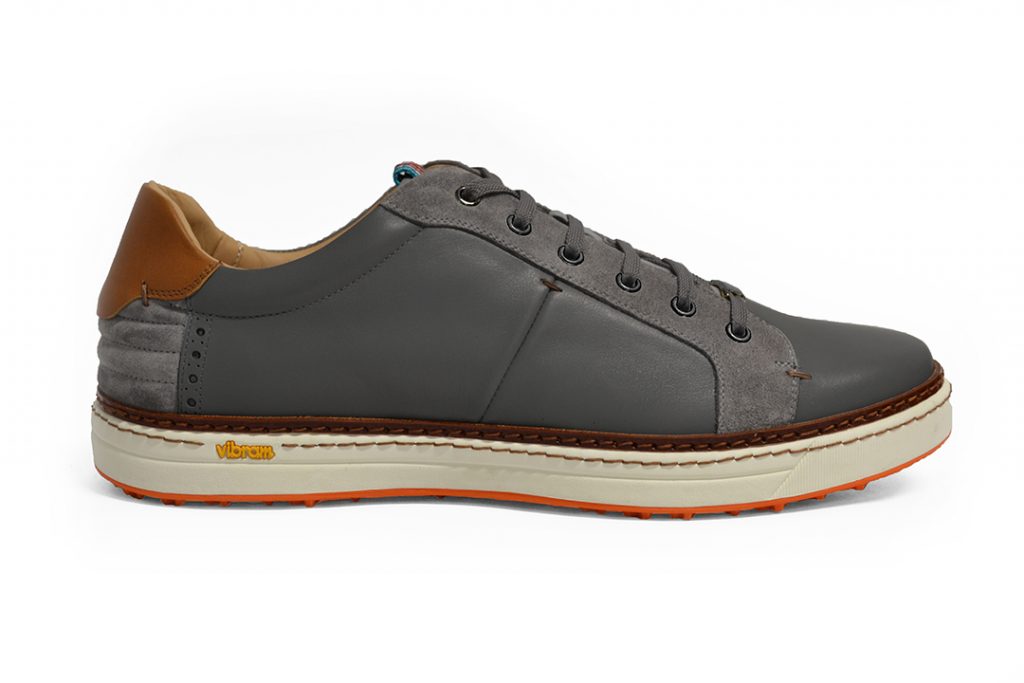
The big trend in golf shoes for several years now is what might be called translatable comfort. It’s footwear that’s built for golf but can be easily and legitimately worn anywhere. Designed and hand-made in Italy, Royal Albartross shoes take this concept to new heights.

Yes, they sport a big-grip Vibram sole and uppers that meld the best construction elements of old-school, spike-equipped shoes and the 21st-century, tech-loaded wonders seen on swingin’ feet around the world, from local munis to PGA Tour stops. But any of the men’s and women’s styles are worth wearing off the course, too.

In fact, after Golf Tips editors got hold of a sample pair of Royal Albartross’ leather Cutler Grey style, we’d say they demand being shown off no matter where you are.

They’re that beautiful, that well-made, that far into a league of their own.

Even the packaging, with a cool welcome note from U.K.-based company founder and chief designer Alex Bartholomew tucked in an envelope and greeting you as you open the box, is a cut above.

Then you pull out the actual shoes, spy their details — the spot-on stitching, the lovingly applied design touches — and allow yourself a “wow.” When you put them on, walk around at first (no break-in necessary) and finally let them carry you to the first tee in the no-shortcuts, Euro-quality style envisioned and maintained by Bartholomew and his crew,  you simply sigh with gratitude.

Once you get deep into a round, you understand why Royal Albartross’ extra attention to craftsman and detail translates to better golf.

The substantial, solid sole promotes a more secure foundation, a snug connection between feet and ground — the cornerstone of any repeatable and efficient swing. And it doesn’t come at the expense of comfort. We felt no pinch spots or loose-fitting areas from toe to heel: Only form-fitting, well-padded bliss.

This boutique shoe company continues to add new models and make inroads into an admittedly crowded field, but not one of those models doesn’t scream “special.”

In short: treat those feet like Royalty, Albartross style.

$199-$450 for Men, $199-$475 for Women | www.albartross.com

lamkin sonar tour

Lamkin has made believers out of Golf Tips testers over the past couple years, and its two latest offerings — the semi-tacky Sonar Tour for every club except the putter and the brand new Sink Fit putter line — only make the company’s grip on us even firmer. Not tight, mind you … firm, as in solid, but not too solid. Does that make sense?

Whatever. Let’s just say the materials and design technology infused in these all-important connectors between body and club are truly at the cutting edge of what, admittedly, can be a ho-hum product category.

lamkin sonar tour
The Lamkin Sonar Tour grip

The new Sonar Tour is a slightly firmer version of the existing Sonar line, designed, says the company, to “specifically to resist torsion in higher swing speeds.” So less twisting, and that’s good. But what matters to most of us is pure and familiar feel from club to club, which begets confidence, which allows a certain level of relaxation at address and through the swing. It’s just a smidgen less tacky than predecessors, but still “molds” to the hand quickly and comfortably.  The Sonar Wrap, meanwhile, is somewhat tackier with higher “traction” than its sibling, but in a wrap style. The Tour is currently only available in standard size while the Wrap is in both standard and Mid Size-plus.

lamkin sink fit grip
The Lamkin Sink Fit putter grip

Lamkin’s new Sink Fit putter grips feature a unique profile contour to promote proper wrist alignment and hand positioning for a more controlled, consistent putting stroke. Models include traditional Pistol, Skinny Pistol or a Straight shape, and all are made with Lamkin’s new Genesis material for a fine combination of feel and surface traction, applied in what they call a “Fingerprint” pattern of intricate, dense textures.

We tried the slightly oversized Straight model — flat top for easy thumb alignment down the shaft, a rounded underside to promote a light touch — and found it had just enough “give” to produce good feedback through the hands, help keep the wrists stable and afford a slight release through impact. Solidifying that hand-putter connection while keeping the pressure soft is one key to great putting on any green speed, and that fact was born out on surfaces ranging from slow (around 8 on the Stimp) to 11 or more. Flatter breaks to Donald Ross-level undulation: Didn’t change our ability to keep the hands soft and the feedback true. Hence, more rolls in the bottom of the cup.

The Straight and The Pistol are also available in an ultra-lightweight polyurethane material; all grips come in a variety of two-tone color schemes.

Sonar Tour $8.99/Sink Fit $19.99 | www.Lamkingrips.com

sun mountain clubglider

Like most serious golfers, Golf Tips editors love to get out there on the road — meaning, of course, airplanes as well — dragging our sticks with us every step of the way. Emphasis on dragging. But now that we’ve finally gotten our hands on the Sun Mountain ClubGlider (which has been around for a few years, but merits a fresh look), we can take that word out of our vocabularies.

This thing ain’t a drag. It’s a one-finger miracle, even when you’ve loaded it up to the razor edge of the 50-pound regular check-in fee maximum.

Instead of pulling that travel bag and precious contents through airport terminals and rental car parking garages, we’re guiding it around as though it’s almost weightless, thanks to ClubGlider’s unique, spring-loaded extendable legs fitted with 360-degree-pivoting caster wheels. This system serves to support all of the bag’s weight and erases the need to bend over and pick it up and get it moving. The slightest pull — even with one finger — puts it in motion again. Sayonara to all that back and shoulder stress. When it’s time to check the clubs, the legs fold back into the hard plastic base with a quick pull.

We put the original Meridian model through its paces on back-to-back trips to Washington state and Montana (home to Sun Mountain’s headquarters) and marveled at ClubGlider’s ease of movement, even in tight spaces including check-in lines. We also saw the bag in use by other traveling golfers — an instant endorsement.

Since the Meridian’s debut, Sun Mountain has added three models – the full-sized Pro, vinyl Tour Series, and slimmed-down Journey – offering protection for golfers ranging from weekend warriors to touring professionals. And, that protection is more robust than ever with the switch to ballistic-style nylon on the Meridian model.

All ClubGlider models include heavy-duty two-way zippers, thick foam padding extending down the travel bag to protect clubheads and shafts, storage pockets, internal cinch straps, reinforced wear areas, and a lift-assist handle. It’s the whole package for the peripatetic player.

$249-$349 | www.sunmountain.com

invisasox

invisasoxThere’s nothing new under the golf sock sun, right? Uh, no — there is, particularly for people who like the no-sock look but still want the comfort and protection of a good, strong and breathable barrier between foot and shoe. On that score, Invisasox are perfect for any golfer who prefers to go “naked” around the ankles, without really doing so.

Invisasox are indeed a leap forward in the no-show sock game. Based on Golf Tips on-course testing, they’re as comfortable to wear as any comparable sock we’ve worn, while well-made and functional. They’re made of a 65 percent breathable cotton and 35 percent spandex blend that comfortably hugs the foot, with absolutely no slip thanks to a unique mesh heel, even when you’re walking all 18 holes. And, of course, since they stay hidden just below the shoe’s opening, you’ll be assured of an even tan line after racking up all those summertime rounds.

Invisasox are available in five colors for men and women.

$13.95 per pair | www.invisasox.com

golf equipment favorites featured

Dozens of great golf products and product lines were introduced at the 2019 PGA Merchandise Show in Orlando last January. But in the weeks since, after extensive and serious consideration, the following seven earned Editor’s Golf Equipment Favorites honors as we head into prime golf season.

Why? Not necessarily due to deep one-on-one testing, but because they struck several chords: inspiration, innovation and application.

best golf irons for 2019

Irons are so good these days across the board that it’s tough to name what’s truly “best” in any given year, but these five seemed to get the most buzz at the PGA Merchandise show in January, and now that they’re hitting the retail market, it’s a great time to give them the nod for best golf irons for 2019.

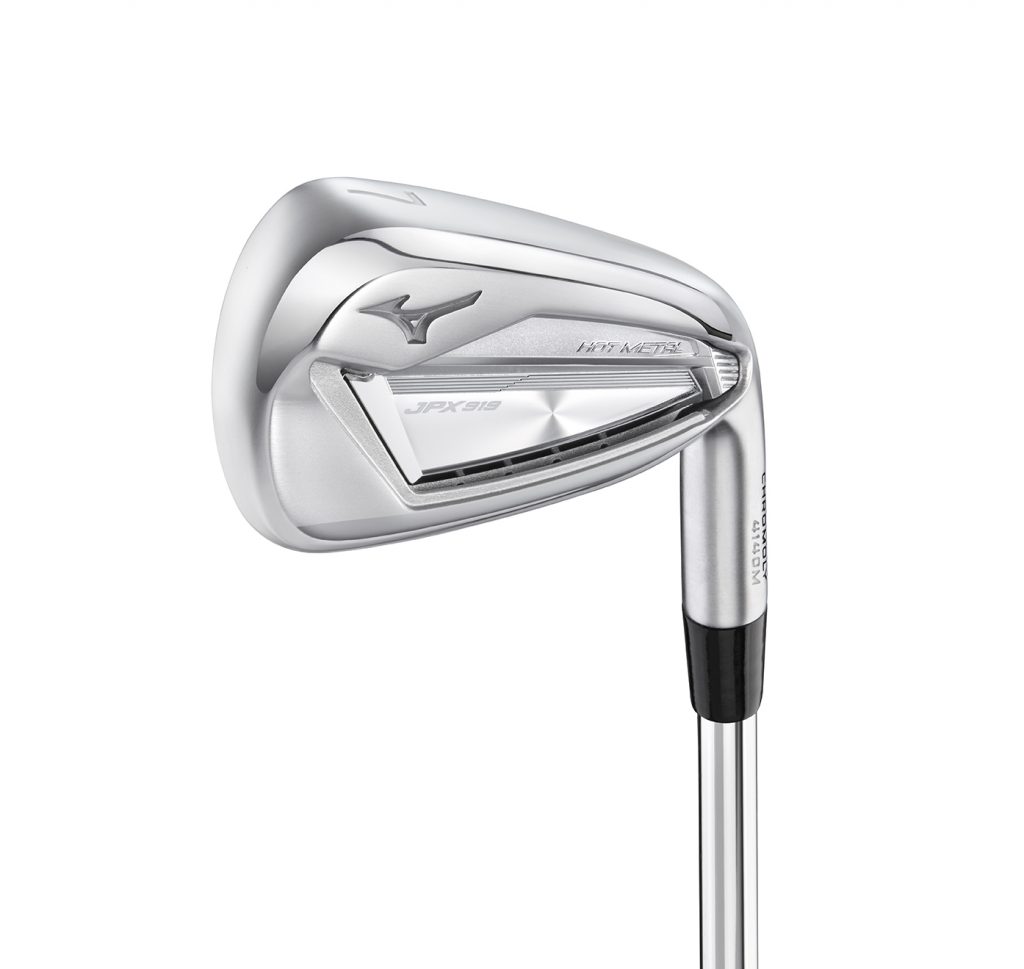
MIZUNO JPX919 HOT METAL PRO IRONS

best golf irons for 2019This popular iron line from one of the world’s most revered manufacturers of high performance clubs has now added a fourth model, joining the JPX919 Tour, Forged and original Hot Metal. The Hot Metal Pro designed for the better player with its smaller head and thinner top profile. The “hot” moniker refers to the club’s manufacturing process, which results in a malleable yet incredibly stro ng metal composition that allows for pinpoint tweaking of lie angle. Every JPX9 model has been engineered from different base materials to help enhance performance for particular swing types, and now, in tandem with the company’s new clubfitting system, it’s more “fittable” than ever.

www.mizuno.com | Check the price on Amazon!

2019 putters select fastback and squareback putters

Scotty Cameron has added two new mid-mallet models to his flagship line of Select putters – the Select Fastback 2 and Select Squareback 1.5 – developed through feedback from the game’s best players.

Available in golf shops worldwide beginning Feb. 15, the new Select models provide additional mid-mallet options for players seeking Scotty’s popular Fastback and Squareback head styles with specific neck configurations and performance characteristics.

Select Fastback 2

Following the introduction of the 2018 Select Fastback model on the worldwide professional golf tours, players immediately asked Scotty for one option – a plumbing neck. The familiar, confidence-inspiring setup, which provides one shaft of offset, has been incorporated into this rounded mid-mallet. In addition to the new neck, subtle refinements have been made to the topline for a slightly thinner look, as well as a reduction of face height.

Select Squareback 1.5

Scotty’s new Squareback 1.5 incorporates a new mini-slant neck that further squares off the overall shape and look at address for the player seeking clean, distinct visual cues. Additionally, the draft angle has been updated to accommodate the new neck, which also produces slightly more toe flow than its mid-bend counterpart, the Select Squareback. Similar to the Fastback 2, Scotty shaved some topline thickness for a thinner appearance from address, and reduced the overall face height.

Both models adopt the Select line’s tour-proven multi-material construction with a precision milled, MOI-enhancing 6061 aircraft aluminum face-sole component expertly designed into the 303 stainless steel putter head.

“Extending the Select line was all about taking the feedback we got from players and incorporating it into new offerings. Shortly after we introduced the 2018 Fastback and Squareback models on tour, players began asking for them with prototype necks. We are seeing more and more players gravitate to these nice, compact head shapes. They’re not blades and not exactly mallets. We call them mid-mallets. By creating the Fastback 2 with a plumbing neck, and the Squareback 1.5 with our mini-slant neck, we’re giving players everything they asked for and more.”

The Fastback 2 and Squareback 1.5 feature Select-line advanced stability weighting with two, customizable stainless steel heel-toe weights, stepless steel shafts and supple Black & Silver Matador Mid-size grips developed to offer the comfort of a larger grip while maintaining responsiveness and feel.

Every putter in the Select line features a raw stainless steel finish with a unique bead blast for a radiant yet glare resistant appearance. Smaller, double-milled “cherry dots” on the sole of the Fastback 2 and the heel and sole of the Squareback 1.5 – inspired by Scotty’s familiar three bright translucent red dot theme – with simplified, engraved typography represents this modern, refined line.

$399 | www.scottycameron.com

holiday gift guide 2017 memo
flightscope mevo setup
The FlightScope mevo app’s setup screen.

Never thought I’d utter these words, but here goes: It’s time to give your golf game over to the little silver dot. You heard that right: It’s time to embrace the tiny, reflective, circular sticker at the heart of the FlightScope mevo personal launch monitor, because when applied to a golf ball, placed on the ground or tee facing the target, several feet away from the little red and white gadget itself, and launched out onto the range or fairway with whatever club is in your hand, it works numerical mini-miracles, instantly, thanks to Doppler radar.

Though I’m nowhere near a Luddite — I love my (now three-year-old) iPhone and adore my new Series 4 AppleWatch — in terms of golf practice and learning I tend to lean on old-school feel and physical swing tinkering rather than subscribe to the tyranny of cold, hard numbers. So when a product like FlightScope mevo comes along with the promise of making every all-too-rare practice session more enlightening and efficient by showing me point blank what key numbers each swing produces, I’m sometimes daunted by the set-up process and wary of the results. After all, after 45-odd years of playing golf I know what I’m feeling inside, what tendencies I’m resigned to go with on any given day.

flightscope mevo driver
FlightScope mevo driver numbers

But mevo, like so much techno-wizardry these days, is a revelation, mostly for its ability to show variations in ball striking, swing speed, spin rate, smash factor and more in real time, with no questions asked and very few loopholes left for my doubts to dive through.

A global high-tech company and industry leader in the development and manufacturing of sports technology, FlightScope’s stated mission is to enhance every athlete’s performance through its various 3D Doppler-driven products — through a portable and affordable launch monitor in mevo’s case. Its bigger, more powerful and more expensive siblings are employed by teaching pros the world over, not only in the golf realm but in baseball, tennis, discus throwing — virtually any athletic pursuit that involves an object flying through space.

flightscope mevo 6-iron
FlightScope mevo 6-iron numbers

But golf is where FlightScope really shines. Mevo, which is an acronym for Measure, Evaluate, Visualize and Optimize, was introduced a few years ago but keeps getting better thanks to tweaks to the unit itself, firmware updates, and the iPhone or Android app that communicates with it via Bluetooth and turns all those silver dot-generated Doppler waves into numbers displayed instantly on screen. If you really want to get fancy, you can shoot video at the same time, then match each swing up with its unique data — the “Visualize” part of the equation, which leads to the “Optimize” kicker: Clipping the videos to their essence and storing them in your personal account on the FlightScope cloud, and even sharing them with your instructor or in game-improvement competition with friends. Bust a record drive or attain a clubhead speed previously thought impossible? Send the telltale figures to the company and they’ll proudly post them on their website and social media.

I didn’t go the video route during my testing session at a local range, finding mevo’s straightforward measurements more than enough to command my attention. Once I got my phone and mevo talking to each other and established my online account, I set up the machine for the right measurement conditions, including whether I was practicing indoors or out, how far I’d place the unit from the ball (it’s best from 5 to 8 feet), local elevation above sea level, my age, measurement mode (Imperial or Metric) and a few other details. Then it was time to start my first session, which defaults to the current day and time though you can name it anything you want — Hackfest Three, Masters Warmup Five or whatever.

flightscope mevo sand wedge
FlightScope mevo sand wedge numbers

There are two ways to tackle the application of those little silver dots — one at a time, as I did, or a sheet’s worth in advance; once you run out, you can order more online. You just need to make sure that with each swing, the dot is facing toward the target, which allows mevo to pick up its movements from impact until it lands (as far as I can tell, it won’t pick up “total” or roll-out distance). And one word of advice: If you live or are traveling to warm climates, don’t leave the dots in your golf bag — they have a tendency to melt together, making it tough to pry them apart and put them into service.

Once you’re ready to start recording swings, make sure the club you’re using matches the one selected on the app; I asked mevo to measure my moves with a 54-degree wedge, pitching wedge, 8-iron, 6-iron, 4-hybrid, 3-wood and driver, setting the app to give a “ready” sign with its Siri-like voice, then utter total carry distance with each swing. On the screen, clearly readable from several feet away, were the raw numbers — head speed, ball speed, smash factor, vertical launch angle, spin, height and flight time. I could have added flight time and highest point of ball flight as well, or displayed the numbers in different configurations.

Through the dozens of recorded swings, I could quickly equate what I felt with what the digits on the screen told me. Those rare flush, well-timed strikes translated into more distance, less spin and more efficient trajectory; and, as you’d expect, the familiar toe-jobs or fats or flips meant much weaker figures. The biggest takeaway, at least for me, was that after several swings with each club, I could dial in my average carry distance for all of them, which, of course, should lead to less club selection guesswork during actual round on the course. The distance shown on a cart’s GPS or through my rangefinder will actually benefit me now, if I don’t let ego get in the way.

Which brings up another mevo absolute: Numbers don’t lie. Nor can I lie to myself any longer: mevo demands that I practice more, and more intelligently — and trust what it, and those little silver dots, tell me.

The mevo retails for $499 and monthly payments as low as $44 are available through the company’s site as well. The  mevo mobile app, customer support,  firmware upgrades, USB charging cable and carry case are included.

www.flightscopemevo.com

smartline putting system

smartline putting system with holeGreen reading can be a frightful beast. A lot smartline putting systemof amateur golfers dispense with it altogether, just taking general aim in the neighborhood of the hole and hoping for the best. An ingeniously simple new product at the center of the confidently named SmartLine Putting System has the potential to turn that fright to delight.



With SmartLine, Southern California-based teaching pro Nick Kumpis designed a U-shaped ballmarker with a built-in alignment system in the form of several easy-to-see lines embossed into the marker’s top side. The red line in the middle is always aimed at the hole itself, while the two white lines on either side — set at 1-degree and 3-degree angles from the red line, with the space between them at 2 degrees — serve as alignment aids when the golfer bends down to line up his ball after discerning slope and general direction. By visually extending the ball’s built-in alignment mark (or one you’ve drawn on) to and through the appropriate SmartLine’s aiming stripe, the guessing game diminishes: You pick up the marker, put it in your pocket and stand over every putt with confidence that your eyes aren’t playing tricks on you.

The big questions: Why hasn’t someone come up with this palm-to-forehead-simple solution before, and what led Kumpis to finally do it?

“This got started in 2016, when our club underwent a major redesign of the golf course,” he explained in an e-mail. “The new course features expansive new greens with much more undulation. Many members struggled with reading the new greens, which affected their overall putting. I began to think of better ways to help my students with their putting, researching green reading methods from the best players and teachers in the world, and honed in on the two areas of difficulty: ability to judge amount of break and aim. To [help them] improve in these two areas, I created a green reading and ball marker system.”

Instructional videos are available at www.smartlineputting.com, with elaborations on how to account for different speeds, uphill and downhill putts and more. “There is a process to learning the system which takes some practice, but my students have really picked up on the bigger breaking putts, and have shown significant improvement on aiming.”

The SmartLine ball marker has been reviewed by the USGA and can used in regular and tournament play, which is a good thing, because we plan to use it from now on, including on the practice green. Putt for dough? Indeed. And how about for fun, too?

$19.99 for one, $29.99 for two-pack, $34.99 for three-pack. Each marker comes with its own protective carry pouch.

0
0
Your Cart
Your cart is emptyReturn to Shop