Stop fearing fairway bunkers with this simple shift in strategy.
One thing that attracts people to golf is that no two rounds will ever be the same. Whether you’re playing on the East Coast, in the Midwest or out in the desert, you will face different shots, situations and challenges. One thing’s for sure, though—you need to be fast on your feet and know how to deal with different situations when you don’t have your “A” game!
Playing golf in Arizona presents many challenges that aren’t often found in other regions. Because of the scarcity of water in the southwest, golf courses reduce the amount of grass and rough by replacing it with fairway bunkers and desert landscape around the greens, so it’s often called “target golf.” If you’re not able to keep your ball in play, you’re likely to find either one of these situations.
Practicing fairway bunker shots is often overlooked when it comes to divvying up your practice schedule. It really isn’t a shot, though, that you should fear. Think of it as hitting a shot from the fairway but from a different-looking surface. One of the most common mistakes I see golfers make is trying to get too much club out of the situation. You have to think less about the distance you need to hit it and more about what club you can use to get out of the bunker and clear of the lip. Getting greedy never works. Take what the situation is going to give you and move on to the next shot.
Fairway bunkers

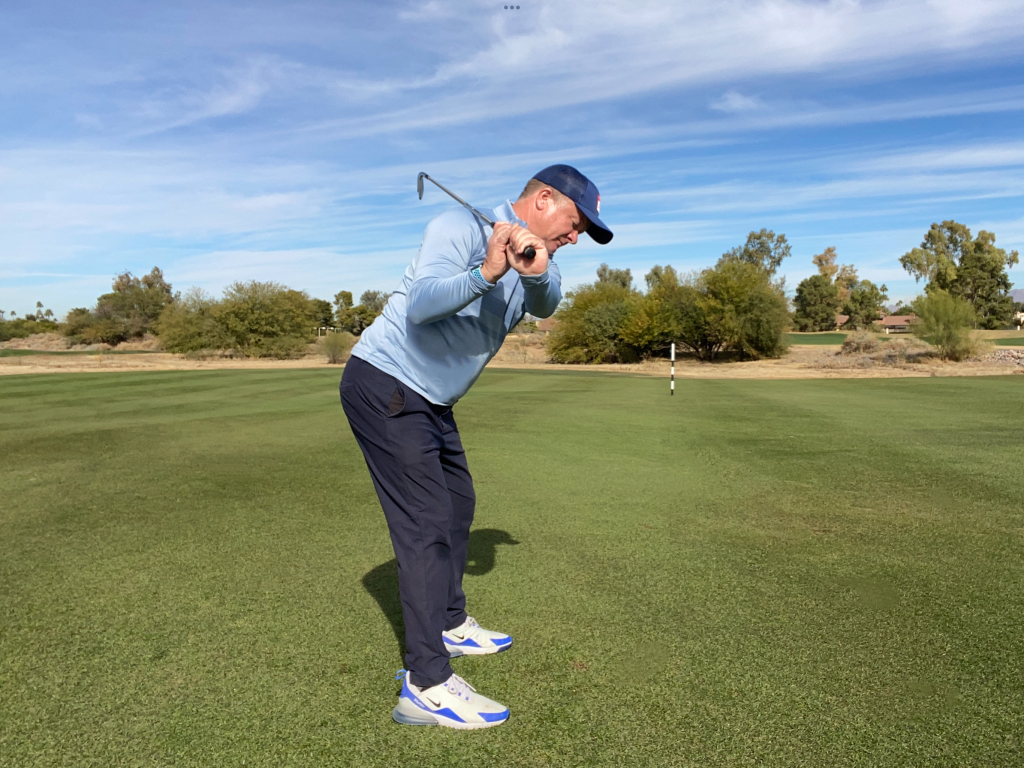
There are a few subtle changes you need to make in your setup when it comes to hitting from a fairway bunker. Tilt your upper body slightly toward the target so that the buttons on your shirt or your sternum are in front of the golf ball. You should feel that your weight is slightly favoring your front foot at address. These adjustments with your upper body will allow the club to travel on a steep downswing, making it less likely you will hit the sand behind the ball at impact.

Keep the ball position in the middle of your stance if you are hitting a short- to mid-iron out of the bunker. Grip down on the handle slightly, as your feet will be below the ball at address. Because of the adjustments in your setup, expect the trajectory of the shot to be slightly lower than normal. As a rule of thumb, take one more lofted club than you think you’ll need so that you have no issues clearing the lip of the bunker.

Your backswing is going to be slightly different than a regular shot. As you initiate your backswing, your weight must stay on your front foot. There should be absolutely no weight transfer toward your back foot as the club completes the backswing. Your swing thought should be to set your weight forward and make an arms and hands backswing with minimal body rotation. If your weight does pivot toward your back foot, it will be very difficult to pivot back toward your front foot on the downswing.

On your downswing, your body should lead the charge back to the ball. Your weight should shift toward your front foot, and your hips and chest should have rotated slightly past the ball before your arms and hands deliver the club back to the ball. Following this correct sequence will ensure you contact the ball before the sand.

As long as you don’t try and hit the ball hard, your swing should end balanced and finish. The majority of your weight should be on your front foot, with your shoulders stacked on top of your hips. Any hanging back with your upper body will cause the club to bottom out early and either blade or chunk the shot.
Desert greenside
Hitting from the desert poses a different challenge. If you are just off the fairway, and you have a clear shot to the green, play it like any other shot you would hit from that distance. If the situation is around the green, then you are more likely to tackle it like a greenside bunker shot. Evaluating the lie should be the first thing you do.
Take into consideration the firmness of the surface and how aggressive you can be with the shot. If the ground is firm like a wet bunker, you’re going to have to somehow break up the dirt with a punchy, steeper swing. If the surface is softer and broken up like a regular greenside bunker, you’re going to need to swing a little shallower and avoid driving the club into the ground.

Club selection is going to be critical when hitting out of the desert. You’re going to want to select a wedge that has little to no sole bounce. Typically, the lie will be tight and the ball will have nothing underneath it other than dirt. High-bounce clubs tend to bottom out too soon and bounce off the hardpan before the ball. Open the clubface slightly to avoid digging the club into the ground and play the ball forward in your stance. Opening the face tends to expose the heel of the club, so make sure you align the ball more toward the toe of the clubface. A good visual cue is to make sure the grooves on the clubface point to your front big toe.

To maximize loft and spin, make some practice swings and feel like you are fanning the face open. Focus on getting the right hand underneath the handle at the midpoint of your backswing, and make sure the clubface is pointing toward the sky. A good visual cue is to make sure the toe of the club points away from the ball and behind you at this point in the swing.

Set up to the ball with a slightly wider stance than normal. This will give you better stability and balance throughout the shot. Lean your weight toward the target to help you create a slightly steeper swing and avoid hitting the ground behind the ball.

Hinge your wrists early to create a slightly steeper backswing. Try to limit how much your body rotates away from the target. If your upper body turns like a full swing, you’re likely to sway off the golf ball and change where the bottom of the swing happens.

Impact should feel like you’re hitting a bunker shot. To maximize the sole’s bounce, release the club early on the downswing by making the arms and hands get to the ball before the body turns toward the target. By playing the ball more forward in your stance, you should aim to thump the dirt before the ball. This will cause an explosion, launching the ball into the air and landing softly while at the same time generating backspin.

Allowing the clubhead to release faster through impact, you should notice that the clubhead finishes above your head before you even have a chance to see where the ball has gone. Resist the feeling of trying to help the ball up in the air by hanging back on your back foot. The swing should come to an end with the majority of your weight still on your front foot.
Summary
Arizona’s “target golf” requires a strategic approach to navigate desert landscapes and fairway bunkers, replacing traditional rough with arid hazards. Successfully managing these courses involves prioritizing club selection to clear bunker lips and adapting swing techniques to firm or soft desert lies. Mastering target golf in arid conditions requires strategic course management, prioritizing higher-lofted clubs for bunker escape over raw distance. Success in desert environments hinges on anchoring the weight forward and utilizing low-bounce wedges to ensure clean ball-first contact from both sand and firm hardpan.
Keep checking back for even more great tips from our elite Top 25 Instructors.