PUTTING IT ALL TOGETHER
These steps do a lot to reducing the amount of speed we can create, but they also do a lot to aid in controlling the low point.
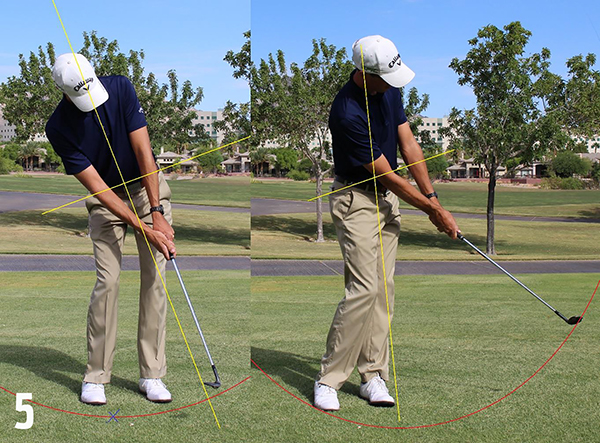
Lack of the latter is generally a large problem for most amateurs. Optimal low point control comes when the shoulders are fairly level through impact (right frame of Photo 5); this provides a “covered” look with the chest (chest point more toward the target than where the ball was).
Step numbers two and three do a great deal to facilitate this. Flaring or opening the lead foot helps the body maintain the level shoulder through impact.
One of the worst things that could happen dynamically though the execution of the shot would be if the hips tilt up — i.e., the lead hip is higher than the trail hip through impact. If this reverse tilt occurs, it will move the low point backwards (see the left frame of Photo 5). This happens because as the hips tilt up, the spine tilts backwards.
For this reason, step three — referencing sternum position — becomes very important. It prevents the same hip tilt that happened dynamically at setup.
Matt Henderson, PGA, is Director of Instruction at TPC Las Vegas. Reach him at matthenderson@pgatourtpc.com