September 16, 2026

golf tips

Use the “10-Yard Ladder” test to identify which clubs are killing your score and bridge the gap between your irons and woods.

The days of carrying a standard 3-through-PW iron set are officially over. In the modern game, “bag optimization” is about forgiveness at the top and precision at the bottom. As golf course technology and green speeds have increased, the demands on your equipment have shifted from simply hitting the ball far to hitting the ball to a specific “landing spot.”

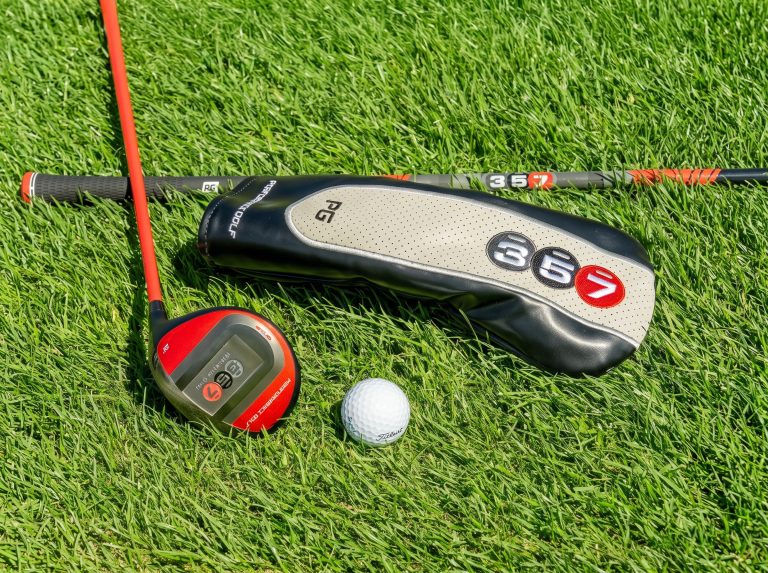
The most critical transition in your bag occurs between your shortest wood and your longest “comfortable” iron. For the vast majority of golfers, the long iron (3, 4, and often 5) is a liability. Because of their low launch angle and thin soles, these clubs require high swing speeds to keep the ball in the air. If you can’t carry your 4-iron at least 180 yards, a Hybrid or a High-Lofted Fairway Wood (7-wood or 9-wood) will objectively improve your scores. These clubs have a lower Center of Gravity (CG), which helps the ball stop on the green rather than skidding off the back.

At the bottom of the bag, the focus shifts to wedge gapping. Most modern sets have “stronger” lofts, meaning your Pitching Wedge might actually be a 9-iron in disguise. If there is a 6-to-8-degree gap between your Pitching Wedge and your Sand Wedge, you are forced to “guess” on those crucial 60-to-80-yard shots. A modern bag should ideally have 4-degree increments between wedges to ensure you never have to swing at 50% power to hit a specific number.

The Drill: The “10-Yard Ladder” Test

This drill identifies the “dead zones” in your bag—the places where your clubs are either redundant or leaving you stranded.

The Process: Go to a range with a launch monitor or clear yardage markers. Hit 5 balls with your 7-iron to establish your “baseline” carry distance.

The Climb: Move up to your 6-iron, then your 5-iron (or its hybrid equivalent).

The Analysis: Look for the “Compression Point.” If your 5-iron only goes 5 yards further than your 6-iron, you don’t have enough swing speed for that 5-iron. That club is a candidate for a High-Lofted Wood.

The Descent: Do the same with your wedges. If your Pitching Wedge goes 110 yards and your Gap Wedge goes 90, you have a 20-yard “hole.” You need to adjust the lofts or add a club to bridge that gap.

Why it works: It removes the ego from your bag. If two clubs go the same distance, one is taking up space that could be used for a more versatile tool—like a specialized “chipping” wedge or an extra hybrid.

Summary: Modern golf equipment strategy, or “bag optimization,” emphasizes replacing long irons with forgiving hybrids or woods to handle fast greens, alongside adopting precise 4-degree wedge gapping for improved scoring. The approach utilizes a “10-yard ladder” test to identify performance gaps and remove redundant clubs, ultimately prioritizing functional accuracy over traditional iron sets.

Ready to turn these insights into lower scores?

Elevate your game by joining our elite community of dedicated golfers. As a Golf Tips Magazine Premium Member, you’ll gain exclusive access to expert equipment deep-dives, professional swing analysis, and advanced course management strategies you won’t find anywhere else.

Stop guessing on the course and start playing with precision. Join us today at golftipsmag.com/register and take the first step toward the best golf of your life.

Trying to figure out what to do next on the golf course can seem like looking into the abyss.

Are you frustrated to the point that you just want to give up altogether? Then you’re not alone! Too many golfers despite working hard on their game share in your frustration.
Are you “Dazed and Confused” not knowing what to do?

To improve your on-course golf strategy, focus on mastering your short game, developing a consistent pre-shot routine, planning your shots strategically, and practicing with a purpose. Additionally, consider experimenting with your swing and setting specific goals for each round to boost your performance. I’ve put together some tips to help you re-focus your game to include developing a better on-course strategy.

Here’s a more detailed look at these tips: 

  • Master the Short Game: The short game (100 yards and in) is often where strokes are gained or lost. Focus on improving your chipping, pitching, and putting skills. Practice these shots regularly, focusing on consistent contact and distance control.
  • Pre-Shot Routine: Develop a consistent pre-shot routine to help you focus and execute shots effectively. This could include a few practice swings, visualizing the shot, and focusing on your target.
  • Strategic Shot Planning: Before each shot, assess the course layout, hazards, and wind conditions. Choose the club that best fits your shot selection and the desired trajectory. Consider where you want to miss the ball, aiming for the “best miss” if you have a tendency to hook or slice.
  • Practice with a Purpose: Don’t just hit balls aimlessly. Set specific goals for your practice sessions, such as improving your accuracy, distance control, or putting. Simulate on-course conditions during practice to prepare yourself for the game.
  • Experiment with Your Swing: Consider experimenting with different swing techniques and grips to find what works best for you. This could involve trying different tempos, ball positions, or club faces.
Starting to make sense? Here are a few “Bonus Tips” just in case!

Bonus Tips:

  • Know your numbers: Accurately measure the distance you hit each club to make better shot selection decisions. This is crucial! Not knowing your numbers, makes it difficult to plan the next shot with any kind of success.
  • Stay positive: Don’t let a bad shot ruin your round. Focus on the next shot and maintain a positive attitude. Having a good mindset keeps you in the right frame of mind when you need it most.
  • Don’t be a hero: Play a smart game and avoid taking unnecessary risks. Lay up when necessary and focus on getting on the green in regulation. too often golfers think they can go for it only to fall short. Be smart!
  • Respect the course: Study the course layout and hazards before you play, and be aware of your surroundings. Knowing where the trouble is, and how to respond accordingly will make the round go a lot smoother.
  • Visualize your shots: Mentally picture yourself hitting the shot you want to hit. This can help you focus and stay confident. This was a key strategy for one of the greatest players who ever lived. If it’s good enough for Jack Nicklaus. It’s good enough for you!

Summary:

Too often golfers spend a lot of time worrying about hitting the perfect golf shot, when really what they need to do is spend more time perfecting their on-course strategy. Developing good ball striking is definitely a bonus, it gives you confidence over each shot. However, if you are unable to capitalize on that good shot because you haven’t developed an equally good on-course strategy, then you are just wasting time. Ideally you want to learn to be good at both. Review the tips above and try to spend as much if not more time, working on your on-course strategy as you do your ball striking. I think you’ll find the strokes will begin to drop.


Hey, guys, it’s Aimee, your golf coach. Today, I’m going to share a tip that will change your driving forever.

Common Mistakes Off The Tee

Many amateur golfers make mistakes such as getting too quick, casting, early extending and using their arms instead of their body turn. These movements are interconnected, leading to shorter distances and slice or hook misses. Prioritizing your swing fixes is crucial. Imagine having a dozen things to work on; addressing the right one first can take care of many others.

What It Takes To Hit Great Drives

Great tempo: If your swing is rushed or inconsistent, you’ll start compensating with your arms, losing power and control. A smooth tempo helps you maintain control over the clubface at impact, enhancing both distance and accuracy.

Tempo

Creating a whip: The whip in your swing generates clubhead speed, resulting in longer drives. This comes from proper hinging, lag and release.

Whip

Maximizing power: Properly using your body means coiling and uncoiling effectively, utilizing a good weight shift. 

Maximizing Power

The Key To Great Driving: Setting The Club

Short and slice misses often stem from setting the club incorrectly, leading to a lofty backswing and improper coil. This disrupts the desired whip and causes compensations like casting. Casting reduces whip and control over the clubface, resulting in distance loss and accuracy issues. It also causes you to hit behind the ball, leading to early extension and misuse of your body, draining power from your swing.

Today’s Goal: Mastering Three Essentials

  1. Great tempo
  2. Creating a whip
  3. Maximizing power

To simplify these, let me “Aimeefy” it for you, making golf simple, fun and effective. Focus on one thing: setting the club at the top of your backswing.

How To Set The Club

Setting the club means finishing your wrist hinge in the backswing, like supporting a big serving tray. Many amateurs struggle with this. Properly setting the club enables you to create lag in the downswing. Once you experience the correct setting and lag, you’ll realize how much more efficient your swing can be.

Set Club

Using Training Aids

I recommend using training aids to help you feel the correct movements. These aids provide immediate feedback, ensuring quality practice and preventing the reinforcement of bad habits.

One such aid makes a click sound if you hinge correctly. Common faults include rotating the wrists too early in the takeaway, which disrupts proper body turn and sets the clubhead under the plane. Our goal is to take the club back on a straighter path without excessive wrist rotation at the beginning. You should hear the clicks between the halfway point and the top of the backswing. This indicates a proper hinge and body turn.

Clicks
Zero Clicks

Practicing With The Training Aid

Put the training aid on and listen for the clicks. Aim to hear the last clicks toward the end of your backswing. Start hitting balls at 50% speed, focusing on hearing the clicks and feeling the lag. As you get comfortable, gradually increase your speed to 100%. Initially, don’t worry about how you hit your shots; focus on hearing the clicks and feeling the lag. A long pause at the top of your backswing is a good sign.

With practice, you’ll set the club, create lag and compress the ball effectively. This will help you develop an amazing tempo, create a powerful whip and maximize your power, leading to longer and straighter drives.

If you want to try the training aid, visit http://www.pureswingproducts.com/golfwithaimee and use the code AIMEE for $20 off. 

Happy swinging!

Aimee Cho, LPGA & Top 25 Instructor


The Scenario

You hit a pretty good drive, but as you step off the yardage to the green, you discover that you’re 5 yards farther than you comfortably hit your 8-iron and 5 yards shorter than you would hit your 7-iron. So what do you do?

Here’s The Solution

Learning to take yards on or off the distance you hit each club is an important skill. If you don’t have it, then the only time you will get close is when you are at exact distances from the pin with each of your clubs. 

The odds of that happening are not very likely, so you need to be able to make adjustments in order to give yourself options. Below are clues to help you decide between hitting a hard shot with a shorter iron or a soft shot with a longer one.

Hit The Longer Club If…

  • The hole plays uphill. 
  • The wind is in your face. 
  • There’s trouble short.

Plus, make sure the distance you’re sitting at is to the pin, not the center of the green. If you only know the distance to the center, play the longer club if the pin is in the middle or back of the green.

Hit The Shorter Club If…

  • The hole plays downhill. 
  • The wind is at your back. 
  • There’s trouble long. 

If you only know the distance to the center, play the shorter club if the pin is in the front of the green.

To add or subtract 5 yards off that club, you need to incorporate the following techniques.

How To Add 5 Yards To An Iron

Step 1–Play the ball just back of center and lean the shaft forward. This will de-loft the clubface, turning your 7-iron into a 6½-iron.

Step 2–Make a full backswing. From the top, feel like you’re about to pinch the ball between the clubface and the grass, as opposed to picking it off the turf.

Step 3–Be sure to accelerate to a full finish.

How To Subtract 5 Yards From An Iron

Step 1–Play the ball forward, more toward your left heel, and set your hands directly above the ball.

Step 2–Make a ¾ backswing, so your hands reach about shoulder height.

Step 3–Swing to a ¾ finish on the follow-through but make sure to turn fully toward the target. Because you are not making a full turn, be sure to keep an even tempo in your swing. It’s easy to rush in the backswing or downswing on less-than-full shots. So think “smooth” when you execute the ¾ shot.

Another “key point” to remember: When hitting your longer club, choke down an inch or two on the handle when taking your grip. It shortens the club, making it easier to control. If you keep this in mind next time you’re faced with shots in between your normal distances, you will find that you will be able to handle the situation better. This is a great tip to practice next time you visit the practice range. Having the skill to execute these shots will give you a world of confidence on the course.


Subscribers,

I am thrilled to announce that on March 6th, 2020 iGolf Sports Network LLC fully acquired Golf Tips Magazine, a leading golf publication. As Founder and CEO of the iGolf Sports Network, I’m excited to add Golf Tips to my growing brand.

What does this mean for subscribers?

A renewed promise to provide subscribers, the highest quality of print and digital content, within the golf industry. Subscribers have long enjoyed the many instructional tips, and articles withing the pages of Golf Tips. I look forward to continuing that commitment and more.

What does this mean for Golf Tips?

Golf Tips Magazine will help to bridge the gap between my weekly Podcasts Golf Talk Live, Women of Golf Show, and my premium Livestream Broadcast & Media Production Company – iGolf Sports Network. In addition, I’m looking forward to working with the many seasoned golf professionals, and golf industry types. I want to take this opportunity to thank each and every one of you for instilling a wealth of knowledge into magazine, which helped to make Golf Tips Magazine a success for over 32 years.  Golf Tips head office will be based in Panama City Beach, Florida.

I look forward to many years as publisher of Golf Tips!

Sincerely,

Ted J. Odorico

Founder/CEO – iGolf Sports Network LLC

0
0
Your Cart
Your cart is emptyReturn to Shop