October 17, 2026

Putters

HB-NEW_Green_2-1024x683.jpg

Cleveland Golf has long been among the world’s leaders in wedge innovation, but now they’re making big strides (strokes?) in the putting realm, too. They’ve just introduced three new Huntington Beach Collection putter models: the 3, the 6C and the 10. They officially launch on April 14, 2017.

The Huntington Beach Collection is a line of milled putters with technology designed to deliver more consistent putting performance. Inspired by the beautiful setting of Cleveland Golf’s North America headquarters, these putters feature the classic designs that have been revered for generations with modern innovations that can help any golfer improve their scoring.

Golfers around the world have discovered the incredible performance and value of the Huntington Beach Collection. The 1, 4 and 6 models, which launched in September 2016, have garnered impressive accolades from many major golf media outlets. Golf Digest awarded a 2017 Hot List Gold Medal and 5 stars for “Performance”, right in line with a review from one particular Hot List tester: “Whatever they’re charging, they should charge more. It’s that good.” MyGolfSpy’s “Most Wanted” putter testing also showed very positive results, with the 4 model earning “Best Value” in the Blade Putter category.

The new Huntington Beach 3, 6C and 10 putter models feature tour-proven shapes and are made from soft 304 stainless steel, which promotes a softer feel at impact. The Precision Milled Face has a coarse, diamond-shaped pattern that is four times deeper than the previous generation, according to Cleveland Golf testing. The face promotes more friction at impact, which enhances feel and helps produce a more consistent roll.

The new putters are available in right-handed 33-inch, 34-inch and 35-inch length options with a Midsize Blue grip. Huntington Beach Collection putters are available at $99.99 each, and the oversized WinnPro X grip is available at a $10 upcharge.

www.clevelandgolf.com


PLD2_Ketsch_RealTreeCamo_Cavity
Ping Ketch Real Tree Came Cavity Putter

Putter design is an artistic genre in its own right, but once again Ping Golf goes its own gorgeous way with its new, limited edition Camo Ketsch models. Want to stand out on the green and show your patriotic side while taking advantage of Ping’s vaunted performance and engineering standards? Give these wands a look.

Merging an innovative graphic application process with high-performance heads precision-milled at Ping, the Camo Ketsch Realtree Xtra, and Camo Ketsch Muddy Girl are part of the lab’s efforts to advance new putter design, technology and engineering concepts.

“The first thing that grabs you is the incredible detail of the camo design that makes these putters distinctive in the marketplace,” said John A. Solheim, Ping Chairman & CEO. “We chose the award-winning Ketsch for this project because of its popularity with golfers and its unique geometry. Using a proprietary Permodize anodized sealing process, we apply the multi-colored camo graphic to the milled 6061 aluminum head. The graphic permeates the material with vibrant and rich detail while creating an extremely hard, durable shell. The results are two putters that look amazing, perform great, and showcase our commitment to manufacturing innovations.”

Contrasting sightlines make the Ketsch easy to aim, and 17-4 stainless steel sole weights yield a low center of gravity for faster forward roll and exceptional stability. The patented TR face technology ensures speed control across the face. Both the Realtree Xtra and Muddy Girl models are milled from 6061 aluminum at PING in Phoenix to ensure the precise engineering detail of the Ketsch design. The stainless steel sole plate undergoes a nitriding finishing process, commonly used in the aerospace industry, which diffuses nitrogen onto the surface of the metal to harden the surface. The stepless shaft has a brushed, non-glare finish that eliminates reflections and further distinguishes the look of both putters.

“The complex geometry of the Ketsch model really challenged us to execute the process to its fullest extent,” Solheim said. “We achieved unmatched image quality that would be impossible to replicate with other manufacturing methods. This type of technology has functional and decorative applications that we look forward to utilizing in the future.”

The PLD2 Camo Ketsch putters retail for $325 and are available for pre-order at Ping authorized golf shops or at www.ping.com.

Cameron Crown Putter Profile

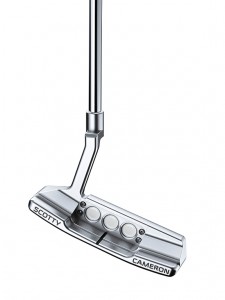
The new line of Cameron & Crown putters by Scotty Cameron offers four of Scotty’s most-trusted models precisely crafted at 33 inches and specifically weighted for players whose setup demands a shorter putter.

Cameron Crown Putter ProfileAvailable in U.S. golf shops beginning Sept. 23, Cameron & Crown putters deliver the craftsmanship, quality and tour-proven performance that have made Scotty Cameron putters the choice of many of the world’s best players for more than two decades:

  • Each Cameron & Crown putter is custom designed at 33 inches and matched with properly weighted heads and new smaller diameter white Matador grips. This configuration ensures correct swing weight, providing optimal feel and balance throughout the putting stroke.
  • From modern blade to high-MOI mallet, Cameron & Crown models are available in four of Scotty’s most popular head shapes — Select Newport 2, Select Newport M2 Mallet, GOLO 5 and Futura X5R — to satisfy the variety of strokes, styles and preferences of players at every level of the game.
  • Multi-material technology — utilizing 303 stainless steel and 6061 aircraft grade aluminum for face inlays, face-sole components and flange constructions — is performance-matched to each putter style to provide ideal forgiveness and feel.
  • A raw stainless steel finish with a unique Silver Mist treatment creates a radiant yet glare resistant appearance. New Cameron & Crown graphics blend Scotty’s familiar three milled dots with an elegant white, gold, silver and black color scheme.

“Each year, I’ve received increasingly more requests – from men, women and juniors – for 33-inch putters,” said Titleist Master Putter Maker Scotty Cameron. “We wanted to call special attention to the importance of weight and length and create a unique offering for those players whose setup dictates a 33-inch putter.”

“When we pioneered the adjustable sole weight system, it became possible to match the putter head weight relative to the length for a balanced stroke,” Cameron said. “Cameron & Crown models are purpose-built 33-inch designs, not manipulated 35-inch putters, with two 20-gram weights to ensure the swing weight and feel of these putters are consistent with their longer counterparts. We then developed a smaller Matador grip to match that performance and feel. These are crucial details when it comes to making a confident stroke.”

MODEL OVERVIEW:

Cameron & Crown Newport 2: Legendary low-slung modern heel-and-toe weighted blade with a plumbing neck, longer angular lines, 303 stainless steel head and face inlay with a flange sight line. The iconic putter model for countless professional tour wins. (Available in both RH and LH configurations.)

Cameron & Crown Newport M2 Mallet: Rectangular, boxy 303 stainless steel mid-mallet head with 6061 aircraft aluminum face-sole technology, flowing single-bend shaft, and pop-through flange alignment system.

Cameron & Crown GOLO 5: Angled back 303 stainless steel multi-material mallet with a crisp single bend shaft, pop-through 6061 aircraft aluminum sole plate with horizontal and vertical alignment aids.

Cameron & Crown Futura X5R: Modern, rounded 303 stainless steel wingback multi-material mallet with high MOI for stability and forgiveness, and enhanced aluminum sole-flange for alignment.

$379 | www.scottycameron.com


Taking the Cure: There’s always room in the bag for another putter, but sometimes you pick up a new model, take a few practice strokes then get down to business on the nearest green, and it’s love at first sink. That’s what happened to the GolfTips review crew when they gave Florida-based Cure Putters’ CX2 Classic Series wand a spin (there’s a CX1 model, too, with a square trailing edge; the CX2’s is rounded). New for 2016 and a companion piece to the company’s RX1 and 2, which have a more unusual “pontoon” design, this is really a traditional perimeter-weighted blade-style putter on steroids – as in a 5-inch-long, 1 __-inch-deep face. That’s a good half-inch longer and quarter-inch deeper than most modern blades, which, according to Cure founder and retired architect Steve Davis, allows a much larger sweet spot and a truer roll no matter where ball meets face. That, combined with an extremely high moment of inertia (MOI) which prevents twisting at impact, leads to a very stable feel and incredible forgiveness for much greater accuracy and distance control, even on extreme mishits.

Adjustable Weights: Through a series of strokes from distances ranging from five to 25 feet, the CX2 produced a pleasant, soft-but-solid feel and an ever-so-slight “tap” sound. Its deep face and low loft rendered it nearly impossible to hit anything but the equator of the ball, which, in turn produced one true, end-over-end roll after another. We also toyed with its adjustable weighting system – six small removable screws, three on each side of the rear cavity – which allows a far greater range of weight, from 334 grams to 376 grams, than any other putter on the market. Cure ships each stick with every screw installed, and you adjust by removing from the “inside-out” to maintain heel-toe balance and the proper MOI. If you sport a shorter stroke, you’ll probably prefer it on the lighter side; longer strokes will go the heavy route, though that’s a relative term; the putter’s all-aluminum body is strong and sturdy, but light, and its precision-milled face is as “soft” as they come, with no insert to deal with.

Then there’s the CX2’s proprietary “Triangulation Alignment,” invented by none other than former PGA Tour player and head honcho Deane Beman – who loved Davis’s prototypes so much he invested in Cure – helps you line up your putt like an arrow for deadly accuracy.

Summary: We’ll leave the final word to the company’s literature, which, after our testing, nails it: “Innovative design takes several problematic variables out of the equation and offers incredible forgiveness and control, resulting in a tighter shot dispersion. Golfers of every skill level will putt more consistently, build confidence and achieve better results with a Cure RX Series putter.”

$299.95 | www.cureputters.com

1 What’s the most overlooked aspect when it comes to putter fitting?

I think the aspect that gets most overlooked in putter fitting is that the fitter isn’t there to impose their belief system to the client. It’s the fitter’s responsibility to have the skills so that they’re able to look at a fitting from the client’s perspective and truly custom-fit a putter to what they want and need.

2 Wedge fitting is becoming more popular. Why do you think getting wedge-fit was so overlooked for so long?

I think it comes down to where the industry gets focused on trends. Many of the game’s categories have been exhausted, so the wedge and putter are the last things. I think bounce is very misunderstood, and courses are so closely mown that having the wrong bounce is making people bad wedge players. It’s about finding the right grind for your motion and course turf conditions.

3 How do you feel about counterbalancing? Do you think some long-putter adopters will move toward counterbalanced putters to abide by 2016’s rule change on anchored putting styles?

I’ve had counterbalancing in our fitting model for 14 years. I think it’s one of the most powerful tools in the fitting process. Heads have been getting too heavy, in my opinion. And, yes, I think counterbalancing will be a big part of the fix to the long putter, as it always has been.

4 How do you decide on how a putter should feel? Are golfers these days preferring softer or firmer putters? Does it even matter?

To me, feel is when we intend to do something and the result is what we intended. When this doesn’t happen, we look at things that seem off, such as vibration or sound. I don’t focus so much on softer, firmer-feeling at impact–those types of things don’t matter. What matters is making a putter that feels good in my client’s hands, mind and eyes.

5 What do you think separates you from the rest?

I think the big difference is that from the beginning I’ve always wanted to make clubs so people play better, not to sell clubs. I’m a PGA professional, and I got into the business to make a difference to the game. This philosophy is the cornerstone of Edel Golf. A majority of the industry goes for the low-hanging fruit. I’ve been very happy doing what’s most difficult in this business–taking responsibility for the clubs I make for people and developing a process for them to find the right ones. I’m not the only one doing this; there are others with the same intentions. I know if you do things for the right reasons, the other good stuff comes with it.

1 Why did you choose squares on the Smart Square putter?

Our goal with the Smart Square putter was to improve on putter alignment. We looked at some of the most successful putter models of the past and set out to improve the alignment feature that some models had. We tested numerous alignment concepts and realized that designing an alignment feature that showed the intended line of the putt in conjunction with a feature that showed when the face is open or closed was the key. These intersecting lines formed the square feature of the Smart Square.

2 How much does length matter when it comes to putting alignment?

Length is very important. Your posture and height really dictate the best length for you. If you have an upright posture, then generally you’ll need a length and lie angle that allows you to keep your eyes as close to the intended target line as possible. If you don’t have your eyes over the intended line of the putt, visual misperceptions can occur.

3 The Smart Square not only looks great, it feels great, too. Why the face insert?

The face insert is designed to feel soft using a copolymer, which allows us to dial in the most responsive feel without losing the feedback generated when the ball is struck. The material is a low-density material, which allows us to take weight directly out of the face of the putter and move that weight to the perimeter of the putterhead. This, in turn, gives us an increase in MOI that stops the putter from twisting on off-center hits.

4 Do you think we’ll ever see alignment aids more prominent in other clubs? Woods and drivers maybe?

Alignment is key in all equipment, although not as prominent as you’ve seen in putting. Most woods these days have subtle alignment aids, from marking on the crown to score line patterns that help you address the ball in the middle of the face. As we push the boundaries in club design, I definitely think you’ll see alignment become more prominent.

5 Might we see a Smart Square in more colors down the road?

We’re continually working on new concepts, and colors are always in our thoughts. Certain colors, or lack thereof, force focus, so designing using color is key to make sure the eye is focused on the visual alignment aspects of the putter.

In 1924, a professional golfer named Leo Diegel started putting in the most unusual way. He bent over at an almost 90__ angle, stuck the butt end of his putter in his belly and bowed his elbows out so he looked like a butterfly. His friends called his unorthodox method "Diegling." It may have looked strange, but Diegling worked. Four years after he first tried it out, Diegel won the PGA Championship at Five Farms Country Club in Baltimore. The next year, he defended his title at L.A.’s Hillcrest Country Club.

Despite his induction into the World Golf Hall of Fame in 2003, few golf fans know that Diegel is credited as the first man to anchor a putter to his body. Even fewer are familiar with Dr. Richard Parmley, the man who invented the long putter. In 1961, the San Diego resident filed a patent request for his "Body-Pivot Golf Putter." Designed to "significantly reduce the difficulty of putting," the putter received a patent in 1965. The next year, Phil Rodgers used it twice to win.

Over the next 34 years, a number of well-known pros anchored belly or long putters to their chest, sternum or stomach, a method that often revived their dormant careers. Charlie Owens won twice with his "Slim Jim," Johnny Miller captured the 1987 Pebble Beach National Pro-Am with a long putter, and Paul Azinger and Rocco Mediate both notched victories with a long putter. Despite P.J. Boatwright (then USGA executive director of rules and competitions) saying in 1989, "There are some who just don’t think it is golf," the game’s governing bodies looked the other way when it came to the way people used these strange blades.

Swinging [the club] freely is ultimately what golf’s about… There were just too many golfers going to this stroke that we don’t believe should be part of the game.
–Mike Davis, Executive Director of the USGA

Then Keegan Bradley won the 2011 PGA Championship, and everything changed. The likeable, young rookie captivated a global audience by birdieing two of the last four holes. The putting style and putters took off. Annual sales, which had languished for years, suddenly boomed. Odyssey, who makes the White Hot XG Sabertooth Bradley put into play, saw long putter sales increase from 8,000 in 2010 to 32,000 in 2011. Adam Sheldon, Brand Manager of Cleveland Golf, said his company has had a 16-fold increase in belly and long putter sales over the past couple of years.

Of course, the most visible evidence of their popularity was seen on Tour. Pros from Ernie Els to Phil Mickelson put a belly putter in play. Suddenly, it seemed like everybody was going long–and winning. In 2011 and 2012, belly and long putters were in the bags of 15 PGA Tour winners. Two out of the last four Major champions have used a belly or long putter en route to victory. Perhaps the most memorable showcase was last year’s Open Championship when Els’ belly putter edged Adam Scott’s broomstick. In that tournament, a remarkable 27% of the field used either a belly or long putter.

As recently as April 2011, USGA Executive Director Mike Davis didn’t think anchoring long and belly putters was a big trend. "It’s not as if all the junior golfers out there are doing this," he told Golf Channel. "We don’t see this as something that’s really detrimental to the game."

But by last November, the trend had become so popular among professionals and amateurs–and so unpopular among purists like Arnold Palmer, Tom Watson and Tiger Woods–that the game’s governing bodies finally took action. On November 28, 2012, they announced a proposed ban on anchoring the putter. The ban, which is all but guaranteed to pass this spring, would go into effect in January 2016 and prohibit the golfer from "hold[ing] the club or a gripping hand in contact with any part of his body." Golfers can still "hold the club or a gripping hand against a hand or forearm," however, _Ê la Matt Kuchar.


Although the ban doesn’t impact any conforming equipment, manufacturers have already noticed a downturn in belly and long putter sales. "We would rather have seen this rule be dealt with when long and belly putters first showed up on the Tours around the world," says Cleveland Golf’s Sheldon. But, of course, that would have been years ago. Years. Before anyone had invented metalwoods, Surlyn-covered golf balls and hybrids.

So, a number of obvious questions remain. Like, why now? To hear Mike Davis tell it on ESPN in November, "Swinging [the club] freely is ultimately what golf’s about… There were just too many golfers going to this stroke that we don’t believe should be part of the game."

The other question being, is anchoring the putter cheating (or, at least, not part of the game)? PGA Tour pro Robert Garrigus doesn’t think it’s cheating. "[Anchoring is] never an advantage," he recently told ESPN. Adam Scott concurred in an email to Fox Sports. "There is no proof that putting with an anchored-style putter is easier, better or stops nerves. It is a different method that some people find more comfortable and others don’t. There are no facts to say that you WILL make more putts putting with an anchored putter."

Still, Golf Tips Senior Instruction Editors Jeff Ritter and Rick Sessinghaus have both seen big improvements in students who anchor. "Having the putter anchored to the body minimizes certain faults from occurring," says Sessinghaus. "Setups tend to be better, and the golfer is consistently over the ball the same way every time because the putter is anchored in the same place." Adds Ritter, "Anchoring makes producing a pendulum-style motion easier for most players." Still, both men stress that it’s not a stroke for everyone. "The first time someone tries a belly putter, it feels cumbersome and difficult to use on longer putts," says Ritter.

As for manufacturers, they have grudgingly accepted the proposed ban. Now they’re tasked with marketing putters that are easy to swing, good for your back and help steady your nerves. Sheldon recommends Cleveland’s 39-inch Almost Belly model. "It has a heavier head, which increases the MOI of the putter, and this helps with limiting the amount of rotation on off-center hits."

Anchoring makes producing a pendulum-style motion easier for most players.
–Jeff Ritter

And if you’ve been anchoring your putter and worry that returning to a regular stroke will bring back the yips, both Ritter and Sessinghaus have some advice.

"I would first try a method like Matt Kuchar," says Sessinghaus. "He places the grip along his left forearm and makes a one-piece motion, always keeping the putter’s grip in contact with his forearm." As the yips can be both physical and psychological, Ritter suggests developing a different motor program: "This means being willing to continually change gripping styles, putters and practice routines. Changing frequently breaks the repetitive motor pattern, giving people with the yips a chance to find their way again."

The other option for noncompeting golfers is simply to ignore the ban. After all, as everyone knows, weekend warriors don’t always play by the rules. Who knows? With this new proposal, some high-powered equipment manufacturers have stated that they’d like to see a bifurcation of the rules. These days, it seems like anything can happen, whether it makes sense or not.

You can learn more about the proposed rule change by visiting the USGA website at usga.org.

It’s pretty cool to be a putter these days. Anything goes when it comes to style, shape and function. Sure, drivers and woods have benefitted most from adjustability/interchangeability lately. But putter customization has picked up a lot of steam this year with new and popular models that promise different methods to help you perfect your stroke.

ODYSSEY FLIP FACE

Model Tested: Flip Face #5 ($320)
Rounded mallet with a single-bend shaft (no hosel) and full-shaft offset

First Impressions: The new Flip Face putters (there are currently three models) look fantastic. The #5 is a smallish mallet design, with the most striking feature (other than the adjustable face–more on that in a moment) being the rectangular cutout behind the face. We assume this does more than allow the face to flip–it pushes the CG back, lending a nice balance and feel to the putterhead. The Flip Face tech enables golfers to literally flip the putterface from the soft White Ice insert to the firmer Metal-X insert. This essentially turns one putter into two. This is done by using a simple wrench tool (which doubles as a divot tool, by the way) and loosening a screw located underneath the toe. The process is an easy one, but here’s my only gripe. The screw comes all the way out, and it’s black. I dropped it in the grass by the green–not fun. Had it been painted white–it might have been easier to find. Anyway, a small detail.

The top end of the putter has a Lamkin 3GEN grip that feels awesome. It also makes it easier to detect the difference in how the two sides of the putterface feel.

Performance: The first insert I tried was the Metal-X, which is an aluminum insert with oval-shaped dimples that grip the ball and impart a better launch on the golf ball. Upon trial, the insert felt impressively firm, but not so firm that it’s uncomfortable. This is probably due to a urethane layer behind the aluminum insert. As it so happened, I tested this putter on some slower greens, so the Metal-X actually helped with my distance control. I felt as though I didn’t need to muscle the ball toward the hole, helping to smoothen out my stroke. I for one have favored firm putterfaces for this very reason, and the Metal-X was right up my alley.

With a quick flip of the face, I was onto the White Ice insert–the same one in the popular White Ice series putters. First of all, what a difference! I was skeptical as to whether or not there would be much of a discernable difference in how the two inserts felt, but my skepticism quickly vanished. It really is like having two putters in one. The White Ice insert was softer, produced less putt distance and seemed like a great fit for putting on faster greens. If you’re like me and you’ve had doubts as to how different the inserts feel–trust me, it’s night and day.

Summary: Being able to adjust the feel and performance of a putter without affecting its overall look and balance is a genius move by Odyssey. The putter does what it says: It offers two unique feels from one putter. The mechanism is pretty slick too (don’t drop the screw!), and I appreciate not having to store inserts away from the putterhead–you simply flip the face over. At $320, it may seem on the expensive side–but know that you really are getting two putters for the price of one here. And if that’s what you want, you can’t go wrong with the Flip Face.


PING NOME

Model Tested: Nome 405 ($299)
Adjustable-length belly putter (Slight Arc shaft configuration)

First Impressions: If we were to hand out an award for the most beautiful mallet we’ve seen this year, the Nome is a serious contender. Its luxurious finish; unique, 3D "Optigraphic" alignment aid; and overall shaping represent PING’s famous dedication to craftsmanship and quality control. The nano-nickel finish you see in the photo? That’s not Photoshop. It really does look silky smooth like that.

The Nome is not PING’s most radical design, but it’s easily our favorite when it comes to mallets. It just looks so simple and makes aligning your putts a cinch. The Nome 405 comes in three shaft bends to accommodate three types of strokes: Straight, Slight Arc and Strong Arc (I tried the Slight Arc). After ogling at the aesthetics for a bit, I couldn’t help divert my eyes to the mechanism located just below the grip. This is where the magic happens. The Nome 405 (405g) has an adjustable shaft, meaning the grip end can slide up and down based on player preference. It telescopically slides up to nine inches, effectively turning the Nome into a long belly or a long regular-length putter. And how it works is even more interesting. Using a screw-like tool, you seemingly tighten the mechanism to loosen the shaft. We have no idea how that works, but leave it to the gearheads at PING to create something innovative. The Winn grip felt great too, complementing the feel of the putterhead perfectly.

Performance: Obviously, the performance begins with finding the right length. PING has a fitting guide (and an instructional video on how to make adjustments, starring our very own Jeff Ritter) on their website. It’s really not a very complicated process–it’s quite easy. Perhaps the only tricky aspect is making sure the grip is on straight–but again, it’s not that hard to do. And by the way, length is generally the most overlooked aspect of putter fitting. With the Nome, there’s no way to overlook it.

For me, I tried the Nome at various lengths, and found my sweet spot at a length that was around 41 inches long. That’s about six inches longer than most standard putters. It felt as though putts were rolling best and my stroke (which is a slight arc by the way) was optimized at this length. Having the ability to adjust the length was crucial and made me realize I’ve been using a putter that wasn’t the right length for my natural putting tendencies. And while I tried a Slight Arc configuration, I felt as though changing the length also changed my stroke a bit–for the better.

As for actual putts, the Nome’s firm face generated what I thought to be a very true and immediate roll. The tungsten weighting is perfectly balanced–and combined with the sightline alignment aid, the Nome made putting a lot more fun. It was also cool to try some new putting styles, as it was a cinch to make adjustments to the length.

Summary: The Nome is truly innovative. And even without the adjustable shaft (there is one, called the Nome 355–see Hunter Mahan for endorsements on this one), it’s an all-around awesome performer. The internal weighting and the alignment aid round out one of PING’s most sophisticated looks yet. No doubt Karsten Solheim is smiling down on this one.

In case you haven’t noticed, the premium putter market is red hot. Despite a sluggish golf economy, it seems golfers are willing to spend a little extra dough to get the balance, looks and, ultimately, feel that comes with a premium putter. And with that, it seems the newly retooled and revamped Never Compromise putter brand is at its most apropos market position. Among its latest offerings are the high-end Gambler Series putters, each precisely forged of stainless steel, which, according to Never Compromise, is what’s behind the soft, buttery feel that comes with each of the four models available. Also available is the new “My Custom Putter” offering, which is as you’d expect–a chance to customize your Gambler Series putter with custom paint and various options.

We can’t help but gush over these new flatsticks, having tested and tried them ourselves. The forged feel is uniquely soft, yet not dull, and the aesthetics of every putter in the series is top-tier in our books. Here’s a look at some custom putter designs, and to learn how you can make one, visit mycustomputter.com.

How did PLOP start?

I founded the company in 1990 and named it PLOP, an acronym for “Physical Laws Of Putting.” PLOP originated with the design of its innovative, perfectly balanced, center-shafted, brass blade putter. It was used by many players, including Arnold Palmer, Seve Ballesteros and Lorena Ochoa.

What’s your company’s mission?

The company has two missions. The first is to custom-fit every golfer. Every Tour pro’s putter is custom-fitted to his or her individual stance. Most amateurs don’t have a Tour-like swing, but many do have a putting stroke as good as a Tour professional’s. And it’s our mission to fit you and custom-make your PLOP putter just like we do for Tour pros.

Our second mission is to design and produce custom-fit putters that are works of art, possess superior physics and are the best performing in the world.

What are the advantages and disadvantages of being a boutique company?

While the quality and design of a putter’s shaft, grip and head are crucial to performance, without the proper fit, the golfer is missing an intrinsic component. PLOP’s new patented computerized measuring device, the “PFIT” device, precisely measures each golfer’s personal putting stance, assuring the proper lie angle and length, which places the golfer’s eyes over the ball and intended putting line. By providing the standard for fitting, our device eliminates the guesswork of getting the correct size for every golfer’s individual putting stance. The result is straighter, repeatable putts.

Consumers also are more selective when purchasing their golf equipment, especially with the higher prices of putters. PLOP sells its custom-fit putters for the same price as or less than an off-the-shelf putter, no matter which manufacturer. This is a distinct advantage to both PLOP and every golfer.

You mill your putterheads differently than other companies. Why?

I only believe in designing center-shafted putters. It’s the only club that the USGA allows to be center-shafted, and that’s a big advantage for the golfer.

The new RSVP 2 putterhead body looks like the PING Anser 2 heel-shafted putter where the hosel is attached to the heel and made out of a singular block of metal. However, the RSVP 2 center-shafted offset hosel floats through a topline heel opening untouched and only connects to a vertical center post at the center of gravity. An advantage of all heel-shafted putters is that there’s an unobstructed view of the ball at setup and through the entire putting stroke.

In 2008, I perfected the method of manufacturing and permanently inserting a separately milled offset hosel (CSH) into a separately milled body (RSVP). The CSH technology increases the amount of feel and feedback that a player receives at the moment of impact with the golf ball, thereby increasing distance and control performance on long putts and keeping the golf ball on line. It also increases the sweet spot and provides virtually no twist in the golfer’s hands at the moment of impact, helping the putt to stay on its intended line. This is a direct result of the CSH technol-ogy, reducing the variables of how much grip pressure the golfer needs to make to counteract the torque imparted at impact with a golf ball for different distances of putts. Moving the connection of the hosel from the heel to the center also helps keep the putter from opening and closing during the putting stroke, a major advantage to keeping the face square at impact.

What’s new for 2011?

I just finished designing the first Center Shafted Hosel (CSH) mallet, the new ICON 2. Check out the photos and details on our website at plopgolf.com.

0
0
Your Cart
Your cart is emptyReturn to Shop