Following are Golf Tips’ recommended 2019 irons, based on hands-on feedback from the PGA Merchandise show and information from the manufacturers. It’s a great place to start if you’re looking to shore up your approach shots.
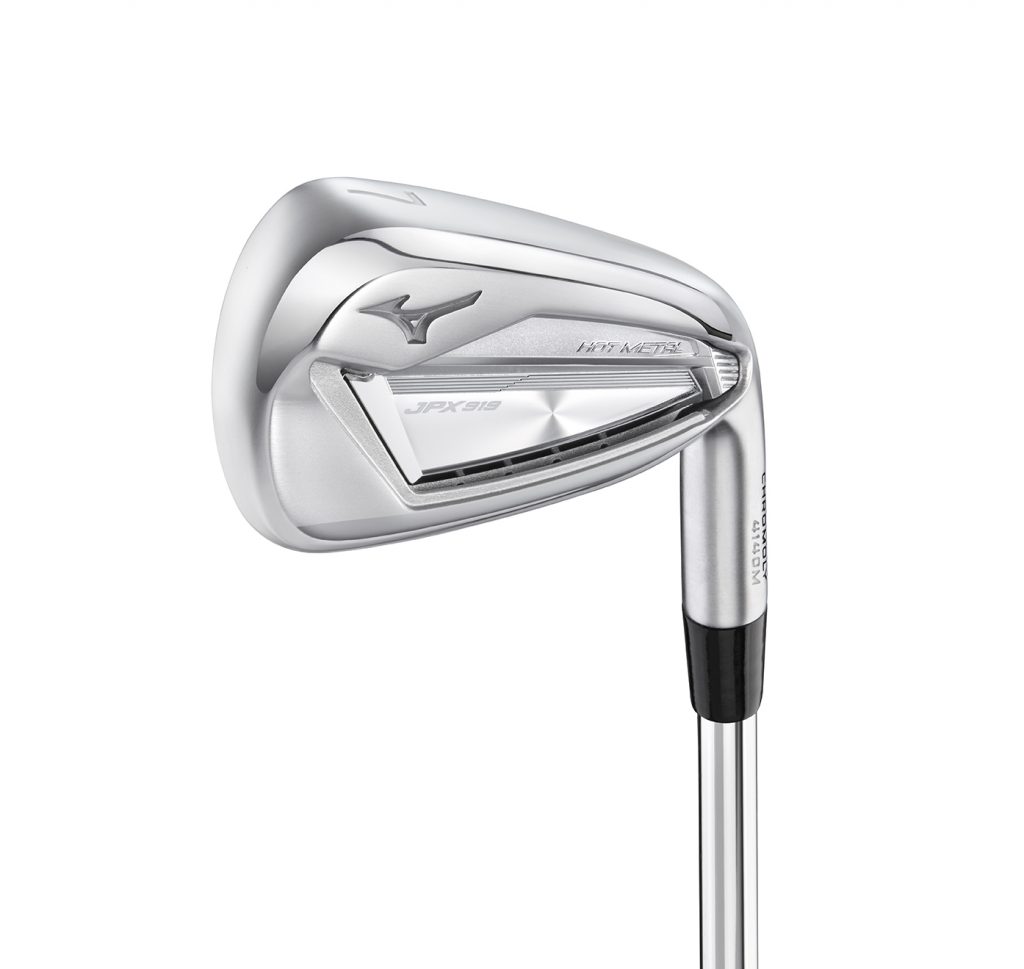
MIZUNO JPX919 HOT METAL PRO
This popular iron line from one of the world’s most revered manufacturers of high performance clubs has now added a fourth model, joining the JPX919 Tour, Forged and original Hot Metal. The Hot Metal Pro designed for the better player with its smaller head and thinner top profile. The “hot” moniker refers to the club’s manufacturing process, which results in a malleable yet incredibly stro ng metal composition that allows for pinpoint tweaking of lie angle. Every JPX9 model has been engineered from different base materials to help enhance performance for particular swing types, and now, in tandem with the company’s new clubfitting system, it’s more “fittable” than ever.
Premier club manufacturer Miura Golf announced the introduction of its newest line of handmade forged irons: the CB-301. Designed and hand-forged in Miura’s Himeji, Japan factory, the CB-301 is the longest forged cavity back iron Miura has ever produced. It is the first fully forged Miura cavity back since the PP9003 in 2011.
The CB-301 is the most recent advance in Miura’s masterful, ever-evolving approach to club design. It is constructed to optimize performance, with the feel and playability of a player’s iron but the forgiveness and distance to improve golfers of all levels. The CB-301 maintains Miura’s meticulous attention to quality, along with the legendary craftsmanship Miura clubs have long been known for.
“We are excited to bring a new level of distance and performance to Miura Golf,” said Hoyt McGarity, President of Miura Golf. “With the CB-301, we’ve created the finest forged cavity back in Miura’s history.”
“At Miura Golf, we strive to provide the world‘s finest forged irons,” said Jason Rutkoski, executive vice president of Miura Golf. “We set out to design a golf club that could be enjoyed by golfers of all skill levels. The CB-301 takes the most innovative design elements of our traditional models and blends them with modern techniques, resulting in the longest iron we’ve ever produced.”
World-renowned craftsman, Katsuhiro Miura began hand-crafting and grinding irons in 1957 and has created one of the most-respected brands in the golf industry. Miura’s endless quest for the perfect club has brought to the world more than 10 product series, a number that grows as the next generation of the Miura family – led by sons Shinei and Yoshitaka – continue their meticulous refinement and evolution of product lines. Each club is individually handcrafted and will never be mass produced, as generations of steel-making skill and passion brings to us the world’s-finest golf clubs.
The visually striking CB-301 comes plated in nickel chrome with a satin finish. Golfers can purchase the CB-301 and all other Miura products at authorized club fitters around the globe or fully-assembled at www.Miuragolf.com.
TaylorMade Golf its P700 series with the introduction of P760 irons, a progressive forged players club designed to give better players specifically what they want and need through the entire set, alleviating the possible consideration of combination sets. The P760 pulls performance technologies and shaping attributes from its Tour-proven siblings, the P750, P770 and P790. The P760 irons effectively replace the P750 and P770 in the TaylorMade lineup, giving players the performance of P750 in the short irons and improves on the performance of P770 in the long irons. The P760’s progressive design is individually optimized for each club from 3-iron to AW to provide Tour- caliber shaping and performance.
Forged Multi-Material Construction
The progressive design of P760 goes beyond shaping; specifically, the iron’s construction. The P760’s unique iron design transitions from a single piece 1025CS forged head in the 8-PW/AW to a 1025CS forged hollow body with SUS630 face material injected with our revolutionary SpeedFoam™ in the 3-7 irons. The hollow cavity construction (3-7 irons) produces consistent distance while adding forgiveness to maintain optimized gapping throughout the set, while the one-piece forged construction in the 8 through AW results in remarkable feel and shot shaping capability for better ball strikers.
Progressive Player-Preferred Shaping
Shaping is one of the most critical phases in the development of a new iron, and TaylorMade’s engineers set out to create a progressive set that met even the most discerning players’ demands. Head size, offset and lofts have been meticulously detailed to engineer specifically what better players demand for precision shot making. The sole geometry of the P760 has also been redesigned with a chamfered leading edge that delivers a cleaner entry into the turf, activating the club’s bounce without the risk of digging, all within a square look at address.
SpeedFoam Technology
SpeedFoam technology, which was first introduced in the highly popular P790 irons last fall, has been incorporated into the P760’s 3-7 irons. SpeedFoam serves the dual purpose of generating ball speed while also dampening vibrations to create optimal sound and feel. SpeedFoam is injected into the club head in liquid form before expanding within the club, providing increased face support while maintaining the soft, solid sound and feel that golfers prefer. The standard set is equipped with True Temper Dynamic Gold 120 (S300, X100) shafts and Golf Pride Tour Velvet 360 grips.
Ben Hogan Golf Equipment Company has introduced Ft. Worth White Irons, a complementary line of custom, hand-crafted forged irons that answer widespread golfer demand for a traditional nickel-chrome clubhead finish in their blade-style iron model.
The new irons join the popular Ft. Worth Black irons, one of Ben Hogan Golf’s most successful product lines, which feature a unique Diamond Black Metal (DBM) finish. The new irons are available for purchase immediately without retail mark-up thanks to BHG’s proven direct-to-consumer sales and distribution model that offers unprecedented pricing for high-performance, custom-made forged irons.
“The Ft. Worth White Irons are illustrative of how Ben Hogan Golf Equipment Company interacts with and listens to its customers,” said Scott White, President and CEO, Ben Hogan Golf Equipment Company. “On the heels of our sales success with the Ft. Worth Black Irons, we found many ‘traditionalists’ who wanted to play this iron design with the standard nickel-chrome finish, so we accommodated them with this launch.”
White adds, “As with the Ft. Worth Black irons, the White irons will be custom-built clubs to individual golfer’s specifications. But, most importantly, unlike other brands who launch a product that is not readily available, our exclusive factory-direct business model allows us to put these irons in the hands of golfers immediately and at hundreds of dollars less than they would pay for competitive products through green-grass and retail channels.”
The Ft. Worth White Irons feature a traditional forged blade design that is engineered for serious, accomplished players seeking a rare blend of feel, consistency, accuracy and forgiveness. Extensive player and machine testing validate that the irons generate a more penetrating ball flight on scoring irons, higher initial launch angles on long irons and better distance control on off-center hits, when compared with competitive irons. This is a direct result of dual Dynamic Progressive Weighting and Adaptive Perimeter Weighting Systems, which allow Ben Hogan engineers to optimize the size, shape and depth of the unique “depression cavity” on the rear of each club head.
The new Ft. Worth White Irons also feature proprietary enhanced V-Sole Technology, which is the most versatile sole in golf and has long been a trademark of Ben Hogan irons and wedges. It combines a high bounce leading edge and low bounce trailing edge on the sole and allows for easy manipulation of the club head no matter the lie and without changing the loft. The bounce angles on the Ft. Worth White Irons have been re-engineered slightly on each club head to eliminate grab by the turf, especially on less-than-full shots.
The company’s signature PreciseLoft System has been simplified in the Ft. Worth White Irons. While maintaining consistent 4-degree loft gaps between each iron for optimal distance gapping and to minimize loft ‘compression’ at the short end of the set, they will only be offered in one loft matrix — the mid-high launch profile (22 to 46-degrees from 4 iron to pitching wedge.
As with all Ben Hogan irons, the Ft. Worth White Irons can be customized at no charge and golfers can specify length, lie, loft and grips (standard or mid-sized) as well as their choice of a variety of steel and graphite shafts.
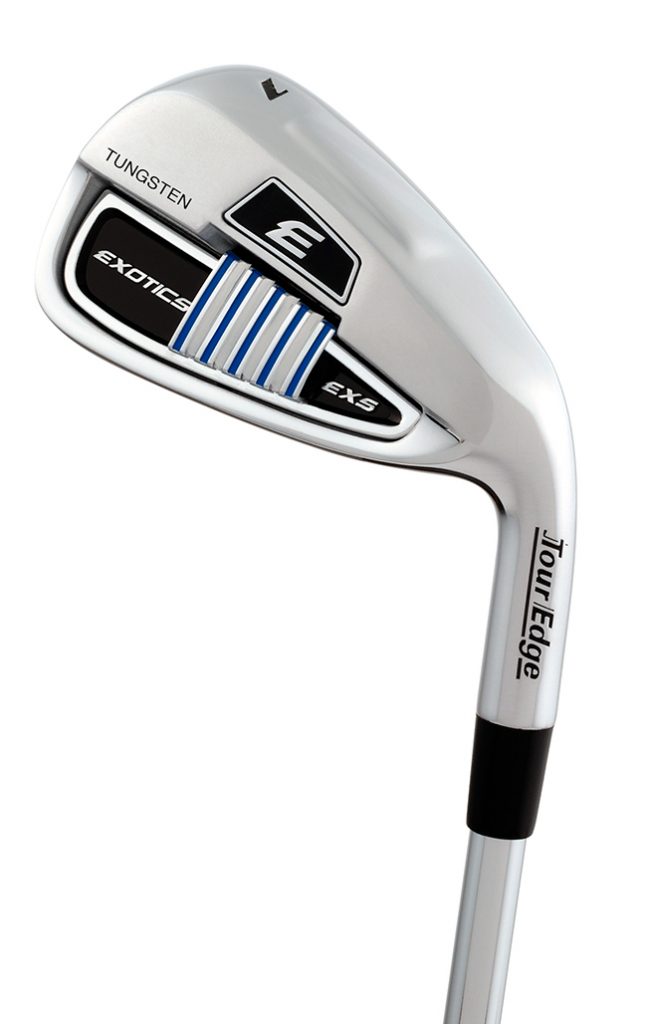
Tour Edge is adding to its Exotics EXS line with a hollow-body iron set, featuring a myriad of game-enhancing innovations.
The loaded-with-technology iron set features a forged Cup Face with state-of-the-art SpiderWeb VFT Technology for expanded sweet spots, a hollow-body design on long irons and an undercut design on short irons that incorporates LaunchPad technology behind the face for optimal launch, a 19-gram Tungsten weight for extreme toe weighting and a Ramped Sole for faster clubhead speed through the turf.
The new ultra-premium, high-performance iron set will be available worldwide on November 1, 2018.
“Make no bones about it, this set was designed to be the longest distance iron in the game,” said Master Club Designer David Glod. The lofts are unapologetically strong as we were able to get the proper launch behind them due to the LaunchPad Technology and the seamless hollow body to undercut construction. I think it’s fair to say that you’ll gain eight to ten yards per iron with the EXS iron on the long irons and five to eight on short irons.”
A new SpiderWeb Variable Face thickness technology located behind the face acts as a web across the face to enhance the sweet spot in every direction from the center of the face. The forged cup face is extremely light and thin, the thinnest that Tour Edge has ever manufactured.
The steel is exceptionally strong and works in conjunction with LaunchPad Technology that is a TPE polymer that has been coated with a special performance gel that absorbs shock and creates more spring effect. The hollow body design also offers the best in perimeter weighting and increased face flex on long irons.
A 19-gram Tungsten toe weight elongates the sweet spot even further for maximum forgiveness on the face. A Ramped Sole offers more relief on the heel and toe for smoother turf interaction.
An ultra-premium Tensei CK Blue 2G shaft series by Mitsubishi Chemical is the chosen stock graphite shaft for the EXS iron set. Extremely light yet extremely stable throughout, the Tensei Blue CK features advanced materials like Carbon Fiber and Kevlar mixed with other lightweight materials that weigh in the 60-80 gram range depending on flex. A 60-gram weight will be available in Ladies and A-flex, a 70-gram shaft available in Regular flex and an 80-gram shaft available in Stiff and X-flex. In steel, the EXS iron set comes standard in a KBS Max 80 shaft that will be available in Regular flex and Stiff flex.
The Exotics EXS irons are available from 4-iron to sand wedge with the set also including a pitching wedge, approach wedge and gap wedge.
Bryson DeChambeau is the game’s biggest one length irons proponent.
Editor’s Note: Now that former U.S. Amateur champion and Top 20 PGA Tour player Bryson DeChambeau has played his way onto the 2018 Ryder Cup team, his well-documented success with Cobra Golf’s one length irons will get plenty of fresh exposure in golf media. That’s why we’ve decided to revisit the following feature from 2017 in which Golf Tips contributor Ken Van Vechten gets fitted for one length irons — and comes away with some interesting conclusions.
With every club company chasing the grail of long, longer, longest, Cobra has veered off on an alternate path toward that end. Though not the first commercial venture to try, the company’s F7 ONE one length irons – in both cast and forged – marks an outside-the-box move for one of the game’s bigger names.
“One length is for any player seeking a simplified way of swinging the golf club,” explains Mike Hearne, custom fitting coordinator for Cobra. “One length offers fewer variables – same ball position, same distance from the ball. By eliminating these variables it allows the golfer to swing in a more consistent posture, which leads to more centered strikes and better mis-hits.”
Cobra took a cue from a common lament – “Why can’t all my irons be like my 7?” – outfitting each KING F7 ONE and KING Forged ONE iron with a 7-iron-length shaft. If this sounds familiar, it’s a set-up strategy that PGA Tour player and former NCAA and U.S. Amateur champion Bryson DeChambeau has employed for a number of years. This strategy led him to several Tour wins in 2018, into serious contention for the FedEx Cup (ultimately won by Justin Rose), and a berth on Ryder Cup Team U.S.A. for 2018.
So, back to my initial trepidation: A 4-iron and a wedge outfitted with a mid-iron shaft: Sure, why not, ain’t nothing bad gonna come of that.
ONE LENGTH IRONS AND YARDAGE SPACING
The obvious head-scratcher is gapping, the sequential yardage spacing as we go from one end of the bag to the other. That was my concern, assuming prior to testing – as is a common perception in the market – I’d have an assem-blage of short longs and long shorts.
DeChambeau checks out his stats.
Distance is the result of a number of factors, working in concert: Shaft length and weight (effectively swing speed), launch angle and spin rates; how the shaft, clubhead and clubface react to the strike; and, so importantly, where the hell we strike the ball on the clubface. All else equal, longer clubs can be moved at a higher rate of speed. What they might not do is produce longer shots. It’s all about how energy is transferred to the ball via the club courtesy of the swing. That is (partially) why a slower-swinging player can hit a 5-wood farther than a standard-lofted driver. Flip it around, and 9-iron with a longer shaft is likely to produce juiced up results.
“I don’t think the advertising is wrong,” says Nick Sherburne, founder of Club Champion, an independent, nationwide network of any-and-all-brands fitting studios, of Cobra’s intent. “One swing plane, one swing, shorter long irons for better control; those are the key selling points. But there are gotchas. There might be gapping issues for some customers, a dual spacing problem on either side [of the mid-irons]. And you have to adapt, there is a learning curve, and for some there won’t be instant success.”
ONE LENGTH IRONS ADJUSTMENT
Cobra acknowledges there could be an adjustment period, and that you can’t ignore the basic tenets of science. But it believes in the formula that a shorter-shafted long-iron struck more consistently – “on the screws,” something most of us do far more often at one end of the bag than the other – by a properly engineered head won’t lead to the ball flight equivalent of a wounded quail. To make sure short irons still behave like they should, Cobra had to tinker to make sure when an 8-iron went down range it did so within reason. (Cobra still has a lineup of F7s and other models in standard progression; this is an option, not a my way/highway mandate.)
After a recent session with Cobra at its SoCal HQ, I’m sold, to a large extent. The testing protocol involves x swings with 5-, 7- and 9-irons – the cast version for me – with the usual fitting-session tweaks of lie angle, shaft and the like, and I hit them alongside my gamers, Callaway Apex CF 16s. I play ProjectX PXi 6.0 (stiff) shafts; the Cobras were outfitted with KBS Tour FLT stiff shafts.
Launch and spin rates varied, but all were within optimal parameters. Sidespin was draw-biased, on par for the two longest clubs in each set but significantly higher with the Cobra 9-iron (as was the launch angle). Dispersion, however, was tighter with the Cobras, due in large measure to flattening, over the course of the fitting process, the lie angle two degrees from standard, eliminating heel-grab. (And that serves as a useful reminder that golf swings, even clubs, are not static, unchanging things. When fitted for my Callaways last year — as outlined in a previous article here — the dispersion was so tight that at times you could put a blanket over my shots. I’ve noticed more leftward misses of late so it is time to re-check my needs relative to lie angle.)
THE ONE LENGTH IRONS: THE NUMBERS
The following data shows peak yardage and ballspeed on the left, and average yardage and ball speed on the right.
The takeaway in all of this is I gain yardage, on average if not every shot, with the same-length Cobras. The most striking result is the consistency, notably with the longest iron.
Loft differential between my 5-iron and the F7 is inconsequential – one degree stronger for the latter. The F7 is also nearly an inch shorter, yet ball speed was up across the board on lower swing speed, and there was far less variability between shots – total yardage and ball speed – best to worst. Callaway has one of the hottest faces in the game, something I see when the planets and I align and I launch a 195-yard 5-iron, but that day, under those testing conditions, the shorter club was giving me a more efficient strike, a fact that also was born out by the impact marks on the clubfaces, as well.
At the other extreme, the 7-iron-shafted 9-iron, despite higher absolute and average ball speed, didn’t produce PED-like yardages.
“Head shapes and lofts are identical, in ONE length vs. variable length,” Hearne explains. “The big difference is the headweight and the CG [center of gravity]/inertia properties of the heads. We add weight to the lower-number irons, to increase ball speed, and they have a lower CG and higher inertia in ONE length. Then we do the opposite in the higher-number irons, taking weight out and raising the CG.”
On the mental side of things, I don’t put a ton of thought into the processes that occur between pulling a club and figuring out if I was goat or GOAT with that specific shot. Good or bad, that’s me. I’m not so fidgety that looking down and seeing a long iron sitting rather near the middle of my stance is going to throw me off, so I didn’t feel adjustment angst. I have friends who in that situation would reach for the Zoloft.
None of this is end-all science or a statistically significant data set applicable to the general populace, and it certainly isn’t religious doctrine cast down from on high; it’s one avid recreational player’s experience. I found setting up across the three same-length clubs to be automatic, refreshingly uniform. However, it wasn’t exactly a burden setting up to my clubs. Your mileage may vary. If I had to choose a side, why not have a single stance and posture if you are getting the results you need? And that, ultimately, is proven over time, in the course of play.
It’s golf, it’s personal – one size does not fit all. But ONE will fit some just fine.
Cobra Golf has introduced what it calls its lightest, easiest-to-hit irons and hybrids in company history. Building off the success of the original F-MAX irons from 2017, the 2018 F-MAX Superlite irons and combo sets feature incredibly light-weight technologies and designs that provide more club speed, distance and easier launch.
The F-MAX Superlite Irons take ultralight technology to the next level. The re-engineered clubhead is 4 grams lighter, and maintains the same high MOI, delivering optimized forgiveness and stability. A 5-gram lighter shaft and a 7-gram lighter grip design, results in 16 grams in weight-savings ensuring the fastest club and ball speed possible for golfers with moderate swing speeds. They also feature an extremely comfortable, midsize Lamkin REL 360 grip (the women’s irons feature a standard men’s size grip) that is engineered using a softer, 7 grams lighter, rubber compound, delivering a lighter swing weight and improved comfort on longer approach shots.
Complementing its lightest shaft and grip offering ever, Cobra Golf has designed F-MAX Superlite Irons with the following industry-leading super game improvement technologies:
Optimized Center of Gravity – Progressive hosel lengths strategically position the CG (Center of Gravity) in each iron to produce the desired launch and trajectory. Shorter hosels in the long irons lower the CG to promote higher launch and distance, while taller hosels in the short iron wedges raise the CG to promote lower, controlled trajectories.
Progressive Offset Design – gradually increases from minimal offset in the wedges and short irons that require more precision to maximum offset in the long irons where increased launch & right to left draw bias.
Low CG/High MOI Design – Weight is positioned in the low heel and low toe areas to increase forgiveness and stability on off-center hits for straighter, more accurate approach shots.
Low Profile with Deep Undercut Design – A low profile shape paired with a deep undercut cavity design work in unison to get the ball airborne quicker, increase ball speeds and create easy launch to optimize carry and overall distance.
Greater Lofts – Greater iron lofts maximize flight trajectory, resulting in increased carry distances, and improved stopping power into greens.
Premium Chrome Finish – a nickel, two-tone chrome plating provides beautiful aesthetics and increased durability for great looking, longer lasting irons.
Specialty Wedge Design – A specialty wedge design in the GW and SW provides added versatility and shot control around the greens.
The new F-MAX Superlite irons and hybrids are available starting Oct. 5.
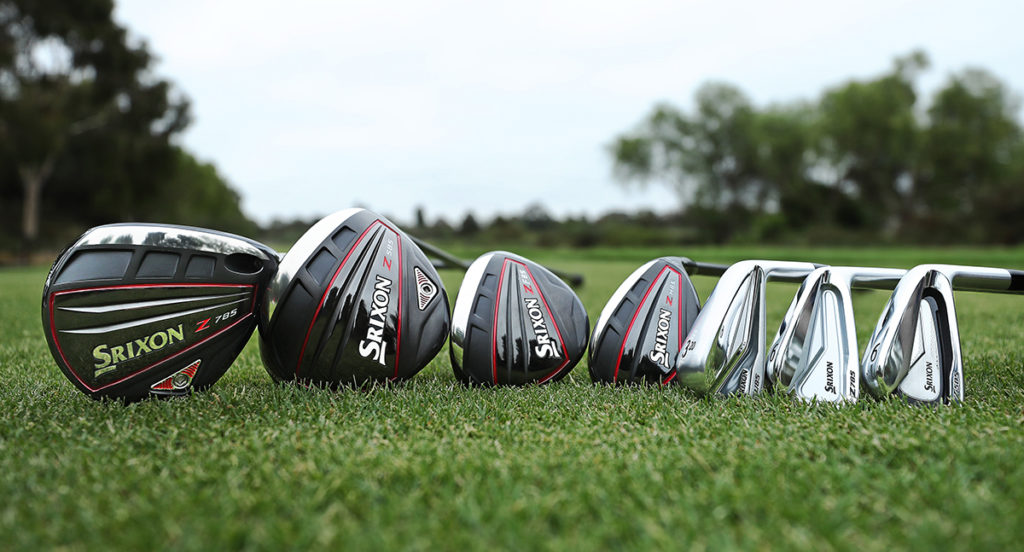
Srixon calls its 2018 Z Series golf clubs, which go on sale in American on Sept. 14, “tour-proven woods and irons crafted for the best players in the world.” Here’s a look at the entire array.
Z SERIES WOODS
The new Z Series Woods present a revolution in woods performance, delivering the most powerful suite of offerings from Srixon. The full line of Z Series Woods feature advanced materials to help amplify your long game.
The Z Series Drivers will boost your speed and distance off the tee with the Ti51AF Cup Face. This cup face is the thinnest, lightest, strongest, and hottest driver face Srixon has ever produced.
“This driver’s faster. This driver’s longer. This driver’s better,” said Keegan Bradley. “It’s really coming off hot and straight. It’s very forgiving and the sweet spot is really big.”
Featuring a lightweight carbon crown, Z Series Woods shift the weight to the perimeter, offering more forgiveness and less offline dispersion.
The Z 785 Driver promotes a low-spin, penetrating trajectory in a tour preferred look and profile; meanwhile, the Z 585 Driver promotes higher, straighter drives with additional forgiveness on off-center strikes.
The same powerful technologies that deliver more speed, distance and forgiveness are present in the Z F85 Fairway Woods and Z H85 Hybrids.
“A big key for me is accuracy,” said Graeme McDowell. “I love the bulge and roll look to this head, and I really feel like I can hit a lot of fairways with it. It’s just a beautiful looking driver that’s got a nice high launch and looks like the ball wants to topple over and get max distance.”
Z SERIES IRONS
Building upon the success of Srixon’s previous generation, the new Z Series Irons offer tour-validated designs with a soft forged feel. Cutting-edge technologies that help enhance distance, workability and feel, the new Z Series Irons are built to perform.
The Z 785 Irons feature a tour cavity, providing additional mass behind the impact location for increased shot-shaping ability and versatility. The Z 585 Irons feature an added speed groove, which allows for more face-flex, enhancing ball speed and distance.
Both irons offer an updated Tour V.T. Sole for smoother turf interaction and more consistent ball striking, while the forged construction from the soft 1020 carbon steel provides a better feel through impact.
Building on the most recent success of the Z U65 Utility Iron, the new Z U85 Utility Iron features a hollow, forged construction for a high-launch trajectory, soft feel, and unmatched distance. The utility irons offer an iron-like address profile making them perfect to create the ideal combo set with the Z 785 or Z 585 Irons depending on player preference.
“We already know that Srixon has one of the best forged irons on the market,” McDowell said. “The stats say that. Tour players choose it, even when they don’t have to. It sits great behind the ball and has that nice, soft buttery feel off the face.”
If your 10-handicap swing is anything like mine (golf gods forbid!), you might be stuck in that annoying limbo between a game improvement club and a less forgiving, forged player’s club. Seems like the white-coated boys at Ping’s R&D department have been keeping us in mind, as their new i500 irons offer distance and precision in one beautifully compact package.
Using thinner, high-strength “maraging” steel is part of the equation — its flexible face bends considerably more at impact than a regulation cast iron. The resultant launch is faster and higher, leading to increased distance. That isn’t easy to achieve in a smaller club, but Ping has somehow managed to combine hollow-body construction without dampening filler or backing materials. That’s what gives the i500s their considerable pop.
The higher launch angle is especially impressive in the longer iron lengths. According to Ping, these irons will launch up to 10 percent higher than the competition, creating steeper landing angles and softer landings. Many competitive clubs can claim to go as far, but they may be merely tweaking the numbers on the sole of the club. Ping isn’t into such deception, preferring less spin and higher launch to achieve the same result. And yes, they look classically handsome, as a minimally offset forged iron ought to!
P.S., even though these irons are closer to being players’ clubs, they may not be quite as workable as a traditional blade. That’s okay by me — I’ll take straight and long over hooks and slices any day. Ping’s i500s are also available in what the company calls PowerSpec and RetroSpec lofts. The former are 1 to 1.5 degrees stronger and the latter are weaker by the same percentage. Lots of shaft options are available with no upcharge as well: Dynamic Gold, Nippon and KBS. Easily one of Ping’s most innovative irons in years.
The new Miura IC-601 irons employ the latest advancements in club design and manufacturing. This model improves on the highly successful ICL-601 Driving Iron.
“We are very proud of this iron, especially because it was created by Miura’s founder Katsuhiro Miura,” says Hoyt McGarity, President of Miura. “He’s integrated innovative technology with traditional design and the outcome is an iron that is higher, longer, and more forgiving than any other in the Miura lineup.”
Recommended for mid- to high-handicap golfers, the IC-601’s face is made of 455 Carpenter Steel as found in the ICL and Genesis PP-9005. Carpenter Steel is used in aerospace applications because it offers a unique combination of high strength, light weight and durability. This enabled Miura to produce an iron with a high Coefficient of Restitution (COR). It also allows more weight to be moved farther back in the club head. This strategic placement of weight allows players to launch the ball higher with increased ball speeds.
In addition to a low center of gravity, the IC-601 has a unique inner cavity design with a wide sole that creates more forgiveness and a large sweet spot. Finished in satin chrome and available in 4-PW, expect to experience optimized speed and performance with the new Miura IC-601.
Miura has been making the world’s finest forged golf clubs since 1977. Designed and constructed by the Miura family in Himeji, Japan, each club is individually made using the patented Miura forging process.


 This popular iron line from one of the world’s most revered manufacturers of high performance clubs has now added a fourth model, joining the JPX919 Tour, Forged and original Hot Metal. The Hot Metal Pro designed for the better player with its smaller head and thinner top profile. The “hot” moniker refers to the club’s manufacturing process, which results in a malleable yet incredibly stro ng metal composition that allows for pinpoint tweaking of lie angle. Every JPX9 model has been engineered from different base materials to help enhance performance for particular swing types, and now, in tandem with the company’s new clubfitting system, it’s more “fittable” than ever.
 Premier club manufacturer Miura Golf announced the introduction of its newest line of handmade forged irons: the CB-301. Designed and hand-forged in Miura’s Himeji, Japan factory, the CB-301 is the longest forged cavity back iron Miura has ever produced. It is the first fully forged Miura cavity back since the PP9003 in 2011.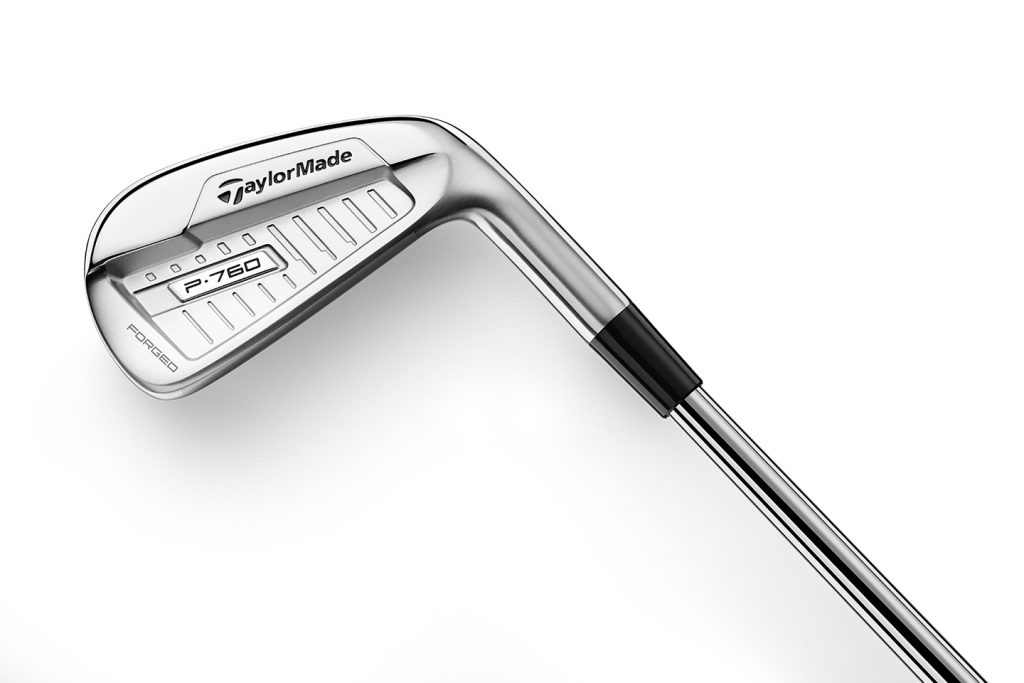

 Tour Edge is adding to its Exotics EXS line with a hollow-body iron set, featuring a myriad of game-enhancing innovations.



 If your 10-handicap swing is anything like mine (golf gods forbid!), you might be stuck in that annoying limbo between a game improvement club and a less forgiving, forged player’s club. Seems like the white-coated boys at Ping’s R&D department have been keeping us in mind, as their new i500 irons offer distance and precision in one beautifully compact package.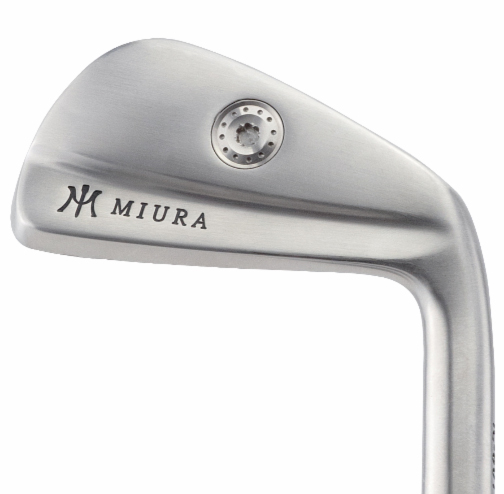
 The new Miura IC-601 irons employ the latest advancements in club design and manufacturing. This model improves on the highly successful ICL-601 Driving Iron.


