October 17, 2026

Ted Odorico

The 357 Fairway Hybrid Review

As a Golf Professional with over three decades under my belt, I’ve watched players cycle through hundreds of “miracle” clubs trying to find that one magic wand to fix their long approach shots. We know the statistics: the majority of amateur approach shots—especially for senior players—miss the green, largely due to playing clubs that demand too much speed or too precise of a strike. The team at Performance Golf has released the 357 Fairway Hybrid, making a bold promise to fix exactly that. Designed by Chris McGinley—a veteran with 35+ years of club innovation experience who has built equipment for the game’s greatest players—the 357 Fairway Hybrid claims to be the first “Super 7-Wood” featuring Tri-Fusion Technology. I took this hybrid out to the course to see if it truly helps you flush it clean from rough to green without requiring a complete swing overhaul.
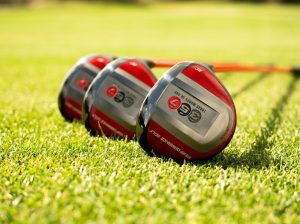
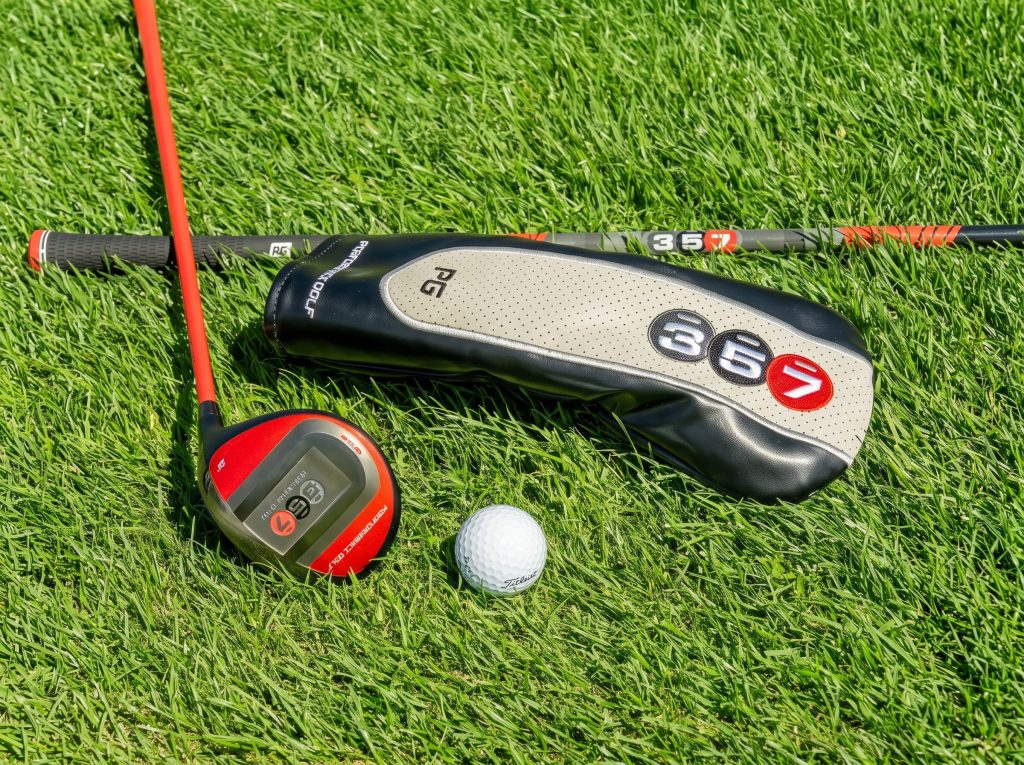
The unique 357 hybrid delivers the high launch of a seven-wood with five-wood length.

The Details: Features & Benefits

Tri-Fusion Technology

The core engineering of the 357 Fairway Hybrid revolves around what Performance Golf calls “Tri-Fusion Technology”. It essentially takes the best properties of a 3-wood, a 5-wood, and a 7-wood, blending them into a single, high-performing club.

The “Bulldozer” Progressed Face

One of the hardest things for amateur golfers is maintaining solid contact out of thick lies. The 357 utilizes a “Progressed Face” that acts like a bulldozer to clear away heavy rough before impact. By increasing the size of the face, they’ve also expanded the sweet spot, making those slightly chunky shots significantly more forgiving.
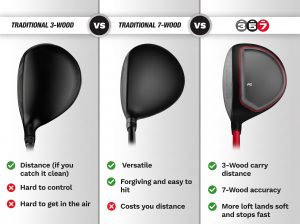
The 357 hybrid combines three woods in one, offering 3-wood distance with 7-wood accuracy.

Power Launch Crown & 7-Wood Loft

To help get the ball airborne quickly, the club features a Power Launch Crown—a design where the crown is pressed down to drastically lower the center of gravity. Combined with the natural loft of a 7-wood, this setup allows you to pop the ball high into the air with optimal spin, ensuring it lands soft on the green rather than rolling off the back.

C-Cup Construction & 5-Wood Shaft

To combat the distance loss usually associated with higher-lofted woods, McGinley integrated C-Cup Construction, welding the clubface to the head in a way that maximizes the “Elastic Effect”. This flexes the face more at impact to increase compression and ball speed. Paired with a customized, lightweight 5-wood length shaft, the club generates more swing speed than a standard 7-wood while remaining far easier to control than a longer 3-wood.

Parallel Dual Stability Rails

A nice bonus feature is the Parallel Dual Stability Rails on the sole. These sit perfectly square on the ground at setup and, combined with extra heel weighting, actively help square the clubface at impact to eliminate the dreaded slice.
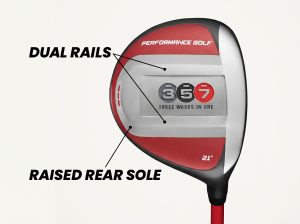
Dual Rails and a Raised Rear Sole help the 357 glide through thick rough.

Pros & Cons

The Pros:

  • Exceptional Versatility: The combination of the Bulldozer face and the Dual Stability Rails makes it incredibly easy to hit out of thick rough, fairway bunkers, or tight lies.
  • Effortless Launch: The low center of gravity and 7-wood loft do exactly what they promise—launching the ball high and landing it softly on the putting surface without needing to change your swing mechanics.
  • Distance and Control: The 5-wood shaft length provides a perfect middle ground, offering the distance of a longer club but the tight dispersion and control of a shorter one.
  • Anti-Slice Weighting: The heel-biased weighting does a fantastic job of encouraging a square clubface at impact, promoting straighter, more accurate shots.

The Cons:

  • Non-Traditional Setup: Traditionalists might take a moment to get used to looking down at the Dual Stability Rails and the slightly different visual footprint of the Tri-Fusion head.
  • Target Audience: While an incredible tool, highly skilled players with extremely fast swing speeds who prefer to aggressively work the ball with lower trajectories might find it launches slightly too high for their specific preferences.

The Editor’s Verdict

After taking the 357 Fairway Hybrid out to the practice tee and seeing how it handles varying course conditions, my thoughts are clear: this is a brilliant piece of problem-solving engineering. For the vast majority of amateur players—and especially senior golfers who are losing sleep over missed greens and dropped shots on long approaches—the 357 Fairway Hybrid is a breath of fresh air. McGinley and the Performance Golf team have identified the exact hurdles players face with traditional 3-woods and long irons, and methodically designed a club to overcome them. The club feels incredibly stable through the turf, and the effortless high launch it provides is genuinely impressive. If you find yourself consistently coming up short, slicing your long fairway shots, or chunking your approaches out of the rough, the 357 Fairway Hybrid is an absolute must-try. It takes the stress out of the long approach, giving you the confidence to simply set up, swing your normal swing, and watch the ball hold the green.

Ready to stop sacrificing  your long approach shots?
Click here to secure your Performance Golf 357 Fairway Hybrid.

The Performance Golf RS1 Putter Review

In my 32-plus years as a Golf Professional, if I had a dollar for every putter that promised to single-handedly “cure” a golfer’s stroke, I’d have retired a long time ago. We see a lot of grand claims come across the editorial desk here at Golf Tips Magazine. But every now and then, a piece of technology makes you stop, grip the club, and take a serious look. The RS1 Putter from Performance Golf is exactly that kind of club. Designed by Chris McGinley—a man who has spent 30 years in club design, helping build equipment for 11 World No. 1 players—the RS1 takes a direct swing at a mechanical flaw found in 95% of putters: rear-weighting that causes “face drift.” I recently put the RS1 to the test to see if its bold “pull it back, let it fall” claim actually translates to fewer putts on the scorecard.

By placing weight forward, the unique RS1 actively prevents natural face drift at impact.

The Details: Features & Benefits

Forward Axis Weighting (The Game Changer)

In a standard putter, the bulk of the mass sits behind the shaft axis. This naturally encourages the face to drift open during the backstroke, forcing the player to use perfect timing to square it back up at impact. Performance Golf flips the script by placing 75% of the 360g head weight in front of the shaft axis. This shifts the center of gravity forward, allowing gravity to actively pull the putter face square. It fights your natural tendency to manipulate the face with your hands.

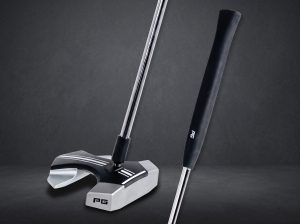
The innovative RS1 features a 10-piece ‘Hammerhead’ mallet design and patented Dual Pistol Grip.

10-Piece “Hammerhead” Construction

Every gram matters in this design. The RS1 utilizes a CNC-machined steel face for premium feel, matched with a lightweight carbon composite crown and an aluminum “T-Wing” tail. This multi-material approach strips weight from the back of the putter and packs it directly behind the sweet spot where it drives performance.

Upright 74° Lie Angle

Most standard putters sit around a 70-degree lie angle. The RS1 is built at a highly upright 74 degrees. This subtle 4-degree shift forces you to stand a bit taller and closer to the ball, which naturally reduces the arc of your stroke. Less arc means less face rotation, keeping the putter moving straight back and straight through.

Patented Dual Pistol Grip

Grip pressure is the enemy of a smooth stroke. The RS1 features a unique Dual Pistol grip with a flat top and bottom, alongside large curved sides. It’s specifically contoured to quiet your wrists and hands, regardless of whether you use a conventional, claw, or cross-handed grip.

(Note: The standard RS1 ($399) comes with a stepless steel shaft and rubber grip. For players seeking a slightly lighter overall weight and softer feel, the RS1+ ($429) swaps in a 15mm low-torque graphite shaft and a polyurethane grip.)


Pros & Cons

The Pros:

  • Self-Correcting Stability: The gravitational “Face Down Balance” is incredibly noticeable. You can genuinely feel the putter wanting to stay square on the takeaway.
  • Unobstructed Alignment: The “Face Forward” design places the shaft behind the face. You get a completely clear, 100% unobstructed view of the striking surface and the T-Trac alignment lines.
  • Premium Feel: The CNC-milled steel face delivers a highly satisfying, active sound and a remarkably true roll right off the face.
  • Quiets the Hands: Between the upright lie angle and the Dual Pistol grip, this putter effectively neutralizes the “handsy” manipulation that plagues most amateur strokes.

The Cons:

  • Aesthetic Adjustment: With the shaft sitting behind the face and a multi-material profile, traditional blade purists will need a practice session or two to get used to the look at address.
  • Unique Grip Shape: While fantastic for locking in the wrists, the pronounced shape of the Dual Pistol grip might feel slightly foreign initially if you are used to a standard pistol or oversized cylindrical grip.
  • Premium Price Point: Starting at $399, it is an investment—though it sits right in line with today’s top-tier milled putters.

Putting the RS1 to the test on the green during a morning practice round.

The Editor’s Verdict

After spending time with the RS1 on the practice green and putting it in play for a few rounds, my overall thoughts are overwhelmingly positive. Performance Golf hasn’t just built a putter; they’ve engineered a mechanical fix built directly into the equipment. The biggest revelation is how it feels during the transition from the backstroke to the forward stroke. Usually, this is the exact moment where amateur golfers manipulate the clubface, leading to pushed or pulled five-footers. With the RS1, McGinley’s Forward Axis Weighting simply takes over. When they say, “Pull it back, let it fall,” they aren’t exaggerating. You can feel gravity guiding the putter head smoothly back to the ball. If you are consistently bleeding strokes on the greens due to an inconsistent arc or an open face at impact, the RS1 is a serious tool for serious improvement. It’s not a gimmick; it’s physics working in your favor. It has absolutely earned its spot as one of the most innovative game-improvement putters I’ve reviewed this year.

Ready to start rolling it straight?
Click to secure your Performance Golf RS1 Putter today.

In my 32+ years as a golf professional, I’ve seen countless gadgets promise to “shave strokes” off your game. But if you’ve followed me or read my work here at Golf Tips Magazine, you know I’m a firm believer in the “Decision Zone”—that 15-to-25-second window behind the ball where you make a 100% commitment to your shot. To commit, you need the right data.

That’s where the Bushnell Tour V7 Shift comes in. Released in February 2026, the Tour V7 Shift isn’t just a minor iteration; it’s a significant leap forward in how we visualize the course.

The Standout Features:

The headline here is the new Dual-Color OLED Display. While previous models used a single-color LCD, the V7 Shift utilizes a brilliant red-and-green system. Your standard line-of-sight distance appears in red, while your slope-adjusted “plays like” yardage is displayed prominently in bright green. This “Slope First” approach removes the split-second of mental math often required under pressure, letting you “see the red, trust the green”.

Another major addition is LINK-Enabled Technology. By pairing the device with the Bushnell Golf app, you can integrate data from your launch monitor to receive personalized club recommendations directly in the viewfinder. For those of us who obsess over “bag optimization,” this is a game-changer for filling those tricky yardage gaps.

The “Patriot Pack” edition adds even more value to this premium setup, typically including a protective carry case, a CR2 battery, and a Folds of Honor ball marker—a portion of the proceeds supporting military families.

Performance on the Course:

  • Precision and Speed: True to the Bushnell heritage, the V7 Shift locks onto flags from over 500 yards with 1-yard accuracy. The Visual JOLT technology—a vibrating pulse accompanied by a flashing red ring—provides immediate, tactile confirmation that you’ve hit the pin and not the trees behind it.
  • Ease of Use: The BITE Magnetic Cart Mount remains one of the most practical features in golf. It’s strong enough to stay secure even over the bumpiest cart paths. Additionally, the new Yardage Range Recall allows you to quickly see your last recorded distance with a simple tap of the mode button—perfect for when you’ve stepped away from your bag and forgotten the number.

Pros:

  • Intuitive Display: The green slope-adjusted numbers are incredibly easy to read in all lighting conditions.
  • Build Quality: It features an IPX6 weather-resistant rating, meaning it can handle a heavy downpour without missing a beat.
  • Tournament Legal: The external Slope-Switch allows you to quickly disable slope for competitive play, ensuring you stay within USGA rules.

Cons:

  • Magnification: At 6x magnification, it’s excellent, but it lacks the 7x power found in the top-tier Bushnell Pro X3+ LINK.
  • Eye Relief: Some users may find the eye relief (how you align your eye with the viewfinder) takes a few rounds to get used to compared to larger models.

The Verdict

The Bushnell Tour V7 Shift Patriot Pack is currently priced at $399.99. For the serious golfer, this is the “smart buy” of 2026. You’re getting the same core performance and connectivity as the $600 flagship models but in a more compact, value-driven package. It provides the clarity and confidence needed to commit to every swing, helping you bridge the gap between “one small feel” and a total breakthrough on the scorecard. Visit: Bushnellgolf.com

“One Minute to a Better Swing, One Week at a Time.”

For the modern golfer, the quest for a more consistent swing often leads down a rabbit hole of confusing mechanics and conflicting advice. Between technical deep-dives and fleeting “miracle” fixes, the average player is often left more paralyzed than prepared.

Enter Ted Odorico, a 32-year Golf Professional who serves as the Editor of Golf Tips Magazine and CEO of the iGolf Sports Network. This season, Odorico is bridging the gap between professional coaching and the everyday player with his new digital series titled “Tuesday Tips.”

Designed for the fast-paced world of vertical video (Reels, TikTok, Shorts), each episode distills complex swing theories into actionable, 60-second breakthroughs. From mastering the “Three Ps of Power” to the psychological art of the “Memory Reset,” Ted’s approach focuses on high-impact adjustments that stick. “Most golfers are one small feel away from a breakthrough,” says Odorico. “‘Tuesday Tips’ is about finding that feel every single week.”

The series officially kicks off on Tuesday, March 3rd, 2026.

Where to Watch:

The weekly tips will be available in the coming weeks as short videos and accompanying blog posts across multiple platforms:

Website: golftipsmag.com

YouTube: YouTube.com/@golftipsmagazine or YouTube.com/@igolfsports

Social Media: Follow Golf Tips Magazine on Instagram, Facebook, and iGolf Sports (Ted Odorico) on TikTok.

0
0
Your Cart
Your cart is emptyReturn to Shop