October 17, 2026

pga tour

What every amateur can learn from playing with the pros.

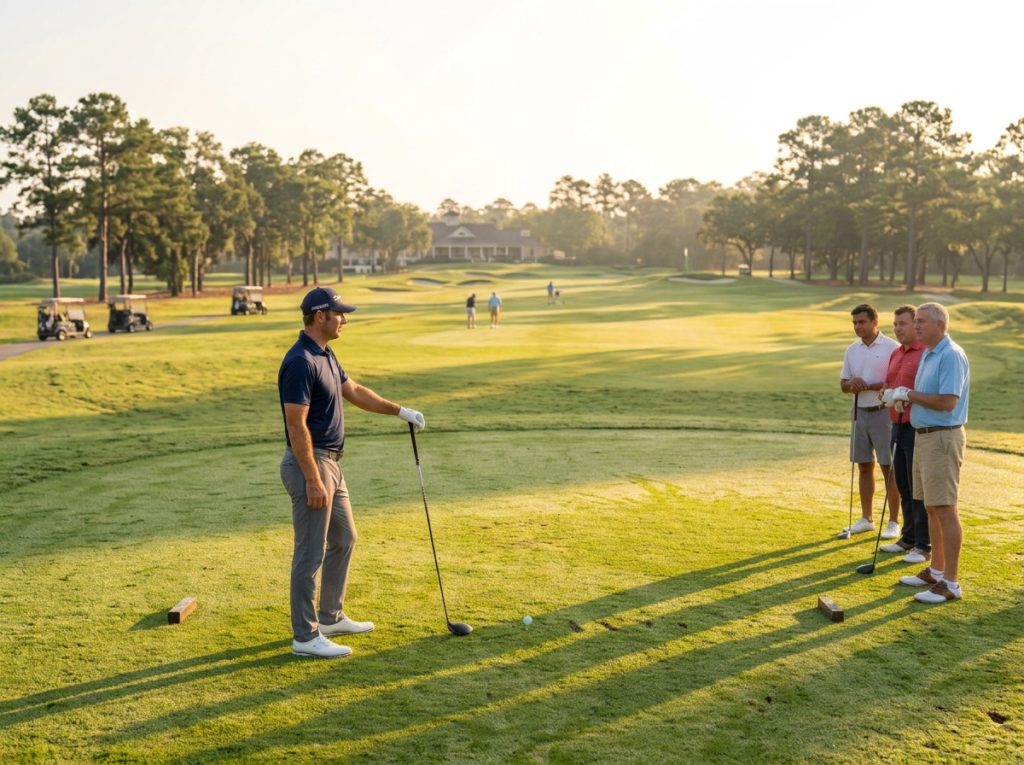
Step onto the first tee of a PGA Tour Pro-Am on a Wednesday morning, and the contrast is immediate. On one side of the tee box stands a touring professional—calm, methodical, and executing a deeply ingrained routine. On the other side stands an amateur—usually a single-digit handicap who crushes it at their home club—visibly vibrating with nerves, gripping the club too tight, and swinging out of their shoes.

Having spent over three decades on lesson tees and inside the ropes, I’ve observed countless Pro-Am groupings. The most striking takeaway is rarely the difference in raw talent or ball speed. Instead, the true chasm between the touring professional and the weekend warrior lies in course management, emotional regulation, and process.
Whether you are prepping for a club championship or just trying to win your Saturday morning Nassau, adopting the mindset of a Tour pro during a Pro-Am will fundamentally lower your scores. Here are the four critical lessons every amateur must absorb from playing alongside the world’s best.

1. The Pre-Shot Routine is an Impenetrable Fortress

When an amateur gets nervous, their brain speeds up. They rush their practice swings, quicken their setup, and fire away before they have truly committed to the shot. The underlying thought is: Let’s just get this over with. Tour pros do the exact opposite. When pressure mounts, they retreat into their pre-shot routine like a fortress. Watch a pro in a Pro-Am: they process the yardage, feel the wind, visualize the shot shape, and step into the ball with the exact same cadence every single time, regardless of whether they are hitting a wedge on a quiet Tuesday or a 4-iron on Sunday afternoon.

The Monday Reset: You do not need Tour-level talent to have a Tour-level routine. Build a 15-second sequence that never changes. Two practice swings, step behind the ball to pick a target line, step in, look at the target twice, and pull the trigger. This routine is your anchor when weekend nerves try to pull you off course.

2. Aiming at the Pin is a Sucker’s Game

Amateurs play “hero golf.” If they have a 7-iron in their hands and the pin is tucked three paces from a water hazard on the right, they aim at the flag. They play for their 1-in-10 perfect strike, completely ignoring the catastrophic penalty for a marginal miss. Tour pros play a game of calculated geometry. They rarely aim directly at tucked pins unless they have a wedge in hand. Instead, they aim at the fat part of the green, or a specific quadrant that leaves an uphill putt. They play for their dispersion pattern, ensuring that a slight mishit still finds the putting surface or leaves a highly manageable up-and-down.

The Monday Reset: Stop playing for the perfect shot and start managing your misses. Divide every green into quadrants. If the pin is tucked behind a bunker, aim 20 feet away to the safe side. Taking double-bogey out of play will lower your handicap faster than hunting for occasional birdies.

3. Effortless Power Trumps Powerless Effort

Stand on a Pro-Am tee box, and you will hear a distinct difference in the sound of the strike. Amateurs often equate distance with violent physical effort, swinging at 110% capacity, coming out of their posture, and producing glancing blows off the heel or toe. The pro swings at a controlled 80% to 85% of their maximum capacity. Their power doesn’t come from aggressive lunging; it comes from impeccable sequencing, maintaining a stable spine angle, and delivering the clubface flush to the center of the ball. In golf, center-face contact at 90 miles per hour will always travel further and straighter than an off-center strike at 105 miles per hour.

The Monday Reset: Dial back the violence. During your next range session, focus entirely on balance. Swing at a speed that allows you to hold your finish flawlessly for three full seconds until the ball lands. You will likely find that backing off your swing speed actually increases your distance because your smash factor (center contact) drastically improves.

4. The 10-Yard Emotional Flush Rate

Amateurs carry their mistakes with them. A chunked wedge on the 4th hole leads to a slammed club, muttered cursing, and lingering frustration that bleeds into the 5th tee shot. One bad swing frequently spirals into a ruined front nine. Tour pros have a remarkable ability to compartmentalize. They hit terrible shots—fats, thins, and wide rights—even in tournament play. The difference is their “flush rate.” A pro might allow themselves five to ten yards of walking off the tee to be visibly annoyed. Once they cross that imaginary line in the fairway, the previous shot ceases to exist. They are entirely present for the next calculation.

The Monday Reset: Implement the 10-yard rule. You are allowed to be angry about a topped 3-wood, but only until you put the club back in the bag and take a few steps down the fairway. Golf is a game of managing mistakes. The player who accepts a bogey and resets their mind immediately is the player who prevents that bogey from becoming an eight.

The Takeaway

Stop trying to buy a Tour pro’s swing and start stealing their mindset. The true gap between professionals and amateurs isn’t raw talent—it’s an unwavering commitment to process. You can dramatically lower your scores by adopting four Tour-level habits: a bulletproof pre-shot routine, smart target selection, a controlled 80-percent swing effort, and the emotional discipline to instantly flush bad shots before they ruin your round.

Golf legend avoids jail time in deal over Florida arrest.

The 15-time major champion avoids jail time in Florida court, accepting a severe 5-year license suspension while raising fresh questions about his future in professional golf. Golf icon Tiger Woods walked into the Martin County Courthouse in Stuart, Florida, on Wednesday, September 2, 2026, to resolve criminal charges stemming from his latest vehicular incident. Accompanied by girlfriend Vanessa Trump and a legal team, the 50-year-old legend accepted a last-minute plea agreement with the State of Florida.

The March Incident: What Brought Him to Court

The court appearance stems from a March 27 rollover crash on Jupiter Island near Woods’ home. While driving a Land Rover, Woods clipped a truck towing a trailer on a residential road, causing his SUV to flip onto its side. Though Woods escaped without major physical injuries and registered a 0.00 on a breathalyzer test, officers at the scene noted slurred speech and failed field sobriety tests. Furthermore, deputies found hydrocodone pills in his pocket and charged him with DUI with property damage after he refused a urine sample.

The Plea Deal: Pros and Cons

Under the deal approved by the judge, prosecutors dropped the formal DUI charge in exchange for Woods pleading guilty to reckless driving and refusing a lawful test.

. Pros for Woods: Avoids a criminal DUI conviction on his record, avoids jail time, and brings closure to a months-long legal saga.

. Cons for Woods: The judge imposed a strict 5-year driver’s license suspension alongside a $1,000 fine. The court delivered a stern warning: any violation of the driving ban results in immediate jail time.

Special Treatment or Standard Procedure?

The outcome has sparked sharp debate online and among legal analysts regarding fairness in the justice system:

. Critique of Leniency: Critics argue that dropping a DUI charge following a high-speed rollover crash involving property damage and prescription medication reflects preferential treatment afforded to ultra-wealthy figures who can deploy elite defense teams.

. Defense of Fairness: Legal experts note that for a first-time chemical refusal without an elevated blood alcohol reading (and no injuries to third parties), plea reductions to reckless driving are relatively common first-offense outcomes under Florida county diversion frameworks. However, the 5-year license suspension is considerably harsher than the standard 6-to-12 months typically handed down to first-time reckless driving offenders.

Impact on his Future and the PGA Tour

This settlement clears his immediate criminal exposure, but his standing on the course remains uncertain. Following the crash, Woods took a formal leave of absence to seek inpatient medical treatment.

The PGA Tour and PGA of America have traditionally treated off-course personal legal issues under their “Conduct Unbecoming of a Professional” policies. While the Tour has historically avoided public suspensions for first-time driving offenses—preferring internal counseling or private fines—Woods’ status as a Tour director and public ambassador creates unprecedented scrutiny. Both governing bodies are expected to allow Woods to return to competition when physically and personally ready, provided he adheres to his rehabilitation programs.

A closing birdie at the 18th turns last week’s “what if” into today’s “what is.”

PALM HARBOR, Fla. — Seven days can be an eternity in professional golf. Just one week ago, Matt Fitzpatrick stood on the 72nd hole at TPC Sawgrass, a share of the lead in his grasp, only to see his tee shot find the pine needles and his championship hopes vanish with a closing bogey. That agonizing finish handed the Players Championship title to Cameron Young and left Fitzpatrick searching for answers in the dark of a Florida evening.

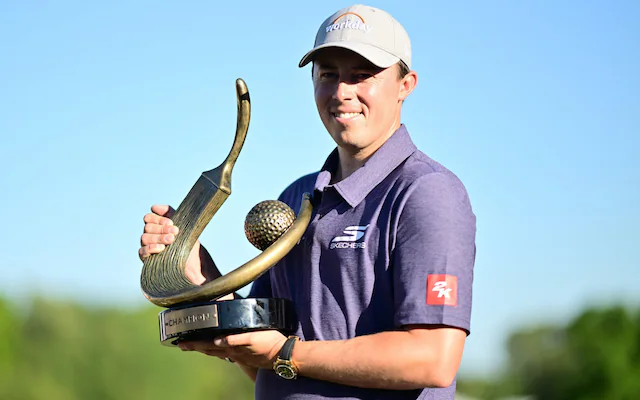
But the beauty of the PGA Tour’s Florida Swing is that the next opportunity is always just a short drive down the I-4. On Sunday at Innisbrook Resort, the universe offered a rewrite. Standing on the 18th green of the fearsome Copperhead Course, Fitzpatrick faced a 14-foot birdie putt to win. This time, there was no hesitation. The ball tracked true, disappearing into the heart of the cup. With an emphatic fist pump and a roar that echoed through the surrounding pines, Fitzpatrick secured a one-shot victory, capturing his third PGA Tour title and—more importantly—his peace of mind.

Fitzpatrick secured a one-shot victory, capturing his third PGA Tour title.

Navigating the Snake Pit

The Copperhead Course at Innisbrook is a different beast than the stadium-style flash of Sawgrass. It is a grinding, claustrophobic test of nerves defined by the “Snake Pit”—the treacherous three-hole closing stretch that has ended many a Sunday charge. Fitzpatrick arrived at the 16th tee on Sunday afternoon locked in a dead heat with David Lipsky, with a hungry pack of pursuers including Xander Schauffele and a surging Jordan Smith breathing down his neck.

While his rivals wrestled with the firm, “sunbaked” greens and swirling winds, Fitzpatrick played a brand of golf that was surgically precise. He didn’t just survive the final round; he dismantled it. In a display of extreme discipline, the 2022 U.S. Open champion didn’t card a single bogey all day. While 54-hole leader Sungjae Im struggled to find his rhythm, shooting a disappointing 40 on the front nine, Fitzpatrick remained the calm center of a chaotic storm.

The Duel in the Pines

The afternoon evolved into a high-stakes chess match between Fitzpatrick and Lipsky. For hours, neither man would blink. When Fitzpatrick finally broke a string of pars by draining a miraculous 30-foot birdie putt on the par-3 15th, it felt like the knockout blow. But Lipsky, playing in the group behind, showed veteran steel, answering with a clinical birdie on the 14th to keep the score knotted.

As the shadows lengthened over the 18th fairway, the tension was palpable. Fitzpatrick had been here before—just seven days prior—with the weight of a tournament on his shoulders. This time, the execution was flawless. He threaded a drive down the middle of the narrow 18th, then stuck a wedge from 118 yards to within “gimme” range for a man of his putting caliber.

“The big thing was I felt I was playing well,” Fitzpatrick said, reflecting on the turnaround from the previous Sunday. “I wanted to continue that and felt like I had the confidence in myself to do so. To do that for four rounds on a course this difficult was special.”

Fitzpatrick is projected to climb back into the top 10 of the world rankings.

A Winner’s Return

When that final putt dropped, the relief was visible. The victory doesn’t just add a trophy to his mantle or a $1.6 million check to his bank account; it re-establishes Fitzpatrick as one of the most dangerous closers in the game. By navigating the “Snake Pit” without a scratch, he proved that his collapse at The Players was a fluke, not a trend.
The golf world now looks toward Augusta National, and Fitzpatrick heads there as one of the hottest players on the planet. He is projected to climb back into the top 10 of the world rankings and currently sits third in the FedEx Cup standings. But for Fitzpatrick, the metrics matter less than the moment.

One week ago, he was the runner-up with a thousand questions. Today, he is the Valspar champion with all the answers. The “Copperhead” may have fangs, but Matt Fitzpatrick proved he’s the one who knows how to strike when it counts.

The air at TPC Sawgrass has a way of thickening when the sun begins to dip behind the moss-draped oaks on Championship Sunday. It is a heavy, pressurized atmosphere that has broken the resolve of the world’s greatest golfers for decades. But as the 2026 Players Championship reached its fever pitch, Cameron Young didn’t look like a man burdened by the weight of the “best player without a major” tag that had followed him for years. Instead, he looked like a man who had finally found the key to the most difficult lock in golf.
In a duel that will be remembered as a modern classic, Young outlasted England’s Matt Fitzpatrick in a back-nine shootout that transformed the daunting Stadium Course into a private arena for two of the game’s purest ball-strikers. When the dust settled on the 18th green, Young stood alone—a Players Champion, a multi-time PGA Tour winner, and officially the new face of American golf.
Players Champion: Cameron Young’s masterclass at the Stadium Course

The Shadow of the Past

To understand the significance of Young’s triumph, one must look at the scars he carried into the week. Since bursting onto the scene, Young had become synonymous with “close but not quite.” With a string of runner-up finishes at major championships and elite elevated events, the narrative had become exhausting: great swing, elite power, but could he close?

Fitzpatrick, conversely, arrived at the first tee on Sunday with the steely resume of a U.S. Open champion. He is a tactician, a player who treats a golf course like a math equation to be solved. As they traded birdies on the opening narrow stretches of the front nine, it felt like a collision of philosophies—Young’s raw, explosive power against Fitzpatrick’s meticulous, grinding precision.

The Turning Point

The leaderboard at Sawgrass is notoriously volatile, and for the first two hours of the afternoon, it looked like a four-way car crash. Ludvig Åberg, the overnight leader, seemed to have the tournament in his grasp until the par-4 11th. In a shocking lapse of judgment, the Swede found the water, and then found it again on the 12th. In the span of twenty minutes, the door didn’t just crack open; it was kicked off its hinges.

Young and Fitzpatrick, playing in the penultimate group, sensed the shift instantly. While the rest of the field struggled with the swirling winds that make the back nine at Sawgrass a psychological minefield, these two found a different gear.

Young’s surge began on the par-5 11th, where he reached the green in two with a towering iron shot that seemed to hang in the air forever. The resulting birdie pulled him level with Fitzpatrick. From there, the two became a two-man breakaway. It wasn’t just about the scores; it was the body language. Every time Fitzpatrick rolled in a clutch ten-footer to save par, Young responded by sticking an approach shot inside the shadow of the flagstick.

The Gauntlet: 16, 17, and 18

The finish at TPC Sawgrass—the par-5 16th, the island-green 17th, and the brutal 18th—is the most terrifying three-hole stretch in the sport. It is where dreams go to drown.

On the 16th, Fitzpatrick played the hole to perfection, laying up and pitching to three feet for a clinical birdie. Young, refusing to play safe, went for the green in two. His ball cleared the water by a mere yard, settling in the fringe. He scrambled for birdie to keep pace, but the momentum seemed to be leaning toward the Englishman. Then came the 17th.

The Island Green is less a golf hole and more a psychological experiment. With the stadium crowd roaring, Fitzpatrick played a safe, conservative shot to the fat part of the green. The pressure shifted entirely to Young. If he missed, the tournament was over. Instead, Young pulled a 57-degree wedge and played a shot so aggressive it silenced the gallery. The ball skipped twice and checked up just six feet from the hole.

When Young poured in the birdie putt, the roar was heard all the way back in Jacksonville. They were tied going to the last.

A Drive for the Ages

The 18th at Sawgrass is a hole that demands a draw over a lake that looks like an ocean. Most players aim for the right-center and hope for the best. Cameron Young, however, produced the single most impressive physical feat of the season.

He unleashed a drive that registered 124 mph of clubhead speed. The ball tracked perfectly over the corner of the water, catching the downslope of the fairway and rolling out to a staggering 375 yards. It was the longest drive on the 18th hole in the history of ShotLink tracking. It turned the hardest par-4 on the course into a pitch-and-putt.

Fitzpatrick, forced to press, pushed his tee shot into the pine straw on the right. From a difficult lie, he could only hack his approach to the front edge of the green. When Fitzpatrick’s par effort slipped past the low side of the cup, the stage was set. Young had two putts from 15 feet to win.

He only needed one.

The Aftermath

As the final putt dropped, Young didn’t offer a wild celebration. There was no hat toss or fist pump to the heavens. Instead, he took a long, deep breath and shared a lingering embrace with his caddie. The look on his face wasn’t just joy; it was relief.

“I’ve been in this position enough times to know that nothing is guaranteed,” Young said afterward, clutching the gold Tiffany-designed trophy. “To do it here, against a player like Matt, on a course that tests every single part of your soul… it’s hard to put into words. I think I just proved to myself that I belong.”

For Fitzpatrick, it was a bitter pill to swallow, but he was gracious in defeat. “I didn’t lose it,” he remarked outside the scoring hut. “Cameron won it. That drive on 18… I don’t know many people on the planet who can hit that shot under that kind of pressure.”

A New Era

The 2026 Players Championship will be remembered for the record-breaking $4.5 million purse and the technical brilliance of the golf played, but more importantly, it signaled a shift in the hierarchy of the PGA Tour. With this victory, Cameron Young moved to No. 4 in the world rankings. He is no longer the “nearly man.”

As he walked off the 18th green toward the clubhouse, the “stadium” atmosphere he had mentioned earlier was still buzzing. Young had faced the most intimidating closing stretch in golf and emerged not just unscathed, but emboldened. The monkey is off his back, and if his performance at Sawgrass is any indication, the rest of the major championship season should be very, very worried.

Analyzing the redemption of Justin Rose and Jon Rahm, and whether Tiger Woods can make one more miracle run at age 50.

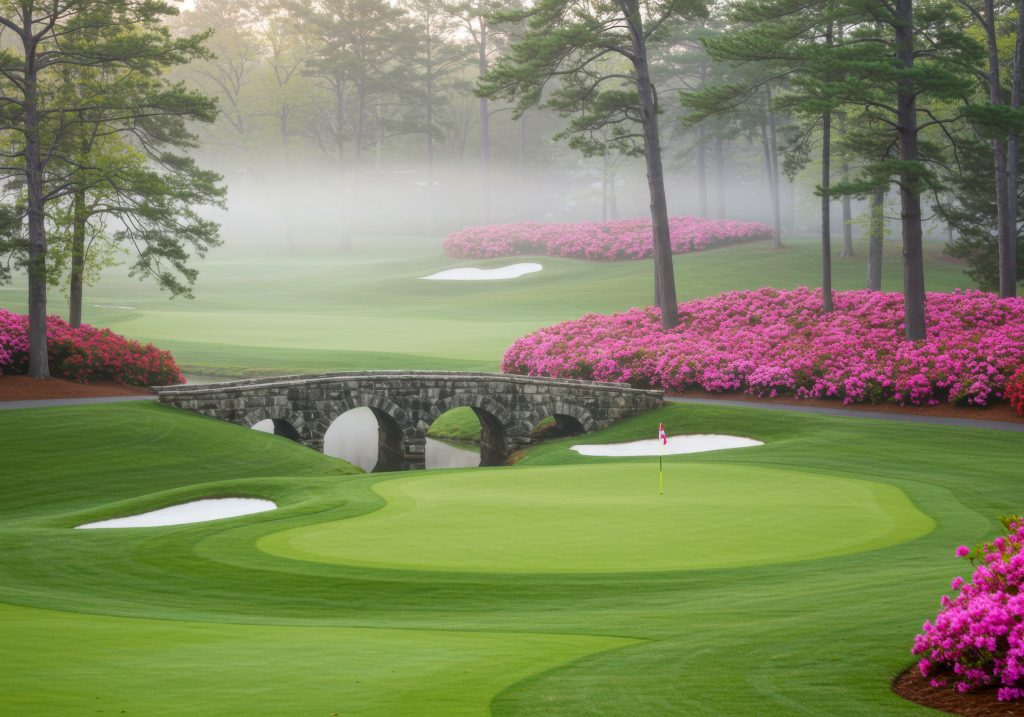
As the gates of Magnolia Lane swing open for the 90th time, the 2026 Masters Tournament arrives with a sense of historic inevitability and a landscape forever altered by the events of the previous year. Scheduled for April 9–12, 2026, this edition of golf’s most prestigious invitational carries a weight far heavier than the typical spring tradition. The narrative is dominated by Rory McIlroy, who returns to the hallowed grounds of Augusta National not as a tortured soul chasing a ghost, but as a defending champion finally unburdened by the career Grand Slam he completed here just twelve months ago. Yet, his path to a repeat is blocked by a formidable titan in Scottie Scheffler, whose ball-striking remains so historically dominant that it has redefined the modern standard of excellence.

This landmark anniversary tournament promises a collision of eras and allegiances, featuring a field that bridges the divide between PGA Tour loyalists and resurgent LIV Golf heavyweights. Against the backdrop of blooming azaleas and the echoes of Amen Corner, the world prepares to witness if McIlroy can build a dynasty, or if the sheer clinical precision of Scheffler will reclaim the throne in what is shaping up to be the most competitive field in the history of the major.

The Expected Favorites

The betting markets and expert analysis for 2026 are dominated by two names, followed by a surging group of younger challengers. Here’s a breakdown beginning with the World No.1 player.

Scottie Scheffler

Scottie Scheffler (+280 to +350): The undisputed World No. 1 is the heavy favorite to win his third Green Jacket. Scheffler won two majors in 2025 (PGA Championship and The Open) and has not finished outside the top 20 at Augusta in six appearances.

Rory McIlroy

Rory McIlroy (+650 to +750): As the defending champion, McIlroy enters 2026 without the immense pressure of the career Grand Slam. While repeat winners are rare—only three players have ever done it—his current form makes him a primary threat.

Ludvig Åberg

Ludvig Åberg (+1200 to +1400): After a runner-up finish in his 2024 debut and consistent contention in 2025, Åberg is widely viewed as the next young star destined for a major.

Bryson DeChambeau

Bryson DeChambeau (+1200 to +1400): Representing LIV Golf, DeChambeau remains a top favorite due to his driving dominance and strong major record over the last two seasons.

Past Disappointments & Redemption Arcs

While Augusta National is celebrated for rewarding course knowledge and veteran savvy, its hallowed grounds can just as easily become a theater of recurring heartbreak for those unable to conquer its psychological demands. The 2026 Masters serves as a critical crossroads for several elite players seeking to rewrite their personal histories with the Green Jacket.
Justin Rose stands at the center of this narrative; after finishing as the runner-up in a gut-wrenching playoff during the 2025 tournament, he returns with a “now-or-never” intensity to finally secure the win that has eluded him for nearly two decades. Similarly, Jon Rahm is under immense pressure to find his redemption after a lackluster 2025 major season that saw him struggle to maintain his status as the world’s most feared competitor.

For others, like Joaquin Niemann, the tournament is a chance to shed the “underperformer” label that has followed him after several high-profile collapses on the weekend. In the shadows of the pines, these redemption arcs provide a poignant contrast to the favorites, proving that at Augusta, the scars of past disappointments often serve as the greatest motivation for future glory.

Jon Rahm

Jon Rahm: Despite winning in 2023, Rahm’s major performances in 2025 were considered below his elite standard, leading to a “crucial year” in 2026 to reestablish his status as a top-tier contender.

Justin Rose

Justin Rose: A three-time runner-up at Augusta, Rose suffered a heartbreaking playoff loss to McIlroy in 2025. Fans and media are watching to see if the veteran can finally secure the win in his late-career prime.

Joaquin Niemann

Joaquin Niemann: Despite high expectations, Niemann has been described as a “no-show” in past majors, struggling to translate his LIV Golf success to the biggest stages.

2026 Masters Predictions

As the 2026 Masters approaches, analysts are anticipating a heavyweight showdown between established icons and a handful of surging sleepers. Scottie Scheffler enters the week as the consensus favorite to win; his ball-striking remains historically dominant, and experts believe that if his putting remains at the elite levels seen throughout 2025, he will be nearly unbeatable at Augusta National.

While the spotlight remains on the leaders, Justin Rose has emerged as the top sleeper pick for the green jacket, bolstered by his early 2026 victory at the Farmers Insurance Open and a career defined by elite course history at this venue. Among the newcomers, Ryan Gerard is the standout name to watch for Top Debutant honors, having secured his invitation through a grueling 10,000-mile journey to crack the world’s top 50.

Finally, with Augusta maintaining its notoriously strict field of under 100 players, the cut line is predicted to land at +2 or +3, though this will ultimately be dictated by the spring weather conditions in Georgia.

The Overall Outlook: What to Expect

Ultimately, the 2026 Masters represents a convergence of legacy, rivalry, and the relentless pursuit of perfection. For the fans, all eyes remain fixed on the practice green as Tiger Woods, now 50 years old and recovering from back surgery, weighs a historic 26th appearance that would once again electrify the gallery. While the players recognize that the friction between the PGA Tour and LIV Golf has settled into a quiet competitive tension, the presence of heavyweights like Brooks Koepka and Cameron Smith ensures the field remains the most formidable in the sport.

The media narrative will undoubtedly pivot between Rory McIlroy’s quest for a rare back-to-back defense and Scottie Scheffler’s methodical march toward his own career Grand Slam later this summer. As the field of approximately 86 players—bolstered by new qualifying exemptions for international champions—prepares to walk these hallowed fairways, the stage is set for a tournament that promises to honor Augusta’s storied past while defining the future of the game.

Congratulations Justin Rose on a great finish!

Rose overcame a three-shot deficit to Tommy Fleetwood over the closing holes and then defeated Spaun in a playoff. The playoff went to a third hole where Rose made a 10-foot birdie putt to win after Spaun missed a similar putt. He made six birdies in his last nine holes, including the two in the playoff. Spaun, the U.S. Open champion, also played well, making a 30-foot birdie putt on the second extra hole. Tommy Fleetwood, who held the lead for much of the tournament, finished one shot out of the playoff, along with Scottie Scheffler.

Justin Rose wins 3 hole playoff against JJ Spaun to clinch the FedEx St. Jude Championship

Rose told ESPN after the win, “When I bring my best I know I’m good enough to compete and play with the best players in the world”. This is Rose’s first PGA Tour victory since the 2023 AT&T Pebble Beach Pro-Am. Rose earned 2,000 FedExCup points and $3.6 million, according to the PGA Tour. According to CBS Sports, Rose is the oldest European winner in the modern era of the PGA Tour.

Golfers are among the most obsessed people on the planet when it comes to their passion of hitting a little white ball in a little white hole.

They want to play as many holes as possible without unnecessary distractions and interruptions.

Will Zalatoris, the 28-year-old PGA TOUR star, is no different.  How he gets from point A to point B efficiently sans hassles is important to saving time and, therefore, making time to focus on his game and livelihood.

That’s why he became a Magellan Jets’ Jet Card holder with the company turning around to authentically make Zalatoris a member of the Magellan Jets professional Tour staff.  He joins the 4Aces Golf Club captained by two-time major champion Dustin Johnson on the LIV Golf League and legendary instructor Claude Harmon III as ambassadors.  Many professional golfers on major Tours worldwide have purchased Magellan Jets’ Jet Cards and fly Charter with the company.

Magellan Jets flies Zalatoris privately from tournament to tournament and elsewhere in “luxe solitude.”

“I live in Dallas where flying commercially is especially harried,” said Zalatoris.  “Tour players rave about Magellan Jets extraordinary service, luxury aircraft and safety record, so I purchased a Magellan Jets’ Jet Card.  Now I don’t get anxious when it comes to travel and can focus even more on my game and life away from the course.”

“Will Zalatoris is an exceptional young man who possesses the morals and values of Magellan Jets,” said Joshua Marc Hebert, Founder and CEO of Magellan Jets.  “Like other professional athletes, he counts on us managing his travel and getting him efficiently, safely and on time to his next tournament and other commitments globally.”

Expected to enjoy a breakthrough 2025 season, Zalatoris finished second in the 2021 Masters Tournament, 2022 PGA Championship and 2022 U.S. Open, and won the 2022 Fe-Ex St. Jude Classic.  Eight top 10 finishes in 2021 earned Zalatoris PGA TOUR Rookie of the Year.  Other achievements include a U.S. Junior Amateur victory, Walker Cup play and ACC Player of the Year award at Wake Forest.

0
0
Your Cart
Your cart is emptyReturn to Shop