October 16, 2026

Modern Golf

Why Your Golf Bag is Getting a Long-Overdue Makeover

There is a quiet revolution happening on golf courses all over the world, and it starts right at the top of your golf bag. For decades, traditional sets of clubs arrived with a standardized lineup that included a 3-iron, a 4-iron, and sometimes even a dreaded 2-iron. These sleek, thin sticks of steel were once badge-of-honor clubs, meant to prove you possessed the precision of a seasoned pro. Today, those long irons are rapidly gathering dust in garages, replaced by a friendly, thick-soled generation of hybrid golf clubs and high-lofted fairway woods.

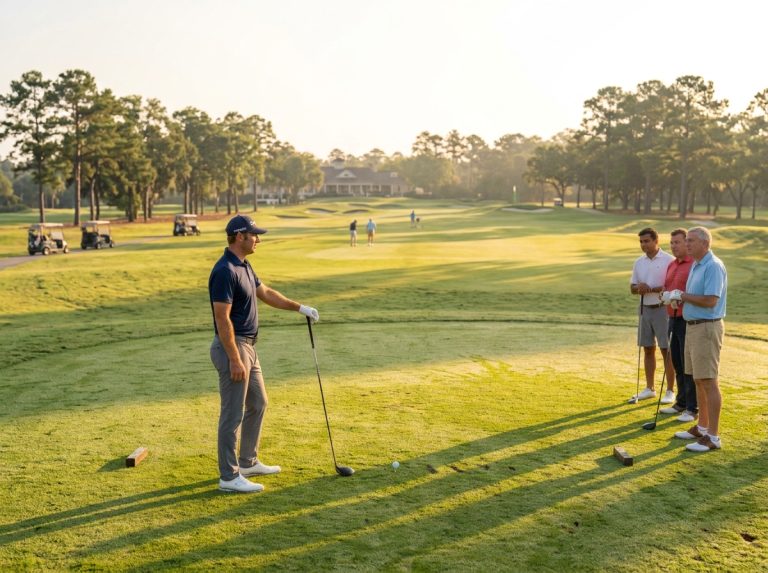
Golfers are seeing the benefits of swapping out long irons for more forgiving hybrid clubs

The shift is a fundamental correction in how everyday golfers approach the game. For the average amateur, pulling a traditional 3-iron from 200 yards out in the rough is a recipe for anxiety. The face is small, the sweet spot is miniscule, and unless you strike it perfectly, the ball is likely to stay close to the ground and veer wildly off course. Golfers have collectively decided that life is too short for stressful shots, opting instead for equipment designed to actually help them.

Enter the hybrid, the ultimate shapeshifter of the golf world. By blending the head shape of a fairway wood with the shaft length and loft of an iron, equipment designers created a tool that offers the best of both worlds. Hybrids feature a much deeper face-to-back profile than standard irons. This design choice pushes the center of gravity low and far back from the face, which does something magical for your swing: it launches the ball into the air with minimal effort.

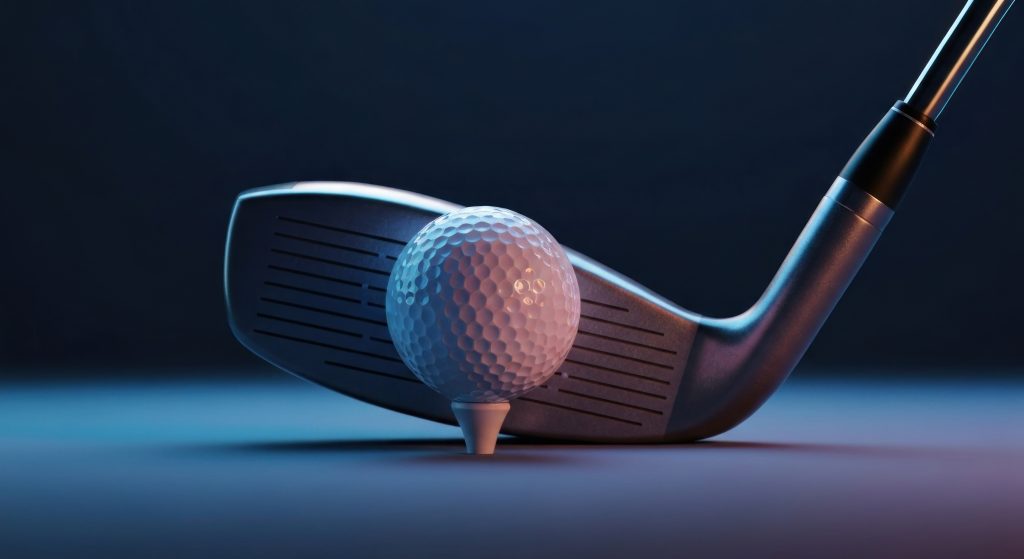
Teeing off with a “Hybrid or Fairway Wood” can be the smart play, especially when accuracy is needed

The beautiful truth about hybrids is their incredible forgiveness. When you mishit a long iron, your hands vibrate, your distance plummets, and your ball disappears into the trees. When you mishit a hybrid, the larger clubhead stability minimizes twisting. Your ball might not reach the exact target, but it stays remarkably online and retains enough distance to keep you out of serious trouble. It turns disastrous misses into perfectly playable shots, saving pars and preventing those scorecard-wrecking big numbers.

Another massive reason for the great iron swap is turf interaction. Traditional long irons require a precise, downward strike that cuts a clean divot. If you hit slightly behind the ball, the iron digs straight into the ground, resulting in a chunked shot that goes nowhere. Hybrids and fairway woods are built with wide, flat soles. They are designed to glide and slide effortlessly across the grass, which means even a slightly imperfect swing will still produce a highly functional result.

This gliding ability transforms how you play from difficult lies. Trying to extricate a golf ball from thick, heavy rough with a 4-iron is an athletic feat that usually ends in frustration. A hybrid cuts through heavy grass like a hot knife through butter, popping the ball out and up onto the fairway. They are so versatile that many creative players even use them for simple bump-and-run chip shots from just off the putting surface, utilizing the wide sole to ensure clean contact.

High-lofted fairway woods are enjoying a major renaissance of their own

While hybrids have conquered the middle ground, high-lofted fairway woods are enjoying a major renaissance of their own. For generations, golfers rarely looked past the traditional 3-wood and 5-wood. Now, savvy players are adding 7-woods, 9-woods, and even 11-woods to their arsenals. A 7-wood typically carries a similar loft to a 3-hybrid or a 4-iron, but it features a slightly larger head and a longer shaft. This combination creates a sweeping motion that results in a towering, majestic ball flight that lands softly on the green.

Choosing between a hybrid and a fairway wood for your long-iron replacements usually comes down to your personal swing style. If your natural swing is steep and you prefer to hit down on the ball like you do with your short irons, you will likely fall in love with hybrids. If you have a smoother, flatter swing and prefer to sweep the ball off the turf like you do with a driver, a high-lofted fairway wood will give you the confidence you need.

Conclusion:

Ultimately, leaving your ego at the clubhouse door is the smartest strategy you can deploy on the golf course. Even elite touring professionals regularly swap out their long irons for hybrids or specialized woods depending on the course conditions. If the best players in the world are looking for a little extra help to make the game easier, there is absolutely no reason the rest of us should be struggling with outdated, unforgiving iron designs.

Take a close look at your bag before your next round, give yourself permission to accept a little extra help, and enjoy the effortless launch of modern club technology.


Beyond the headlines, we reflect on the generational impact of Tiger Woods and the unwavering spirit of golf’s most iconic figure.

In the quiet hours of a Sunday afternoon at Augusta National, there is a specific type of silence that only one man can command. It is not the silence of indifference, but the heavy, expectant hush of a world watching a living legend navigate the twilight of a career that redefined an entire sport. At Golf Tips Magazine, our mission has always been to provide the tools for improvement and the inspiration to keep swinging. Today, however, we set aside the mechanics of the draw and the physics of the flop shot to speak on something more fundamental: the human spirit of the man who gave us the modern game. Recent headlines surrounding Tiger Woods have once again ignited a firestorm of speculation, critique, and, in some corners of the media, a rush to judgment. At Golf Tips, our official position is one of unwavering encouragement. We believe that what Tiger Woods does in his private life is exactly that—personal. Unlike the mainstream media, which often dwells on the fractures in a person’s foundation, we choose to look at the monumental structure he has built for the game of golf.

This is an article of empathy for the struggle, a cautionary reflection on the weight of greatness, and a celebration of the most impactful career in the history of the sport.

The Architect of Modern Golf

To understand the current chapter of Tiger Woods’ life, one must first respect the sheer magnitude of the book he has already written. Before Tiger, golf was a niche pursuit, often viewed through a lens of exclusivity and tradition that moved at a glacial pace. Then came 1997. When a 21-year-old Tiger Woods dismantled Augusta National to win his first Masters by 12 strokes, he didn’t just win a tournament; he shifted the tectonic plates of the sporting world. He brought an athleticism to the tee box that the game had never seen, turning the golf swing into a high-velocity expression of power and precision. He made “Tiger-proofing” a necessity for courses around the globe, forcing architects to rethink the very limits of the game. But his impact went far beyond yardage. Tiger Woods invited the world to the fairway. He broke down racial and socioeconomic barriers, inspiring a generation of golfers who finally saw someone who looked like them holding the Claret Jug or wearing the Green Jacket. Every time we see a young phenom today—athletes who treat their bodies like high-performance machines and approach every shot with clinical intensity—we are seeing the “Tiger Effect” in real-time. He didn’t just play the game; he rebuilt it in his image.

The Weight of the Gaze

There is a cautionary tale to be told about the price of such singular excellence. For nearly three decades, Tiger Woods has lived under a microscope that would crush most individuals. When you are the “Chosen One,” there is no such thing as a quiet mistake. Every stumble is a front-page story; every recovery is a miracle or a letdown. As we reflect on his journey, we must acknowledge the immense physical and mental toll of maintaining that level of dominance. Tiger’s career has been a masterclass in resilience, defined by a series of comebacks that defy medical logic. From reconstructive knee surgeries to spinal fusions that were supposed to end his playing days, he has consistently willed his body back into competitive form. The cautionary element here is not for Tiger, but for us, the observers. It is a reminder of the fragility of even the most robust icons. It highlights the danger of tying a human being’s entire worth to their statistical output or their public perfection. When we demand that our heroes be infallible, we forget that they are prone to the same gravity that affects us all.

A Position of Encouragement

At Golf Tips Magazine, we choose to lead with empathy. The latest news, while complex, serves as a reminder that the path of a legend is rarely a straight line. We see a man who has given everything to his craft—a man who has played through unimaginable pain to hear the roar of the crowd one more time. Our stance is simple: we are here to support the person, not just the player. The challenges Tiger faces today, whether physical or personal, are his to navigate, and he deserves the space to do so with dignity. We believe in the power of the “long game”—the idea that success isn’t just about the trophies in the case, but the ability to recognize when change is needed and to address it with the same discipline used to master a 60-degree wedge.

Why We Still Believe

Why do we remain so staunchly in Tiger’s corner? Because golf is a game of integrity and second chances. Every golfer knows the feeling of a bad round—the frustration of a drive that finds the woods or a putt that lips out. But we also know the beauty of the next tee box. The game teaches us that no matter what happened on the 9th hole, the 10th is a fresh start. Tiger Woods has shown us this “fresh start” mentality time and time again. His 2019 Masters victory remains perhaps the greatest comeback in sports history, a moment that wasn’t just about golf, but about the refusal to be counted out. It was a win for everyone who has ever been told their best days are behind them.

Moving Forward

As we look to the future, we hope for health, peace, and continued growth for Tiger. Whether he ever hoists another major trophy is secondary to the legacy he has already secured. He has been the ultimate ambassador for the sport, a father who shares his love of the game with his son, and a figure who continues to draw millions of eyes to the screen just to see him walk onto the range. To the fans, we say this: let us be the gallery that cheers not just for the birdies, but for the man himself as he navigates this next leg of his journey. Let us offer the same grace we would hope for on our own toughest days.

Tiger Woods changed golf forever. He gave us moments of magic that we will tell our grandchildren about. For that, he has earned our respect, our silence when it’s needed, and our loudest encouragement when he decides to step back into the light.

0
0
Your Cart
Your cart is emptyReturn to Shop