September 16, 2026

golf training

GolfForever’s First 28-Day Fitness Challenge Drives Strong Member Engagement.

Aspen, Colo. — GolfForever, the industry-leading at-home golf fitness and wellness system designed to help everyday golfers move better, play better, and enjoy the game pain-free late into life, announced that its February 2026 GolfForever Fitness Challenge drew nearly 1,000 participating members, far exceeding expectations and prompting plans for additional challenges later this year.

The February Challenge was created to help golfers prepare their bodies for the season ahead, turning the offseason anticipation into an opportunity to build strength, mobility, and consistency. Designed to keep members motivated and accountable, it gave golfers a simple, structured way to build momentum alongside a like-minded community while reinforcing habits that support long-term performance.

“We didn’t know what to expect when we put the challenge out there,” said Jon Levy, GolfForever SVP of Brand and Communications. “We had never engaged our membership with a formal challenge or monitored their activity in this way before. To see nearly 1,000 golfers sign up was an exciting indicator of how engaged our members are, and how motivated they are to improve their bodies and games for the upcoming season.”

As part of the Challenge sign-up process, GolfForever surveyed participants prior to the start to better understand the program’s impact. Among a subset of 399 respondents who reported using GolfForever an average of two times per week or more, 98.5 percent reported noticeable improvements in their physical ability to swing a golf club, including gains in range of motion, flexibility, strength, and endurance.

During the Challenge, increased engagement led to additional reports of improvement and hundreds of positive messages from participants. One enthusiastic GolfForever user whose story stands out is 79-year-old Gene Merchant, who committed himself to one hour of exercise four to five days a week even before the 28-day challenge began. He used the Challenge period to share his enthusiasm and results. “This GolfForever system seems to work the core and the whole body very well. After five or six months, I started to notice a real difference in my game. I was driving the ball up to 40 yards longer. My average driving distance had dipped down to about 190 yards and after the GolfForever workouts, I’m now able to drive it 230 yards.”

Following the success of the February Challenge, GolfForever will double down on current plans to integrate these success markers directly into the core user experience, spurred by powerful stories shared by members who moved out of chronic pain and back onto the course. “It’s very clear our members are motivated by goals and measures of progress,” Levy noted. “So, that’s exactly what we’re going to give them more of in their daily GolfForever experience.”
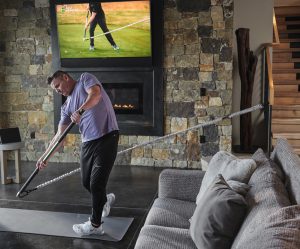
Moving forward, the company’s focus will be on providing members with enhanced tools to quantify and manage their personal progress, such as enhancing the onboarding strength and flexibility test; new quantitative and qualitative feedback loops to help users measure their progress over time; and a function allowing users to adjust their personalized programs based on their evolving fitness levels.

“This challenge showed us the impact our mission has on people,” Levy said. “GolfForever members will soon better understand the tangible value and measurable progress they see in their bodies and on the golf course.”

For more information about GolfForever, visit golfforever.com.

About GolfForever

GolfForever is a comprehensive, smart at-home training system that takes a science-based approach to maximizing performance by improving flexibility, core strength, balance, and rotational power. The first golf-specific home training program to embrace the approach of home exercise equipment paired with streaming instruction, GolfForever takes it one step further by customizing each golfer’s exercise routines just for them, based on a proprietary strength and flexibility test users take when starting. The result is a product and program that is safe, highly effective for any golfer and proven to work, as evidenced by a pilot study that saw users who used GolfForever three days per week for 30 days gain an average of 26 yards with their driver.

With exercise routines designed by some of the top PGA Tour trainers and orthopedic experts in the U.S., GolfForever users can expect to swing and perform their best – with a pain-free body – for as long as they play the game. It is used by more than 1,000 PGA Tour and LPGA Tour players, and thousands of everyday golfers alike. Founded in Aspen, Colorado in 2019 by Dr. Jeremy James, a leading specialist in chronic back pain and co-author of the Younger Next Year Back Book, GolfForever is the ideal companion to expert golf instruction. For more information, go to GolfForever.com or download the new mobile application on the Apple Store for IOS or Google Play for Android.

Ever feel stuck in the same place, wondering how some people seem to level up effortlessly?

Here’s the raw truth: Growth begins when uncomfortable becomes your new normal

If you’re comfortable, you’re not evolving — you’re just repeating. That’s exactly what keeps most players and coaches stuck in a loop, hitting great shots in practice but crumbling under pressure on the course.In this post, I’ll cut through the shiny surface and reveal why embracing discomfort is the game-changer. Whether you’re a golfer struggling to transfer practice to the course or a coach hungry to push your players beyond their limits, this is for you. Let’s dive into why being uncomfortable is the secret to real progress — and how to harness it.

Why Growth Comes From Discomfort — Not Comfort

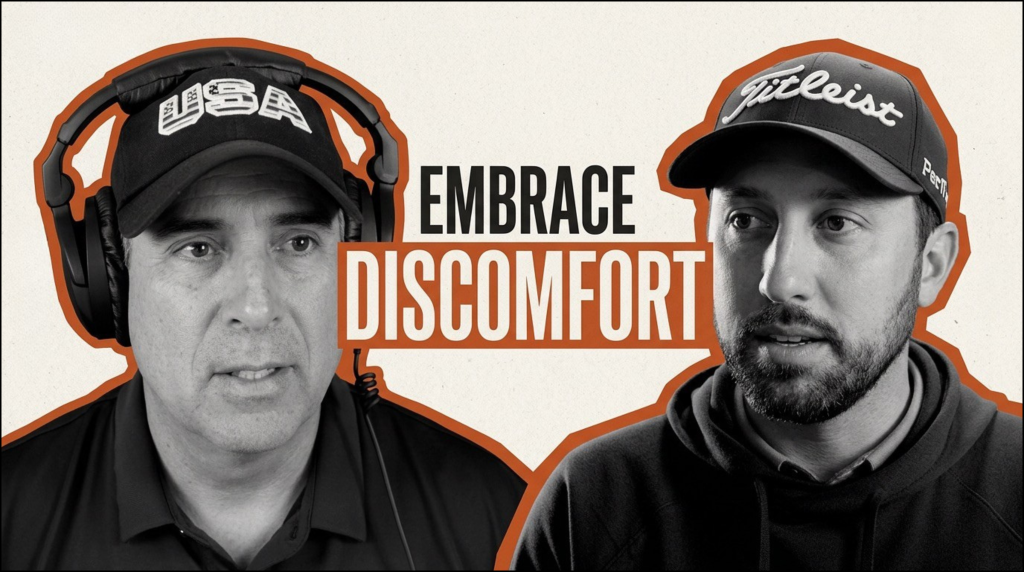
When I spoke with golf coach Michael Wheeler on a recent Coaches Corner segment of my podcast Golf Talk Live, he dropped a truth bomb: “Growth begins when uncomfortable starts.” Think about this—when was the last time you truly pushed yourself outside your comfort zone? To see how embracing discomfort can truly change your game, watch the full conversation here:

The problem: Most people like being comfortable because it feels safe. But safety doesn’t lead to progress; it breeds stagnation. Growth happens when you challenge yourself, push past doubts, and face the uncomfortable realities of what it takes to improve.

Coach Wheeler emphasizes: “Your job isn’t to make someone comfortable; it’s to make them uncomfortable — that’s how you grow.” Whether it’s in golf swing mechanics or mental toughness, the discomfort is where the magic occurs.

The key takeaway: If you want to grow, you must get comfortable being uncomfortable.
How to Embrace Discomfort and Accelerate Your Progress

Change doesn’t happen by wishing for it. It demands action — specifically, action that pushes your boundaries.

Here’s how to flip the script:

1. Shift Your Mindset on Challenges: Instead of avoiding discomfort, see it as a sign you’re on the right track. Like a coach told me, “The best players don’t shy away from the tough shots — they seek them out.” Every mistake, every missed shot, is a stepping stone, not a failure.

2. Seek Out Your Limits: Get intentional about putting yourself into uncomfortable situations. On the golf course, this could mean practicing under simulated pressure or trying shots that scare you. Off the course, it’s about pushing mental boundaries — like staying present during high-stakes moments.

3. Learn to Appreciate the Discomfort: Discomfort is a signal that you’re growing. Instead of resisting it, lean into it. The more you do, the more resilience you build — resilience that translates into all areas of life.

4. Make It a Habit: Consistently put yourself in uncomfortable settings. Whether it’s a tough practice drill or high-pressure situations, discipline creates growth. Remember: “Building a swing is one thing; transitioning into a player requires facing your fears and uncertainties.” Pro tip: The more often you step into discomfort, the less intimidation it holds over you.

From Practice to the Real Deal — Making the Transfer

Here’s the real challenge: it’s one thing to be a “range rat” hitting fantastic shots, but how do you bring that same confidence to the first tee? Coach Wheeler nails it: “Building a golf swing is one thing. Becoming a player is another.” The difference? Transferability”

Practice should mirror the real game, and that’s where discomfort comes in again. It’s about replicating pressure, unpredictability, and stakes during practice so you’re not thrown off when it counts.

Practical Tips:

  • Simulate course conditions during practice.
  • Practice under pressure — time yourself, add stakes.
  • Reflect on failures and embrace them as learning opportunities.
  • Train your mind to stay calm amid discomfort.

Remember: the more you get used to feeling uneasy, the better you’ll handle stress and uncertainty on the course, where it matters most.

Final Thought: Growth is Uncomfortable — Get Used to It

If you’re serious about getting better, you must accept that discomfort is part of the journey. It’s like the coach said, “You need to put yourself in uncomfortable positions — that’s when you start to grow.” Every successful athlete and golfer has faced moments of doubt, fear, and discomfort. The difference maker? They kept going.

So ask yourself: Are you avoiding discomfort — or leveraging it to level up? The path to mastery isn’t paved with comfort zones. It’s built through challenge, resilience, and the willingness to face what makes you uneasy.

Ready to Embrace Discomfort and Grow?

Start today: Seek out the uncomfortable, push your limits, and watch yourself transform. Growth begins where comfort ends. Will you take the leap?

Frequently Asked Questions:

  • Why is discomfort necessary for growth? Discomfort signals that you’re stepping outside your current limits. Without it, you risk stagnation because real progress requires challenging what’s familiar.
  • How can I get comfortable with feeling uncomfortable? Start small. Wear the uncomfortable cloak intentionally: try new drills, take on pressure scenarios, or push yourself just beyond your usual boundaries. Over time, discomfort becomes familiar.
  • What if I fail during uncomfortable situations? Failure in discomfort is a vital part of growth. It teaches resilience and helps you refine your approach. Embrace mistakes as lessons, not setbacks.
  • How does discomfort help in golf or sports? It prepares you for high-pressure moments, builds mental toughness, and transfers the skills from practice to performance. The more uncomfortable situations you train in, the more prepared you’ll be when stakes are high.

Remember: Growth doesn’t happen in comfort — it happens when you rise above your fears, face discomfort head-on, and keep moving forward. Are you ready to grow?


0
0
Your Cart
Your cart is emptyReturn to Shop