September 15, 2026

golf strategy

Adjust Your Swing, Equipment, and Strategy to Play Your Best Golf All Autumn Long.

As the humid haze of midsummer fades into crisp morning breezes and vibrant foliage, golfers everywhere face an annual crossroad. It is easy to view autumn as the sunset of the golf season—a time when clubs start gathering dust in the garage and tee times become an afterthought. Yet ask any seasoned player, and they will tell you the exact opposite: fall is arguably the absolute best time of year to play. The fairways are firm, the air is refreshing, and the courses offer breathtaking backdrops.

To make the most of this golden season, you do not need a complete swing overhaul. You simply need a slight shift in mindset, a few smart equipment adjustments, and a willingness to embrace the changing elements.

Riding the Momentum: Don’t Put the Game on Cruise Control

By late summer, most golfers have established a rhythm. Your tempo is dialed, your contact is consistent, and you have built up valuable course muscle memory over months of regular play. The biggest mistake players make right now is pulling back on their schedule just as their game peaks.

Vibrant autumn foliage frames a pristine green, showing off fall’s best scenic course conditions.

To keep that momentum rolling, rethink how you structure your golf week. If daylight savings time or cooler evenings cut into your post-work nine holes, shift your focus toward quality practice rather than full rounds. A brisk 45-minute evening session focusing on short-game touch or wedge distance control keeps your hands sensitive and your feel sharp. When weekend rounds do arrive, you will step onto the first tee feeling warmed up and ready, rather than trying to shake off a week’s worth of rust.

The Cold Hard Physics of Cold Weather Golf Balls

One of the most noticeable differences in autumn golf comes down to simple physics and ball compression. Cold air is denser, creating more drag on the ball in flight. At the same time, cold weather affects the golf ball itself: lower temperatures cause the core material of the ball to firm up, making it feel harder off the clubface and reducing core spring energy.

Switching to soft, low-compression balls maintains optimal feel and distance as temperatures start dropping.

How to Choose the Right Ball for Fall Conditions:

1. Drop to a Lower Compression Rating: If you normally play a firm tour-style ball (like a Titleist Pro V1x or TaylorMade TP5x), consider switching to a softer, lower-compression model (such as a Titleist AVX, Callaway Chrome Soft, or Srixon Soft Feel). A lower-compression ball compresses more easily under cold temperatures, helping restore felt feel off the club and maximizing distance when swing speeds naturally slow down slightly.

2. Keep Your Balls Warm Before Teeing Off: Keep a couple of golf balls in your pants pocket between holes. Body heat helps maintain the core temperature of the ball, ensuring optimal energy transfer at impact.

3. Expect Less Distance Overall: Combine denser air with firmer ball reaction, and you will lose about 2 to 3 yards for every 10-degree drop in temperature. Adjust your expectations and club selection accordingly.

Reading the Elements: Playing Smart in Cooler Air

Transitioning to fall golf requires accepting one fundamental physics rule: cold air is denser than warm air, and golf balls simply do not fly as far. Add in extra layers of clothing that slightly restrict your turn, and you can expect to lose anywhere from half a club to a full club in distance.

Wearing cozy layers maintains smooth swing tempo during a crisp autumn session.

Instead of trying to swing harder to force your midsummer yards—which usually leads to tense, off-center hits—club up generously. If you normally hit a 7-iron from 150 yards, pull a smooth 6-iron. Focus on a relaxed, effortless rhythm. Additionally, pay close attention to turf conditions. Autumn morning dew leaves fairways damp, meaning less roll on your drives, while afternoon leaves can hide a ball that strays just a few yards off the fairway. Playing target golf and favoring accuracy over raw distance will keep your scorecards clean.

Two Simple Fall Swing Fixes to Take to the Range

While you shouldn’t overhaul your mechanics mid-season, fall is the ideal time to refine a couple of low-effort, high-reward feel drills during your Sunday practice.

. The Low-Tee Stinger Drill: With breezy autumn weather rolling in, learning to control trajectory is a game-changer. Tee the ball low—just half an inch above the turf—and move it back an inch in your stance. Focus on finishing with your hands low around chest height on the follow-through. This naturally lowers your launch angle, keeping your ball flight penetrating under wind gusts.

. The “Two-Putter Cover” Contact Drill: Damp fall greens mean your putting stroke needs crisp, center-face contact to roll smoothly. Place two headcovers on either side of your putter head, leaving just half an inch of clearance on the toe and heel. Practice taking short, smooth strokes without clipping the covers. It instantly solidifies your stroke paths on slower autumn greens.

Embracing the Season’s Rewards

Ultimately, autumn golf is about enjoying the unique charm of the game when nature puts on its best show. Pack a lightweight windbreaker, swap in a slightly softer golf ball that responds better in low temperatures, and keep a micro-fiber towel handy for damp turf. With a few minor tweaks to your routine, the fall months won’t just mark the end of another year on the links—they might just produce your best rounds yet.

Are you choosing the correct side of the tee box for your swing?

If you’re guilty of trying to make a driver swing change in the middle of your round like most, you’ve probably realized that it isn’t the greatest way to play. Instead of trying to make mechanical changes, try playing with the shot that you have for that day and take advantage of your surroundings instead. Most tee boxes are wide enough to set up in a variety of locations, so let’s figure out which side is the correct side for you. In general, whatever side you fear hitting to, you will go to that side of the box.

Scenario 1

Let’s say that you are a player who absolutely hates missing the shot to the left. I would suggest that you set up on that side of the tee box to eliminate the left side. If you tee it up on that side, you will open up more of the right side of the hole.

To help avoid the left side of the fairway. Tee it up on the left.

Scenario 2

If the right side of the hole makes your blood boil, try teeing it up on the right side of the tee box, so you’ll be more inclined to aim out toward the left side.

Golfer who typically fade or slice the ball, you should tee it up on the right side.

Scenario 3

The middle of the tee box works best if your miss is minimal both ways and if you’re teeing off with a shorter club.

If you hit pretty straight then you are generally safe to tee it up in the middle.

Bonus Tip:

Did you know that you can set up with your feet outside of the tee markers? As long as the ball itself is teed up within the parameters of the markers, it is completely legal. As extreme as this may be, it comes in handy if the teeing ground is uneven or if there are divots all over.

As long as the ball itself is teed up within the parameters of the markers, then this is completely legal.

Summary:

Instead of making mechanical swing changes during a round, golfers should use tee box positioning to manage their ball flight and fear of hazards. Align on the side of the tee box that corresponds to the side you fear missing on, or use the center for minimal misses, notes instructor Cathy Kim

Tip provided by: Cathy Kim, PGA/LPGA Professional & Top 25 Instructor

Stop fearing fairway bunkers with this simple shift in strategy.

One thing that attracts people to golf is that no two rounds will ever be the same. Whether you’re playing on the East Coast, in the Midwest or out in the desert, you will face different shots, situations and challenges. One thing’s for sure, though—you need to be fast on your feet and know how to deal with different situations when you don’t have your “A” game!

Playing golf in Arizona presents many challenges that aren’t often found in other regions. Because of the scarcity of water in the southwest, golf courses reduce the amount of grass and rough by replacing it with fairway bunkers and desert landscape around the greens, so it’s often called “target golf.” If you’re not able to keep your ball in play, you’re likely to find either one of these situations.

Practicing fairway bunker shots is often overlooked when it comes to divvying up your practice schedule. It really isn’t a shot, though, that you should fear. Think of it as hitting a shot from the fairway but from a different-looking surface. One of the most common mistakes I see golfers make is trying to get too much club out of the situation. You have to think less about the distance you need to hit it and more about what club you can use to get out of the bunker and clear of the lip. Getting greedy never works. Take what the situation is going to give you and move on to the next shot.

Fairway bunkers

Stack the Sternum

There are a few subtle changes you need to make in your setup when it comes to hitting from a fairway bunker. Tilt your upper body slightly toward the target so that the buttons on your shirt or your sternum are in front of the golf ball. You should feel that your weight is slightly favoring your front foot at address. These adjustments with your upper body will allow the club to travel on a steep downswing, making it less likely you will hit the sand behind the ball at impact.

Set the Foundation

Keep the ball position in the middle of your stance if you are hitting a short- to mid-iron out of the bunker. Grip down on the handle slightly, as your feet will be below the ball at address. Because of the adjustments in your setup, expect the trajectory of the shot to be slightly lower than normal. As a rule of thumb, take one more lofted club than you think you’ll need so that you have no issues clearing the lip of the bunker.

No Weight Shift

Your backswing is going to be slightly different than a regular shot. As you initiate your backswing, your weight must stay on your front foot. There should be absolutely no weight transfer toward your back foot as the club completes the backswing. Your swing thought should be to set your weight forward and make an arms and hands backswing with minimal body rotation. If your weight does pivot toward your back foot, it will be very difficult to pivot back toward your front foot on the downswing.

Trap it at Impact

On your downswing, your body should lead the charge back to the ball. Your weight should shift toward your front foot, and your hips and chest should have rotated slightly past the ball before your arms and hands deliver the club back to the ball. Following this correct sequence will ensure you contact the ball before the sand.

Stick the Finish

As long as you don’t try and hit the ball hard, your swing should end balanced and finish. The majority of your weight should be on your front foot, with your shoulders stacked on top of your hips. Any hanging back with your upper body will cause the club to bottom out early and either blade or chunk the shot.

Desert greenside

Hitting from the desert poses a different challenge. If you are just off the fairway, and you have a clear shot to the green, play it like any other shot you would hit from that distance. If the situation is around the green, then you are more likely to tackle it like a greenside bunker shot. Evaluating the lie should be the first thing you do.

Take into consideration the firmness of the surface and how aggressive you can be with the shot. If the ground is firm like a wet bunker, you’re going to have to somehow break up the dirt with a punchy, steeper swing. If the surface is softer and broken up like a regular greenside bunker, you’re going to need to swing a little shallower and avoid driving the club into the ground.

Evaluate the situation

Club selection is going to be critical when hitting out of the desert. You’re going to want to select a wedge that has little to no sole bounce. Typically, the lie will be tight and the ball will have nothing underneath it other than dirt. High-bounce clubs tend to bottom out too soon and bounce off the hardpan before the ball. Open the clubface slightly to avoid digging the club into the ground and play the ball forward in your stance. Opening the face tends to expose the heel of the club, so make sure you align the ball more toward the toe of the clubface. A good visual cue is to make sure the grooves on the clubface point to your front big toe.

Fan the face

To maximize loft and spin, make some practice swings and feel like you are fanning the face open. Focus on getting the right hand underneath the handle at the midpoint of your backswing, and make sure the clubface is pointing toward the sky. A good visual cue is to make sure the toe of the club points away from the ball and behind you at this point in the swing.

Set up for success

Set up to the ball with a slightly wider stance than normal. This will give you better stability and balance throughout the shot. Lean your weight toward the target to help you create a slightly steeper swing and avoid hitting the ground behind the ball.

Stay stacked

Hinge your wrists early to create a slightly steeper backswing. Try to limit how much your body rotates away from the target. If your upper body turns like a full swing, you’re likely to sway off the golf ball and change where the bottom of the swing happens.

Blast, Baby!

Impact should feel like you’re hitting a bunker shot. To maximize the sole’s bounce, release the club early on the downswing by making the arms and hands get to the ball before the body turns toward the target. By playing the ball more forward in your stance, you should aim to thump the dirt before the ball. This will cause an explosion, launching the ball into the air and landing softly while at the same time generating backspin.

Stick the landing

Allowing the clubhead to release faster through impact, you should notice that the clubhead finishes above your head before you even have a chance to see where the ball has gone. Resist the feeling of trying to help the ball up in the air by hanging back on your back foot. The swing should come to an end with the majority of your weight still on your front foot.

Summary

Arizona’s “target golf” requires a strategic approach to navigate desert landscapes and fairway bunkers, replacing traditional rough with arid hazards. Successfully managing these courses involves prioritizing club selection to clear bunker lips and adapting swing techniques to firm or soft desert lies. Mastering target golf in arid conditions requires strategic course management, prioritizing higher-lofted clubs for bunker escape over raw distance. Success in desert environments hinges on anchoring the weight forward and utilizing low-bounce wedges to ensure clean ball-first contact from both sand and firm hardpan.

Keep checking back for even more great tips from our elite Top 25 Instructors.

Why Your Golf Bag is Getting a Long-Overdue Makeover

There is a quiet revolution happening on golf courses all over the world, and it starts right at the top of your golf bag. For decades, traditional sets of clubs arrived with a standardized lineup that included a 3-iron, a 4-iron, and sometimes even a dreaded 2-iron. These sleek, thin sticks of steel were once badge-of-honor clubs, meant to prove you possessed the precision of a seasoned pro. Today, those long irons are rapidly gathering dust in garages, replaced by a friendly, thick-soled generation of hybrid golf clubs and high-lofted fairway woods.

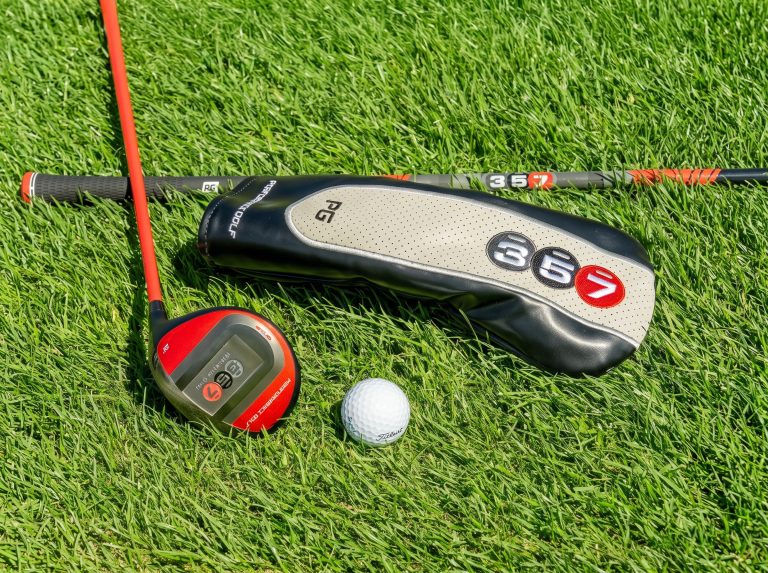
Golfers are seeing the benefits of swapping out long irons for more forgiving hybrid clubs

The shift is a fundamental correction in how everyday golfers approach the game. For the average amateur, pulling a traditional 3-iron from 200 yards out in the rough is a recipe for anxiety. The face is small, the sweet spot is miniscule, and unless you strike it perfectly, the ball is likely to stay close to the ground and veer wildly off course. Golfers have collectively decided that life is too short for stressful shots, opting instead for equipment designed to actually help them.

Enter the hybrid, the ultimate shapeshifter of the golf world. By blending the head shape of a fairway wood with the shaft length and loft of an iron, equipment designers created a tool that offers the best of both worlds. Hybrids feature a much deeper face-to-back profile than standard irons. This design choice pushes the center of gravity low and far back from the face, which does something magical for your swing: it launches the ball into the air with minimal effort.

Teeing off with a “Hybrid or Fairway Wood” can be the smart play, especially when accuracy is needed

The beautiful truth about hybrids is their incredible forgiveness. When you mishit a long iron, your hands vibrate, your distance plummets, and your ball disappears into the trees. When you mishit a hybrid, the larger clubhead stability minimizes twisting. Your ball might not reach the exact target, but it stays remarkably online and retains enough distance to keep you out of serious trouble. It turns disastrous misses into perfectly playable shots, saving pars and preventing those scorecard-wrecking big numbers.

Another massive reason for the great iron swap is turf interaction. Traditional long irons require a precise, downward strike that cuts a clean divot. If you hit slightly behind the ball, the iron digs straight into the ground, resulting in a chunked shot that goes nowhere. Hybrids and fairway woods are built with wide, flat soles. They are designed to glide and slide effortlessly across the grass, which means even a slightly imperfect swing will still produce a highly functional result.

This gliding ability transforms how you play from difficult lies. Trying to extricate a golf ball from thick, heavy rough with a 4-iron is an athletic feat that usually ends in frustration. A hybrid cuts through heavy grass like a hot knife through butter, popping the ball out and up onto the fairway. They are so versatile that many creative players even use them for simple bump-and-run chip shots from just off the putting surface, utilizing the wide sole to ensure clean contact.

High-lofted fairway woods are enjoying a major renaissance of their own

While hybrids have conquered the middle ground, high-lofted fairway woods are enjoying a major renaissance of their own. For generations, golfers rarely looked past the traditional 3-wood and 5-wood. Now, savvy players are adding 7-woods, 9-woods, and even 11-woods to their arsenals. A 7-wood typically carries a similar loft to a 3-hybrid or a 4-iron, but it features a slightly larger head and a longer shaft. This combination creates a sweeping motion that results in a towering, majestic ball flight that lands softly on the green.

Choosing between a hybrid and a fairway wood for your long-iron replacements usually comes down to your personal swing style. If your natural swing is steep and you prefer to hit down on the ball like you do with your short irons, you will likely fall in love with hybrids. If you have a smoother, flatter swing and prefer to sweep the ball off the turf like you do with a driver, a high-lofted fairway wood will give you the confidence you need.

Conclusion:

Ultimately, leaving your ego at the clubhouse door is the smartest strategy you can deploy on the golf course. Even elite touring professionals regularly swap out their long irons for hybrids or specialized woods depending on the course conditions. If the best players in the world are looking for a little extra help to make the game easier, there is absolutely no reason the rest of us should be struggling with outdated, unforgiving iron designs.

Take a close look at your bag before your next round, give yourself permission to accept a little extra help, and enjoy the effortless launch of modern club technology.

The “Tough Two”: When the Ball is Above and Below Your Feet.

Think back to your last round—how many times did you actually have a perfectly level stance? If you’re like most golfers, you can probably count them on one hand. Golf is a game of slopes, yet we spend hours practicing on level ground. To truly take your game from the range to the course, you must understand how to work with gravity, not against it, by adjusting your setup for every incline. Understanding what may or may not happen from these uneven lies and making the necessary set-up adjustments are extremely important to executing the shot and minimizing the BIG mistakes.

When executing any of the uneven lies, use these three steps to help.

Step 1: Take several practice swings to get a feel for the slope
Step 2: Swing at 75% tempo
Step 3: Use a three-quarter length swing

Here we’ll discuss the two toughest uneven lies: Ball above your feet and ball below your feet.

Uneven Lies: Ball Above Feet

Uneven Lies: Ball Above Feet

Option 1: Action-Oriented Flow

“To execute this shot correctly, start by choking down slightly on the grip for better control. You’ll want to aim just right of your target to account for the ball’s flight path while shifting your weight toward your toes to keep the movement dynamic. Complement this by adopting a more upright posture at address, and consider using less club than usual; this helps take some speed off the swing and effectively reduces the risk of a hook.”

Option 2: Casual & Direct

“When setting up, try shortening your grip and aiming a bit to the right to give yourself some room to work. Keeping your weight on the balls of your feet and maintaining a taller, more upright stance will help stabilize your plane. Finally, reach for less club—it’s one of the easiest ways to kill that unwanted hook and keep your ball on a straighter line.”

Key Adjustments Included:

. Choking down: Improving control.
. Aiming right: Counteracting a hook.
. Weight on toes: Promoting balance and athletic movement.
. Upright posture: Creating a more repeatable swing plane.
. Less club: Reducing swing speed to minimize excessive curvature.

SWING – The more lofted club you use for this shot, the further the face will point to the left. Using a lower lofted club will point closer to the target at address and reduce the amountof hook on the shot. This lie shifts the ball closer and higher to you than normal, which will steepen the swing plane, causing you to hit too much ground. At impact, feel the club just brushing the top of the grass. The slope, and a flatter swing plane, will create a right-to-left flight.

Uneven Lies: Ball Below Feet

Uneven Lies: Ball Below Feet

Option 1: Technical & Instructive Flow

“To properly address the ball and guard against a slice, start by gripping up on the club to utilize its full length for maximum leverage. Set your alignment by aiming slightly left of your target, which helps square the face at impact. At address, shift your weight toward your heels and increase your knee flex to create a deeper, more stable base. Finally, opting for a club with more loft is a simple but effective equipment tweak that reduces the side spin responsible for a slice, keeping your ball flight straighter.”

Option 2: Casual & Action-Oriented

“Setting up for success starts with your hands—grip further up the club to gain a bit more extension and power. You’ll want to aim to the left of your final destination to account for any natural curve, while sitting back with your weight on your heels and adding a bit more bend in your knees. This grounded stance, combined with the extra help of a higher-lofted club, will work together to kill off that slice and keep you in the fairway.”

Key Adjustments Included:

. Grip up: Maximizing club length for leverage.
. Aim left: Offsetting the left-to-right curvature of a slice.
. Weight on heels: Promoting a more stable, grounded foundation.
. Increase knee flex: Lowering your center of gravity for balance.
. More loft: Reducing the axis of side spin to straighten out ball flight.

SWING – This is by far the hardest of the uneven lies. Why? In this situation, your swing needs to be more upright than normal WITHOUT changing your posture or knee flex duringthe backswing. Opposite of the other lie, the ball is now further away, making is easier for you to thin or top the shot. Keep your chest down and keep your knee flex throughout the swing, including the finish. Use a club with more loft to help increase backswing on the ball which will reduce the amount of slice. Play for a left-to-right shape and stay down.

Summary

To wrap up these techniques, it’s all about understanding how small setup tweaks can completely alter your ball flight. The first shot requires a more athletic, “tall” posture with the weight forward to help you hold off a hook and maintain precision. Conversely, the second shot focuses on creating a deeper, more stable foundation with a lower center of gravity to help square the face and eliminate a slice.

By mastering these opposing adjustments, you gain the ability to troubleshoot your swing flaws in real-time and keep your ball on the intended line.

Stop second-guessing your yardage and start committing to every strike with a repeatable process for preparation and reflection.

In the high-stakes world of professional golf, the difference between a champion and the rest of the field often lies in the “six inches between the ears.” While fans marvel at 300-yard drives, the true science of the game is found in the repetitive, almost meditative rituals known as the pre-shot and post-shot routines. These are not mere habits; they are psychological anchors that allow players to perform under extreme pressure by turning a chaotic environment into a controlled, predictable process.

The Pre-Shot Routine: The Science of Preparation

For a professional, the pre-shot routine is a transition from the analytical “Thinking Box” to the athletic “Play Box”. In the Thinking Box—usually a few steps behind the ball—the golfer gathers data: wind speed, elevation, lie, and precise yardage. Once a decision is made and the club is pulled, the routine shifts. By the time they step into the Play Box, the thinking is over. The goal is to quiet the mind and let muscle memory take over.

The pros practice this religiously because it builds a “force field” against nerves. For instance, legendary golfer Annika Sorenstam’s routine was famously timed at exactly 24 seconds, rarely varying by more than a single second over a 14-year career. This extreme consistency ensures that whether a player is on the first tee or facing a championship-winning putt on the 18th, the physiological state of their body remains the same. Without this ritual, players often speed up when nervous, leading to the “collapses” seen when a leader’s routine becomes erratic under Sunday pressure.

Finding a Pre-Shot Routine That Works for You

Creating your own routine isn’t about mimicking a pro’s specific “waggle” or “foot-step,” but about following universal principles of focus.

Establish a Decision Zone: Start every shot 2-3 steps behind the ball. Use this space to make your “contract” with the shot. Once you decide on a target and club, commit to it 100%.

Identify Your Visual and Physical Cues: Some players need to see the ball’s flight (visualization), while others need to feel the “weight” of the club or the rhythm of a practice swing. Find a physical trigger—like a deep breath or a specific club adjustment—that signals to your brain, “it’s time to go”.

Keep it Brief and Purposeful: A routine should generally last between 15 to 25 seconds. If you stand over the ball too long, tension and doubt will inevitably creep in.

The Post-Shot Routine: The Art of Letting Go

While the pre-shot routine prepares you for the strike, the post-shot routine protects your mental state for the next one. Its primary purpose is to process the outcome—good or bad—and then “store or reject” it.

A solid post-shot routine involves a brief period of reflection—roughly 10 seconds—where you ask if you were fully committed to the shot. If the shot was poor, you might take one “corrective” practice swing to feel the right motion, then physically signal the end of that shot by cleaning your club and putting it back in the bag. This ritual prevents a single bad swing from spiraling into a bad round, ensuring that by the time you reach your ball for the next shot, your mind is neutral and ready to start the process again.

Summary:

The pre-shot and post-shot routines are the invisible framework that holds a golfer’s physical game together. By mastering the science of the Thinking Box and the Play Box, professional golfers ensure their mechanics remain sharp even when nerves are fraying. While the pre-shot routine builds the commitment necessary to execute a high-level swing, the post-shot routine provides the emotional discipline to leave the last result behind and focus entirely on the next opportunity. For any golfer looking to shave strokes off their handicap, these mental rituals are just as vital as any technical swing change.

Take Action:

Ready to take your mental and physical game to the next level? Don’t leave your performance to chance. Become a Golf Tips Premium Member today to gain exclusive access to tried-and-true methods, deep-dive drills, and professional secrets designed to transform you into a more consistent, confident player.

Join here: golftipsmag.com/register

Stop trying to overhaul your swing and start weaponizing the one you brought to the course.

Getting ready for a weekend round isn’t about fixing your swing—it’s about weaponizing the one you already have. Success on the course comes from shifting your focus from the practice range to the reality of the 18-hole challenge, where managing the environment and your own expectations is the true secret to a lower score. To help you navigate everything from tricky winds to tucked pins, here is your tactical blueprint for a smarter, more disciplined weekend of golf.

This Weekend Warrior Cheat Sheet is designed for quick scrolling on your phone between holes. Save this or screenshot it before you head to the first tee.

The Weekend Golfer’s Tactical Blueprint:

1. Pre-Round: Play with what you brought

Instead of rebuilding your swing, embrace a “play with what you brought” mentality. If your shots curve right on the range, don’t fight it—simply aim left and let that natural shape work for you. While you’re at it, scrub your wedge grooves for maximum spin and spend five minutes rolling 30-foot putts from fringe to fringe to calibrate your feel for the day’s green speeds.

2. The Elements: “Breezy? Swing Easy.”

When the wind kicks up, remember: “When it’s breezy, swing easy.” Hard swings add distance-killing backspin, so take one extra club and commit to a smooth 75% power stroke. To keep the flight piercing, move the ball an inch back in your stance. On uphill lies, club up to account for the high, short flight; on downhill lies, club down and tilt your shoulders to match the slope for a low, rolling finish.

3. Course Strategy: Smart Targets

Success is about playing the percentages. Use the “Middle of the Green” rule—ignore tucked pins and aim for the “fat” part of the surface. To eliminate the “Big Miss,” tee up on the side of the trouble (if water is left, tee up on the left) to create a wider angle toward safety. If you find the trees, ditch the hero shot; punch out to your favorite wedge yardage (like 80 yards) to set up a stress-free par save.

4. The Finish: Stamina & Simplicity

To survive the back-nine fade, follow the short-game mantra: Putt when you can, chip when you can’t putt, and pitch only as a last resort. Keeping the ball on the ground is your safest bet. Before the round, use a club on the ground to recalibrate your alignment—most amateurs aim further right than they think. Fuel up with a snack every six holes to keep your focus sharp through the 18th.

The 15-Minute “Tee-Ready” Routine

0-3 min: Dynamic torso twists and leg swings.
3-8 min: 15 balls (5 wedges, 5 “one-sided” mid-irons, 5 drivers).
8-13 min: 30-foot lag putts and 5 basic chips.
13-15 min: Check alignment on the range and grab your water.

Finally: Go get ’em this weekend! This guide is all about owning your game exactly as it is right now. Forget the stress of “perfect” form—you’ve already got the tools you need to crush it. By playing smart, staying smooth in the wind, and aiming for the heart of the green, you’re setting yourself up for a confident, low-scoring round. Trust your swing, stay fueled, and most importantly, enjoy the walk. You’ve got this!

0
0
Your Cart
Your cart is emptyReturn to Shop