September 16, 2026

golf equipment

Adjust Your Swing, Equipment, and Strategy to Play Your Best Golf All Autumn Long.

As the humid haze of midsummer fades into crisp morning breezes and vibrant foliage, golfers everywhere face an annual crossroad. It is easy to view autumn as the sunset of the golf season—a time when clubs start gathering dust in the garage and tee times become an afterthought. Yet ask any seasoned player, and they will tell you the exact opposite: fall is arguably the absolute best time of year to play. The fairways are firm, the air is refreshing, and the courses offer breathtaking backdrops.

To make the most of this golden season, you do not need a complete swing overhaul. You simply need a slight shift in mindset, a few smart equipment adjustments, and a willingness to embrace the changing elements.

Riding the Momentum: Don’t Put the Game on Cruise Control

By late summer, most golfers have established a rhythm. Your tempo is dialed, your contact is consistent, and you have built up valuable course muscle memory over months of regular play. The biggest mistake players make right now is pulling back on their schedule just as their game peaks.

Vibrant autumn foliage frames a pristine green, showing off fall’s best scenic course conditions.

To keep that momentum rolling, rethink how you structure your golf week. If daylight savings time or cooler evenings cut into your post-work nine holes, shift your focus toward quality practice rather than full rounds. A brisk 45-minute evening session focusing on short-game touch or wedge distance control keeps your hands sensitive and your feel sharp. When weekend rounds do arrive, you will step onto the first tee feeling warmed up and ready, rather than trying to shake off a week’s worth of rust.

The Cold Hard Physics of Cold Weather Golf Balls

One of the most noticeable differences in autumn golf comes down to simple physics and ball compression. Cold air is denser, creating more drag on the ball in flight. At the same time, cold weather affects the golf ball itself: lower temperatures cause the core material of the ball to firm up, making it feel harder off the clubface and reducing core spring energy.

Switching to soft, low-compression balls maintains optimal feel and distance as temperatures start dropping.

How to Choose the Right Ball for Fall Conditions:

1. Drop to a Lower Compression Rating: If you normally play a firm tour-style ball (like a Titleist Pro V1x or TaylorMade TP5x), consider switching to a softer, lower-compression model (such as a Titleist AVX, Callaway Chrome Soft, or Srixon Soft Feel). A lower-compression ball compresses more easily under cold temperatures, helping restore felt feel off the club and maximizing distance when swing speeds naturally slow down slightly.

2. Keep Your Balls Warm Before Teeing Off: Keep a couple of golf balls in your pants pocket between holes. Body heat helps maintain the core temperature of the ball, ensuring optimal energy transfer at impact.

3. Expect Less Distance Overall: Combine denser air with firmer ball reaction, and you will lose about 2 to 3 yards for every 10-degree drop in temperature. Adjust your expectations and club selection accordingly.

Reading the Elements: Playing Smart in Cooler Air

Transitioning to fall golf requires accepting one fundamental physics rule: cold air is denser than warm air, and golf balls simply do not fly as far. Add in extra layers of clothing that slightly restrict your turn, and you can expect to lose anywhere from half a club to a full club in distance.

Wearing cozy layers maintains smooth swing tempo during a crisp autumn session.

Instead of trying to swing harder to force your midsummer yards—which usually leads to tense, off-center hits—club up generously. If you normally hit a 7-iron from 150 yards, pull a smooth 6-iron. Focus on a relaxed, effortless rhythm. Additionally, pay close attention to turf conditions. Autumn morning dew leaves fairways damp, meaning less roll on your drives, while afternoon leaves can hide a ball that strays just a few yards off the fairway. Playing target golf and favoring accuracy over raw distance will keep your scorecards clean.

Two Simple Fall Swing Fixes to Take to the Range

While you shouldn’t overhaul your mechanics mid-season, fall is the ideal time to refine a couple of low-effort, high-reward feel drills during your Sunday practice.

. The Low-Tee Stinger Drill: With breezy autumn weather rolling in, learning to control trajectory is a game-changer. Tee the ball low—just half an inch above the turf—and move it back an inch in your stance. Focus on finishing with your hands low around chest height on the follow-through. This naturally lowers your launch angle, keeping your ball flight penetrating under wind gusts.

. The “Two-Putter Cover” Contact Drill: Damp fall greens mean your putting stroke needs crisp, center-face contact to roll smoothly. Place two headcovers on either side of your putter head, leaving just half an inch of clearance on the toe and heel. Practice taking short, smooth strokes without clipping the covers. It instantly solidifies your stroke paths on slower autumn greens.

Embracing the Season’s Rewards

Ultimately, autumn golf is about enjoying the unique charm of the game when nature puts on its best show. Pack a lightweight windbreaker, swap in a slightly softer golf ball that responds better in low temperatures, and keep a micro-fiber towel handy for damp turf. With a few minor tweaks to your routine, the fall months won’t just mark the end of another year on the links—they might just produce your best rounds yet.

Why Your Golf Bag is Getting a Long-Overdue Makeover

There is a quiet revolution happening on golf courses all over the world, and it starts right at the top of your golf bag. For decades, traditional sets of clubs arrived with a standardized lineup that included a 3-iron, a 4-iron, and sometimes even a dreaded 2-iron. These sleek, thin sticks of steel were once badge-of-honor clubs, meant to prove you possessed the precision of a seasoned pro. Today, those long irons are rapidly gathering dust in garages, replaced by a friendly, thick-soled generation of hybrid golf clubs and high-lofted fairway woods.

Golfers are seeing the benefits of swapping out long irons for more forgiving hybrid clubs

The shift is a fundamental correction in how everyday golfers approach the game. For the average amateur, pulling a traditional 3-iron from 200 yards out in the rough is a recipe for anxiety. The face is small, the sweet spot is miniscule, and unless you strike it perfectly, the ball is likely to stay close to the ground and veer wildly off course. Golfers have collectively decided that life is too short for stressful shots, opting instead for equipment designed to actually help them.

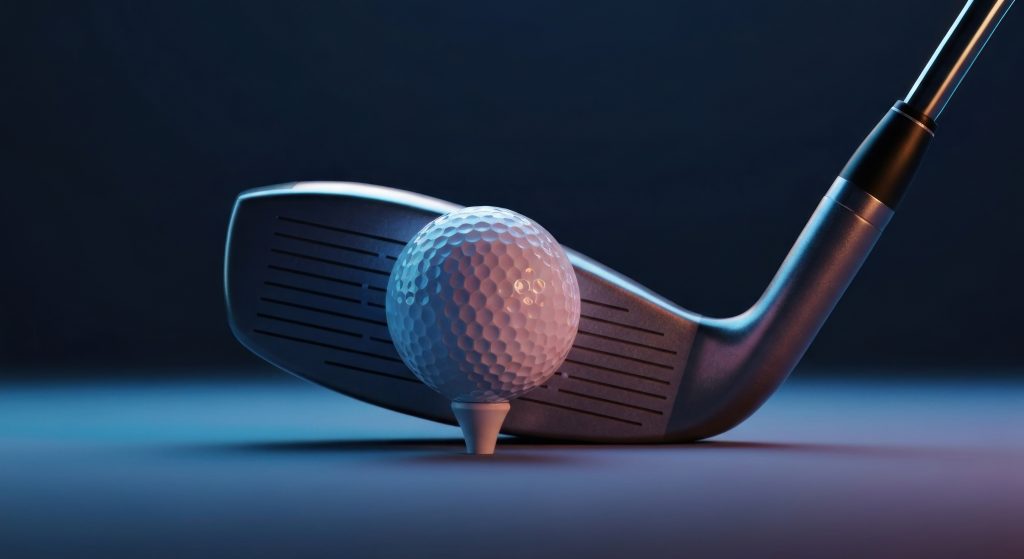
Enter the hybrid, the ultimate shapeshifter of the golf world. By blending the head shape of a fairway wood with the shaft length and loft of an iron, equipment designers created a tool that offers the best of both worlds. Hybrids feature a much deeper face-to-back profile than standard irons. This design choice pushes the center of gravity low and far back from the face, which does something magical for your swing: it launches the ball into the air with minimal effort.

Teeing off with a “Hybrid or Fairway Wood” can be the smart play, especially when accuracy is needed

The beautiful truth about hybrids is their incredible forgiveness. When you mishit a long iron, your hands vibrate, your distance plummets, and your ball disappears into the trees. When you mishit a hybrid, the larger clubhead stability minimizes twisting. Your ball might not reach the exact target, but it stays remarkably online and retains enough distance to keep you out of serious trouble. It turns disastrous misses into perfectly playable shots, saving pars and preventing those scorecard-wrecking big numbers.

Another massive reason for the great iron swap is turf interaction. Traditional long irons require a precise, downward strike that cuts a clean divot. If you hit slightly behind the ball, the iron digs straight into the ground, resulting in a chunked shot that goes nowhere. Hybrids and fairway woods are built with wide, flat soles. They are designed to glide and slide effortlessly across the grass, which means even a slightly imperfect swing will still produce a highly functional result.

This gliding ability transforms how you play from difficult lies. Trying to extricate a golf ball from thick, heavy rough with a 4-iron is an athletic feat that usually ends in frustration. A hybrid cuts through heavy grass like a hot knife through butter, popping the ball out and up onto the fairway. They are so versatile that many creative players even use them for simple bump-and-run chip shots from just off the putting surface, utilizing the wide sole to ensure clean contact.

High-lofted fairway woods are enjoying a major renaissance of their own

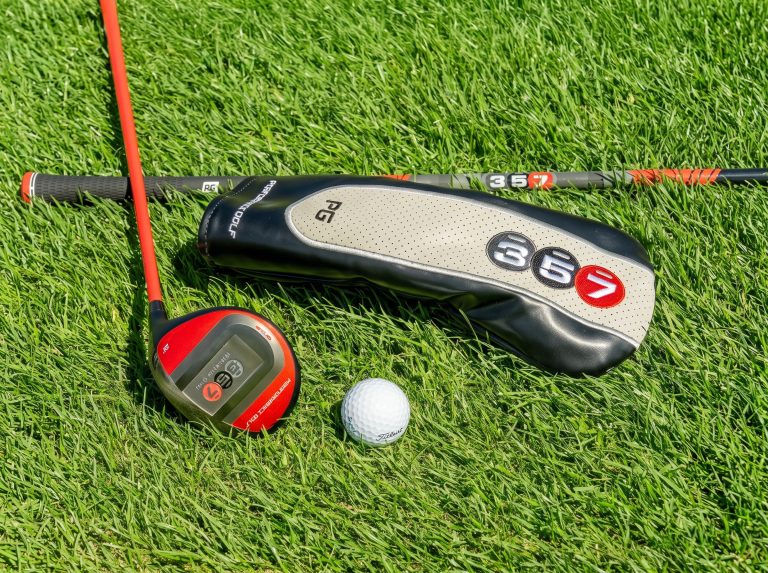
While hybrids have conquered the middle ground, high-lofted fairway woods are enjoying a major renaissance of their own. For generations, golfers rarely looked past the traditional 3-wood and 5-wood. Now, savvy players are adding 7-woods, 9-woods, and even 11-woods to their arsenals. A 7-wood typically carries a similar loft to a 3-hybrid or a 4-iron, but it features a slightly larger head and a longer shaft. This combination creates a sweeping motion that results in a towering, majestic ball flight that lands softly on the green.

Choosing between a hybrid and a fairway wood for your long-iron replacements usually comes down to your personal swing style. If your natural swing is steep and you prefer to hit down on the ball like you do with your short irons, you will likely fall in love with hybrids. If you have a smoother, flatter swing and prefer to sweep the ball off the turf like you do with a driver, a high-lofted fairway wood will give you the confidence you need.

Conclusion:

Ultimately, leaving your ego at the clubhouse door is the smartest strategy you can deploy on the golf course. Even elite touring professionals regularly swap out their long irons for hybrids or specialized woods depending on the course conditions. If the best players in the world are looking for a little extra help to make the game easier, there is absolutely no reason the rest of us should be struggling with outdated, unforgiving iron designs.

Take a close look at your bag before your next round, give yourself permission to accept a little extra help, and enjoy the effortless launch of modern club technology.

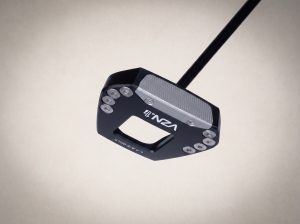
L.A.B. Golf reimagines putter head geometry to automatically show you where your face is aimed.

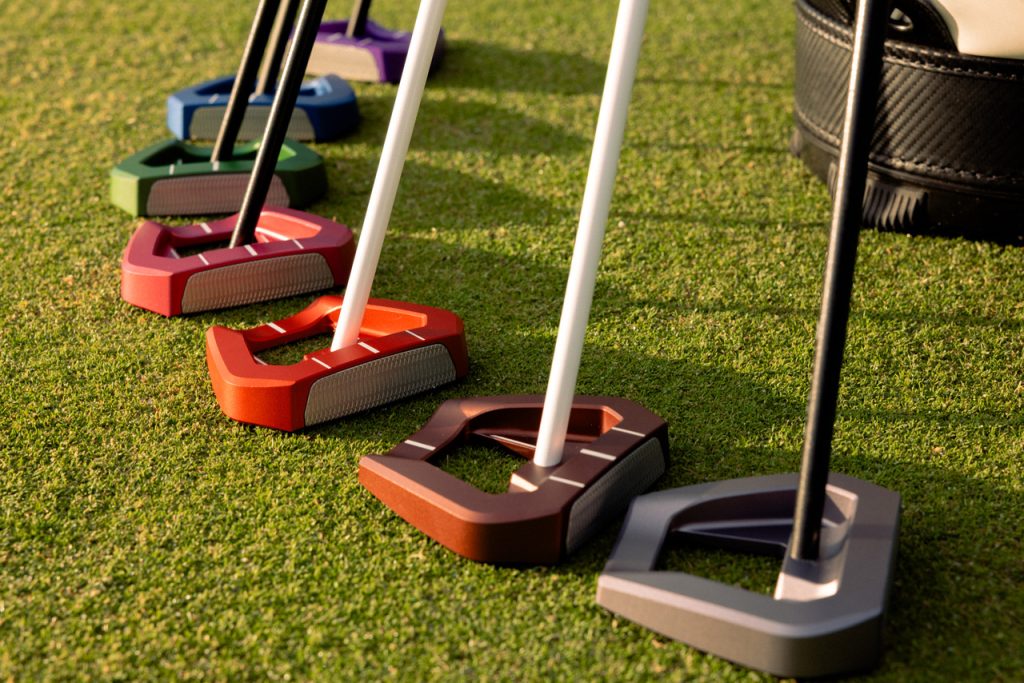
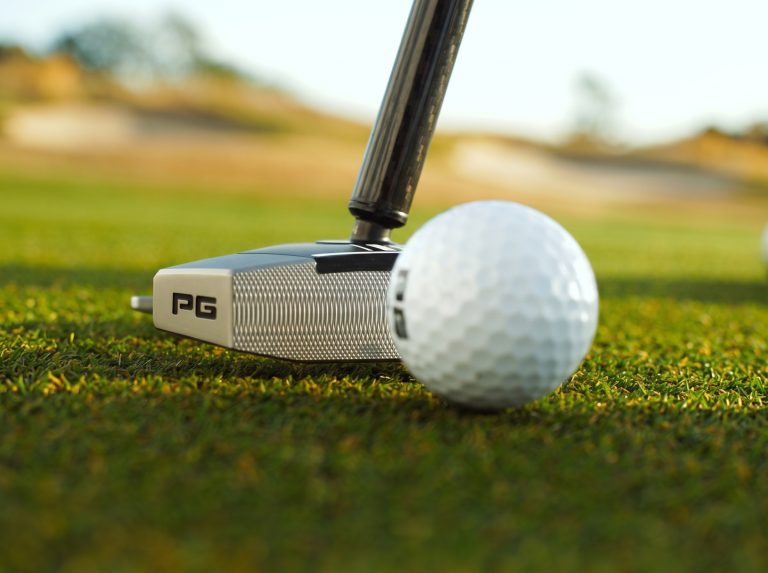
L.A.B. Golf, renowned for pioneering Lie Angle Balance technology in putting, has introduced the VZN.1i putter with the sole purpose of improving vision and optimizing alignment.

Most other brand putters integrate alignment lines but what makes the VZN.1i different is it has an alignment system built in to the geometry of the head to show where the face is pointed to make aiming intuitive. 

Choose Your Head

Featuring a traditional, full-sized mallet profile, VZN.1i introduces a 303 stainless-steel face insert that offers a deeper milling than existing L.A.B. models. Equipped with a dual pickup method including a “gimme getter” and a scoop option, VZN.1i is available in both 0-Degree (Vertical) and 1.5-Degree shaft lean variations.

Choose Your Alignment

As with all L.A.B. putters, every VZN.1i is hand-balanced and assembled, passing through up to 10 different stages of craftsmanship before reaching the end of the production process. The Custom version allows golfers to select their preferred shaft, head color, putting style, shaft lean, shaft length, lie angle, alignment markings, head weight, and grip.

Choose Your Shaft
Choose Your Grip

The VZN.1i Stock model is available for $499; Custom versions start at $599. For more information on L.A.B. go to labgolf.com.

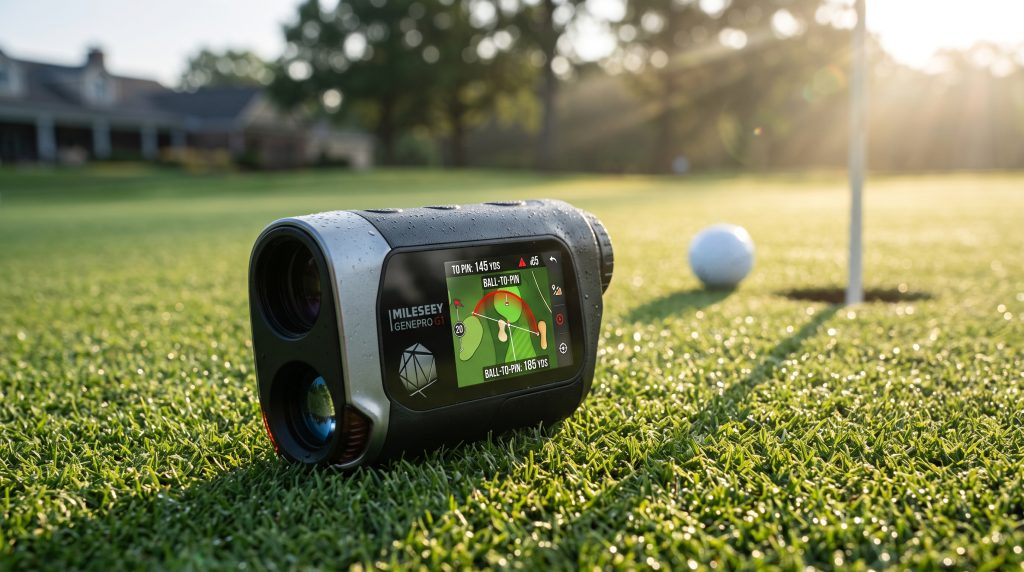
Golf GPS speakers are not a new concept, but they have historically suffered from one massive design flaw: they anchor your data to the golf cart. If you are playing a “cart-path-only” hole, you are stuck guessing your yardage from across the fairway or draining your phone battery using a clunky backup app.

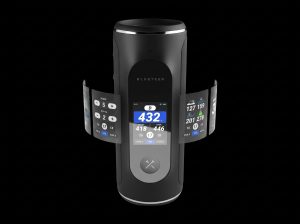
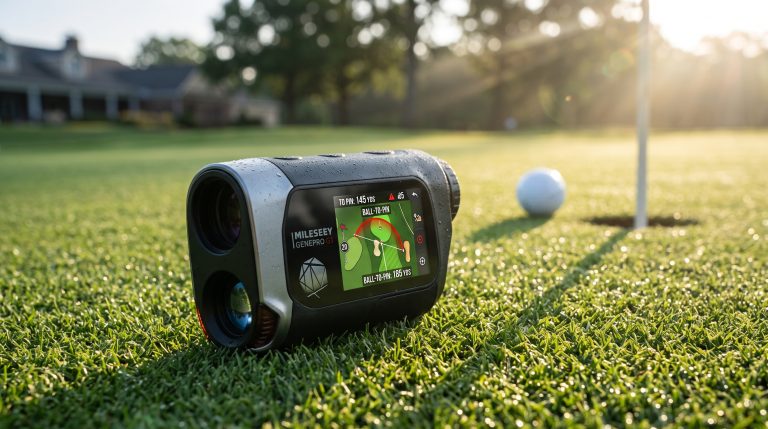
The MILESEEY GeneSonic Pro completely shatters that mold. Retailing at $299.99, this device introduces a clever, two-piece modular design that might just make it the smartest piece of course tech I have tested all year.

Key Features

  • Detachable 3-Inch Handheld: The color touchscreen pops directly off the speaker base.
  • True Standalone GPS: An internal GPS chip talks directly to satellites without needing a phone or app.
  • 43,000+ Preloaded Courses: Works globally right out of the box with zero subscription fees.
  • 40W Audio Power: Equipped with a premium dual-band crossover system for rich, high-fidelity sound.
  • Dynamic Green View: Allows you to manually drag and drop pin locations for exact distance readings.
  • IP67 Waterproofing: Completely dustproof and submersible to handle sudden downpours.
  • What’s in the Box – MILESEEY GeneSonicpro Golf Speaker comes with extensive accessories kit: Speaker Lanyard ×1, Handheld Carabiner×1, Cleaning Cloth ×1, USB-C Charging Cable ×1, Quick Guide ×1, User Manual ×1.

Setup and Ease of Use

Out of the box, setup is a breeze. Connecting the Bluetooth to my phone took under five seconds, which is all you need to do to get your music playlist rolling.

The actual GPS side requires absolutely no cellular data or companion app pairing. When you arrive at the first tee, you simply tap the golf icon on the touchscreen. It takes about two minutes to secure a satellite lock, automatically recognizes your course, and displays your yardages. It is highly intuitive, even for the most tech-averse golfers.

Pros & Cons

Pros

  • The Detach Factor: On cart-path-only days, you just slip the 3-inch handheld into your pocket or clip it to your belt with the included carabiner. Your music stays playing at the cart while you bring your yardages directly to your ball.
  • Zero Subscription Fees: Unlike heavy hitters in this category that hide advanced features behind annual paywalls, MILESEEY is a one-time purchase.
  • Exceptional Sound: The 40W system pumps out crisp highs and genuinely deep bass that easily fills the fairway without distorting at high volume.
  • Dual Control Points: You can control track skips and audio volume from both the speaker base and the detached handheld remote.
  • Brawny Magnets: The magnetic mount is incredibly secure. It stayed locked to the cart strut even while driving over aggressive bumps and rough terrain.
Cons
  • Slight Screen Pixelation: The 3-inch color screen is perfectly readable in direct sunlight, but it lacks the ultra-high resolution of modern smartphones.
  • Crowded Interface: With hazards, dynamic green views, and stat-tracking toggled on, the small screen layout can look a bit cluttered until you customize it.
  • Scratch-Prone Display: The housing has reinforced bumpers, but the screen glass itself can pick up minor surface scuffs if tossed carelessly into a bag with tees and keys. I highly recommend adding a screen protector.

Ted’s Editorial Verdict

The MILESEEY GeneSonic Pro achieves something few tech products do: it genuinely solves a recurring on-course headache. While competitors like the Bushnell Wingman HD have dominated the market, MILESEEY has significantly outpaced them in pure utility with this standalone, detachable design. If you are looking for an all-in-one device that respects your phone’s battery life, delivers premium sound, and gives you elite flexibility on the course, this is an absolute winner. It has officially earned a permanent spot on my game-day cart.

Why the DF3i is the Firmest, Fastest L.A.B. Yet.

Making a 64-foot putt to clinch a U.S. Open victory, as J.J. Spaun did with his L.A.B. DF3 putter in 2025, would be any golfer’s dream. But with the same putter in your hands, the odds of sinking putts from any distance will become reality.

L.A.B. Golf, renowned for pioneering Lie Angle Balance (L.A.B.) technology in putting, has now gone one step further by introducing the DF3i. Building on the success of the original Directed Force, and best-selling DF3, the DF3i features a performance-driven profile engineered for players seeking a firmer feel while maintaining the consistency, stability, and face control that have defined L.A.B. Golf putters.

Milled from 6061 aircraft aluminum and bonded to a fly-milled, stainless-steel insert, DF3i is ideal for golfers who love the form of the DF3 but prefer more responsive feedback at impact. DF3i delivers faster ball speeds without sacrificing the Lie Angle Balance performance the brand is known for.

“We are stoked to be offering the DF3i. The DF3 is the putter that put us on the map.

The only real criticism we ever get about it is that to some it feels like the ball comes off a bit soft and slow,” said L.A.B. Golf Founder Sam Hahn. “Adding the stainless insert for a firmer feel and slightly faster ball speeds will hopefully appeal to an even greater number of golfers looking for a couple extra-long ones to fall!”

With the Custom version of the DF3i golfers can select their preferred lie angle, length, putting style, head-weight, head color, alignment marking, shaft, and grip, ensuring that each DF3i is tailored to the individual. As with all L.A.B. putters, every DF3i is hand-balanced and assembled, passing through up to 10 different stages of craftsmanship before reaching the end of the production process.

DF3i is available at www.labgolf.com and at authorized retailers across the world. The Stock model is available for $499, with Custom versions starting at $599.

BERES 10 is defined by performance, luxury, and craftsmanship.

Carlsbad, CA — Honma Golf, the leader in beautifully crafted performance golf equipment, today announces the launch of BERES 10, the next generation of the iconic collection. Crafted for players who value consistency, luxury, and effortless power, BERES 10 elevates performance through greater distance, precision, and control.

For more than 65 years, Honma has manufactured the world’s most luxurious golf clubs and has turned heads with its prestigious BERES family of clubs. BERES 10 continues this tradition, representing the highest expression of luxury in golf, where rarity, refinement, and performance exist in perfect harmony. Globally recognized as a symbol of prestige, BERES has long been the choice of those who value craftsmanship at its most elevated level.

The intricate design of BERES 10 draws inspiration from Edo Kiriko, a traditional Japanese glass-cutting art established in 1834 and designated a National Traditional Craft of Japan. The disciplined geometry, deep colors, and intricate two-tone overlay techniques of Edo Kiriko mirror Honma’s own philosophy—where technical excellence and refined beauty coexist.

The timeless beauty of Edo Kiriko glasses inspired master Takumi craftsmen, whose pursuit of perfection defines Honma’s legacy. The glass-cutting discipline combines a unique blend of transparency, dimension, and metallic elegance that shifts with the light in exquisite detail. The BERES 10 woods feature striking laser-cut patterns on the clubheads, creating a modern interpretation of glass-cutting techniques that are executed with a level of precision found only in the world’s most exclusive creations. These are not decorative gestures; they are signatures of mastery.

Yet BERES 10 is defined as much by performance as by appearance. Advanced engineering is seamlessly integrated to deliver effortless clubhead speed, powerful distance, and a penetrating, remarkably stable ball flight. Advanced materials and hand-finished construction work together to produce efficient ball flight and reliable performance. The result is a set that performs with authority while preserving the elegance expected at this level. (3-Star woods feature a champagne gold sole; 4 Star and 5 Star grade woods have a gold sole.)

BERES 10 Driver

At the heart of the BERES 10 Driver is the Pure Speed Engine, a suite of four advanced technologies engineered to deliver maximum acceleration and efficiency at impact. The Full Titanium Frame features an ultra-thin, high-rigidity crown and body that optimize head stability and energy transfer, while the Rear Weight Balancer incorporates a 9-gram (men’s model) high-density sole weight to lower the center of gravity for higher launch and increased forgiveness. A forged Cup Face Design expands the high-speed zone across the entire clubface, and the Variable Thickness Face utilizes an optimized flex pattern to minimize ball-speed loss on off-center strikes. Together, these innovations produce exceptional ball speed, high MOI, and a stable, powerful launch – engineered for one purpose: pure speed.

The women’s BERES 10 Driver features a Full Titanium Frame, Casting Cup Face, and 4-gram Rear Weight Balancer to achieve high ball speed, MOI, and forgiveness. (Men’s and Women’s Driver Pricing: 3 Star $1,200, 4 Star $2,000, and 5 Star $5,000)

BERES 10 Fairway Wood & Hybrids

BERES 10 performance extends far beyond the driver, with Pure Speed engineered throughout the Fairway Woods and Hybrids. Each club features Cup Face construction, a Rear Weight Balancer with loft-specific weighting, and a low center of gravity design to promote naturally high launch, paired with high-strength faces for explosive ball speed. The result is aggressive long-game performance that delivers exceptional forgiveness and extended carry from every position on the course. The women’s Rear Weight Balancer features a 4-gram aluminum weight. (Men’s and Women’s 3 Star Fairway $800/Utility $600, 4 Star Fairway $1,500/Utility $1,400, and 5 Star Fairway $5,000/Utility $5,000)

BERES 10 Irons

Forged by master craftsmen, BERES 10 Irons unite refined beauty with powerful distance performance. The new Speed Core Face integrates a 3D L-Cup Face Structure that expands the high-velocity zone across the entire face and maintains ball speed on off-center hits, while a 3D Variable Thickness Design optimizes energy transfer efficiency and feel at impact. An intricately crafted 3D Emblem Structure suppresses unwanted vibration while elevating the club’s premium aesthetics. A low-and-deep center of gravity promotes higher launch and steeper landing angles to help hold greens, and lightweight shafts featuring an advanced 5-axis hybrid metal mesh construction with TORAYCA® T1100G carbon fiber deliver improved impact efficiency, higher ball speed, and greater distance.

The Men’s and Women’s BERES 10 Iron sets are distinguishable in composition. The men’s collection is a forged S25C carbon steel, and the women’s product offering is a body of 17-4 stainless steel casting. (Men’s and Women’s 3 Star $550/each, 4 Star $1,350/each, and 5 Star $5,000/each)

LEADING GOLF SHAFT TECHNOLOGY – ARMRQ FLIGHT

HONMA’s proprietary golf shaft technology pushes the limits of performance with advanced carbon composites and high-grade metals. Variations based on design and material differences. Higher grades deliver greater precision and consistency — for longer, straighter shots.

★★★3S – The high-elasticity TORAYCA® M40X, which pursues the ultimate in both fiber strength and elastic modulus, provides superior playing performance that efficiently accelerates head speed without waste, while at the same time suppressing torque and improving stability.

★★★★4S – The kick point is designed closer to the tip to further improve club head speed. At the same time, flexing and torque are further suppressed, increasing initial speed and stability.

★★★★★5S – From the 4S grade, the bias layer has been further strengthened to generate strong torsional return power. This is an ultra-premium shaft that achieves the ultimate flight and stability.

The BERES 10 collection is available in Men’s and Women’s 3 Star, 4 Star, and 5 Star series. Standard iron sets include 7-10, SW for ladies, and 5-11, AW, SW for men. Visit us.honmagolf.com for more information.

Honma Golf: Taylor Hull – Sales Director, North America email: taylorhull@honmagolf.com

Press release by: Kevin Frisch PR

0
0
Your Cart
Your cart is emptyReturn to Shop