October 11, 2026

Ted Odorico

CEO, iGolf Sports Network LLC Editor, Golf Tips Magazine Producer/Host, Golf Talk Live & Women of Golf Show Golf Instructor & Corporate Coach for 32+ years

Letting Gravity Do the Heavy Lifting in Your Downswing.

The Gravity Drop: Mastering the Transition from Load to Lead

Welcome to Day Three. This is the moment of truth. Over the last two days, you’ve built a professional foundation and wound your torso into a high-tension spring. You have the posture of an athlete and the potential energy of a coiled cobra. But now comes the part where most amateur games fall apart: the delivery. If the backswing is about building the engine, the downswing is about the transmission. Most golfers panic at the top of the swing. They see the ball sitting there and their brain screams, “Hit it!” In response, they “cast” the club from the top, throwing their hands and shoulders at the ball like they’re trying to swat a fly against a wall. This move—the dreaded “Over-the-Top” move—is the primary cause of the weak slice and the pulled shot. The pros do the exact opposite. They don’t try to “hit” the ball; they let gravity and sequencing do the work. They understand that speed isn’t created by shoving the club downward; it’s created by letting the club “drop” into the slot so it can arrive at the ball with clinical precision and maximum velocity.

The Secret of Sequencing: The “Bottom-Up” Engine

In a perfect golf swing, the downswing starts before the backswing even finishes. Think about a professional pitcher or a quarterback. They don’t wait for their arm to reach the furthest point back before they start stepping toward their target. Their lower body moves forward while their upper body is still finishing its load. This creates “separation.” When your lower body starts moving toward the target while your shoulders are still turned away from it, you create even more tension. This is the “Gravity Drop.” By shifting your weight to your lead side first, the club naturally falls into a shallower, more inside path. When you “cast” with your hands, you pull the club outside the line, forcing a steep, across-the-ball strike. When you lead with your hips, the club “slingshots” behind you, allowing you to hit the back of the ball rather than the side of it. Today, we are going to force your body to feel this professional sequence.

The Drill: The “Step-In” Transition

To master this, we’re going to use a dynamic drill that makes it impossible to “cast” the club. This drill forces your lower body to take the lead in the dance, creating a natural, effortless transition.

The Mission: To force your lead side to “re-center” and clear the path before your hands have a chance to take over.

1. The Starting Block: Set up to a ball (or just a spot on the ground) with your feet touching—heels and toes side-by-side. Hold the club in your normal grip, but keep your stance completely narrow.

2. The Move: Start your backswing as you normally would, focusing on that “Shoulder-to-Chin” rotation we practiced yesterday.

3. The Action: Here is the key: Just as the club reaches about 75% of the way to the top—before you’ve finished your backswing—take a small “stride” (about 6 to 10 inches) toward the target with your lead foot.

4. The Follow-Through: Once that lead foot plants firmly on the ground, let your hips turn and allow the club to swing through.

5. The Payoff: This “re-centering” move is a game-changer. It forces your hips to clear and your weight to shift forward before your hands can fire. You’ll feel the club “drop” onto an inside path, ensuring you hit the back of the ball with a compressed, powerful strike.

When you tried the Step-In drill, did you find it difficult to time the stride while the club was still moving backward?

Why “Effortless” Speed is the Fastest Speed

There is a massive difference between “swinging hard” and “swinging fast.” When you swing hard with your arms, your muscles tense up, which actually slows the clubhead down. When you sequence the swing correctly—starting from the ground up—you create a “whip” effect. Imagine a long bullwhip. To make it crack, you don’t throw the tip of the whip at the ground. You move the handle forward, then snap it back. The handle (your hips) leads, and the tip (the clubhead) follows with massive, multiplied speed. By using the Step-In Transition, you are training your body to be the handle, not the tip. This is how players like Fred Couples or Ernie Els look like they’re barely trying while the ball screaming off the face.

Summary: Power is Sequenced, Not Forced

The transition is the bridge between your preparation and your result. If that bridge is shaky, the result will be inconsistent. By letting the lower body lead the downswing, you eliminate the “handsy” compensations that lead to fat shots, thinned shots, and slices. You’ve learned that the downswing isn’t a race to the ball; it’s a controlled release of the tension you built in Part 2. When you trust the “drop,” you stop fighting the club and start letting the club work for you.

What’s Next?

You’ve made contact, and if you’ve followed the sequence, it probably felt like butter. You’ve felt the “click” of a compressed ball and seen the higher, more penetrating ball flight. But the work isn’t done. Are you falling over your own feet after the strike? Are you “walking after” your shots because you’re off-balance? A great swing doesn’t end at impact; it ends in a position of total control. Tomorrow, we wrap the series by mastering the “Statue Finish.” This is the secret to consistency that the cameras love, your playing partners envy, and your scorecard desperately needs.

Check back tomorrow for Part 4, the final piece of the puzzle that ensures every shot you hit is as repeatable as the last.
Stop Lifting the Club and Start Loading the Engine.

The Power of the Coil: Why “Loading” Beats “Moving” Every Time

Welcome back to Day Two of your transformation. Yesterday, we tore down your old, shaky foundation and replaced it with a rock-solid, athletic setup. You’ve mastered the hip hinge, your weight is over the balls of your feet, and your arms are hanging with professional “dead weight” relaxation. You finally look like a golfer who means business.

But here is the hard truth: standing like an athlete is only half the battle. Now that you’re standing like one, it’s time to move—but “moving” isn’t actually the goal. “Loading” is.

The biggest mistake amateurs make is equating a “big swing” with a “powerful swing.” They see a pro like Rory McIlroy or Dustin Johnson and try to mimic the length of their backswing. To get there, they “sway” their hips away from the target or “lift” the club into the air with their shoulders. In doing so, they bleed energy out of the back of the swing like a leaky tire. Real distance isn’t born in the length of your arms; it’s born in the friction between your upper and lower body. Today, we’re turning your torso into a high-tension coil that’s begging to be released.

Movement vs. Torque: Understanding the “X-Factor”

In the world of high-level golf instruction, we talk a lot about “X-Factor.” This is the difference in rotation between your hips and your shoulders. If your hips and shoulders turn the same amount, you aren’t a golfer—you’re a revolving door. There is no tension, no stretch, and therefore, no speed.

To hit the ball a long way, your lower body needs to act as an anchor while your upper body winds up against it. Think of a slingshot: if you move the entire slingshot backward, nothing happens. But if you hold the frame still and pull the elastic back, you create potential energy.

When you “sway” or “slide” off the ball, you’re moving the whole slingshot. When you “coil” while keeping your trail leg stable, you are stretching the elastic. Today’s mission is to teach you how to feel that stretch for the first time.

The Drill: The “Shoulder-to-Chin” Rotation

This drill is designed to take the club out of your hands so you can’t “cheat” the turn with your arms. We are going to use the posture you built yesterday to create maximum torque without sliding an inch off the ball.

The Mission: To find your “max load” point and ensure your lead shoulder is doing the heavy lifting, not your hands.

1. The Setup: Assume your “Wall-Butt” posture from Day One. Instead of holding a club normally, take a mid-iron and hold it horizontally across your chest. Pin it against your shoulders with your arms crossed over your chest (left arm over right for right-handers).

2. The Target: Look down and pick out a specific blade of grass (or a coin on the carpet) directly between your feet. This is your “center.”

3. The Action: Without letting your hips slide toward your trail side, turn your torso back. Focus on moving your lead shoulder (the one closest to the target) down and across. Keep turning until the end of the club points behind that blade of grass.

4. The Checkpoint: At the top of this turn, your lead shoulder should be tucked neatly under your chin. Your back should be facing the target, and your trail leg should feel like a pillar of concrete holding your weight in place.

5. The Payoff: If you’ve done this correctly, you will feel a deep, slightly uncomfortable stretch in your lead lat and your trail hip. That isn’t pain—that is stored energy. You have officially turned your body into a high-tension spring.

During the Shoulder-to-Chin drill, did you find it difficult to keep your eyes on the blade of grass while completing your turn?

The Myth of the “Long” Backswing

Many golfers believe that if they can just get the clubhead further behind them, they’ll hit it further. This leads to “collapsing” the lead arm or over-rotating the hips. The result? You lose your connection to the ground and your timing goes out the window.

A compact, coiled turn will out-drive a long, loose swing every single time. Why? Because a coiled swing is ready to fire instantly. A loose, long swing requires a “gathering” phase at the top just to get back into position. By the time the loose swinger gets back to the ball, the coiled golfer has already zipped through the impact zone with effortless velocity. When you practice the “Shoulder-to-Chin” rotation, don’t worry about how far the club points. Worry about how much resistance you feel in your core. That resistance is your fuel tank.

Summary: Resistance is the Secret to Speed

The backswing isn’t a position you “get to”; it’s a tension you “build up.” By mastering the relationship between your shoulders and your hips, you eliminate the power leaks that cause weak fades and “short-armed” shots. When you create a centered turn, you stay over the ball, making solid contact almost certain. You’ve moved away from “hitting at” the ball and toward “releasing through” the ball.

What’s Next?

You’re loaded, you’re tense, and you’re ready to explode. You’ve built the engine, and you’ve filled the tank with high-octane tension. But here is the danger: if you fire too early, or if you fire from the top with your hands, you’ll lose all that beautiful energy in the first six inches of the downswing.

Most golfers waste their coil before they even get to the ball. Tomorrow, we’re going to show you how to spend that energy wisely. Join us for Part 3, where we reveal the “Gravity Drop”—the move that turns stored tension into pure, effortless speed.

Check back tomorrow for Part 3 as we transition from the backswing to the most critical move in golf: the start of the downswing.

Why Your Swing is Over Before It Even Starts

The Foundation of Power: Why Your Setup is Sabotaging Your Swing

Welcome to Day One of your transformation. You aren’t here to “tweak” a few things; you’re here because you’re tired of the inconsistency that haunts every amateur’s weekend.
This is the first of a four-part series designed to strip your game down to the studs and rebuild it with the precision of a professional. Most golfers approach the tee like they’re trying to solve a Rubik’s Cube while falling out of a plane. They focus on “fixing” their swing mid-air—trying to manipulate the clubface at 100 mph—but the truth is much simpler: you’re sabotaging yourself before you even move the club.

Think of your setup like a skyscraper’s foundation. If the concrete is tilted at the base, it doesn’t matter how expensive the glass is or how pretty the penthouse looks; eventually, the whole thing is coming down. In golf, that “collapse” looks like a snap-hook into the trees or a thin shot that rattled your teeth. Today, we’re ending the guesswork. We’re getting your body into an aggressive, athletic position that makes success inevitable.

The Anatomy of the Athletic Setup

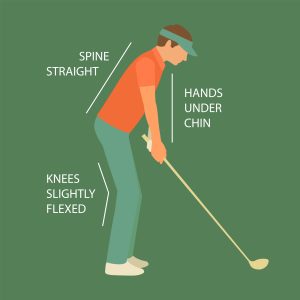
Before we touch a club, we have to talk about posture. The biggest mistake high-handicappers make is confusing “bending over” with “hinging.” When you simply bend over, you round your spine, tuck your chin into your chest, and kill your ability to rotate.

You become a hunchback, and a hunchback cannot move with speed. A pro-level setup requires Dynamic Balance. This means your weight isn’t on your heels (which causes a slice) or on your toes (which causes a shank). It’s centered over the balls of your feet, allowing your large muscle groups—the glutes, quads, and core—to bear the load. When you sit into a proper posture, you create “secondary tilt.”

This is the slight angling of the spine away from the target. It creates the “room” your arms need to swing freely. Without this space, your brain realizes mid-downswing that your knees are in the way, forcing you to “stand up” through impact. We call this early extension, and it is the primary killer of distance.

The Drill: The “Wall-Butt” Posture Check

To find this position, we’re going to use a tool you have at home: a flat wall. This drill removes the ego and the golf ball from the equation so you can focus entirely on feel.

The Mission: To find that elusive “athletic hinge” and create a flat back without looking like a hunchback or a folding chair.

1. The Starting Block: Stand with your back to a wall, feet shoulder-width apart. Position your heels about six inches away from the baseboard. Stand tall, shoulders back, and look straight ahead.

2. The Hinge: Place your hands in the creases of your hips (where your thighs meet your torso). Without bending your knees yet, push your hips backward. Your goal is to “hinge” at the pelvis until your glutes lightly graze the wall behind you.

3. The Soften: Once your glutes touch the wall, add a very soft flex to your knees—just enough to unlock them. Let your arms hang naturally. They should feel like “dead weight,” dangling straight down from your shoulder sockets.

4. The Checkpoint: If you’ve done this correctly, you will feel a slight tension in your hamstrings and your weight will be distributed over the balls of your feet. You should feel “heavy” and connected to the ground, yet ready to spring in any direction. This is the blueprint for a repeatable swing.

How did the Wall-Butt drill feel on your first few tries—did you notice any tension in your hamstrings?

The blueprint for a repeatable swing, begins with a solid foundation.

Why “Dead Weight” Arms Matter

In the drill above, I mentioned letting your arms hang like dead weight. This is a secret many pros won’t tell you: Tension is the enemy of speed.

When you reach for the ball or pull your arms in too tight, you create tension in the forearms and shoulders. This tension acts like a brake on your swing. By finding the correct hip hinge against the wall, your arms naturally hang in a position where they can swing like a pendulum. This “hanging” position ensures that the club travels on a consistent arc, reducing the need for your hands to “save” the shot at the last second.

Summary: Balance is Your Only Constant

A great setup isn’t a suggestion; it’s a requirement. By mastering your hinge and your weight distribution, you eliminate the frantic compensations that lead to those “where did that come from?” misses.

When you start in balance, you stay in balance. You’ve now built a frame that can handle high-velocity rotation. You’ve cleared the path for your hips to turn and your arms to fire. Most importantly, you’ve stopped fighting your own anatomy.

What’s Next?

Congratulations—you’ve officially moved out of the “hopeful” category and into the “intentional” one. You’ve got the stance of a pro, but let’s be honest: a statue doesn’t hit 300-yard drives.

A great setup is just a loaded gun; tomorrow, we’re going to learn how to pull the trigger. We’re taking this rock-solid blueprint and turning your body into a high-tension spring. We’re moving from Posture to Power.

Check back tomorrow for Part 2, where we break down the “Coil vs. Turn” and show you how to generate effortless speed without swinging harder.

Beyond the headlines, we reflect on the generational impact of Tiger Woods and the unwavering spirit of golf’s most iconic figure.

In the quiet hours of a Sunday afternoon at Augusta National, there is a specific type of silence that only one man can command. It is not the silence of indifference, but the heavy, expectant hush of a world watching a living legend navigate the twilight of a career that redefined an entire sport. At Golf Tips Magazine, our mission has always been to provide the tools for improvement and the inspiration to keep swinging. Today, however, we set aside the mechanics of the draw and the physics of the flop shot to speak on something more fundamental: the human spirit of the man who gave us the modern game. Recent headlines surrounding Tiger Woods have once again ignited a firestorm of speculation, critique, and, in some corners of the media, a rush to judgment. At Golf Tips, our official position is one of unwavering encouragement. We believe that what Tiger Woods does in his private life is exactly that—personal. Unlike the mainstream media, which often dwells on the fractures in a person’s foundation, we choose to look at the monumental structure he has built for the game of golf.

This is an article of empathy for the struggle, a cautionary reflection on the weight of greatness, and a celebration of the most impactful career in the history of the sport.

The Architect of Modern Golf

To understand the current chapter of Tiger Woods’ life, one must first respect the sheer magnitude of the book he has already written. Before Tiger, golf was a niche pursuit, often viewed through a lens of exclusivity and tradition that moved at a glacial pace. Then came 1997. When a 21-year-old Tiger Woods dismantled Augusta National to win his first Masters by 12 strokes, he didn’t just win a tournament; he shifted the tectonic plates of the sporting world. He brought an athleticism to the tee box that the game had never seen, turning the golf swing into a high-velocity expression of power and precision. He made “Tiger-proofing” a necessity for courses around the globe, forcing architects to rethink the very limits of the game. But his impact went far beyond yardage. Tiger Woods invited the world to the fairway. He broke down racial and socioeconomic barriers, inspiring a generation of golfers who finally saw someone who looked like them holding the Claret Jug or wearing the Green Jacket. Every time we see a young phenom today—athletes who treat their bodies like high-performance machines and approach every shot with clinical intensity—we are seeing the “Tiger Effect” in real-time. He didn’t just play the game; he rebuilt it in his image.

The Weight of the Gaze

There is a cautionary tale to be told about the price of such singular excellence. For nearly three decades, Tiger Woods has lived under a microscope that would crush most individuals. When you are the “Chosen One,” there is no such thing as a quiet mistake. Every stumble is a front-page story; every recovery is a miracle or a letdown. As we reflect on his journey, we must acknowledge the immense physical and mental toll of maintaining that level of dominance. Tiger’s career has been a masterclass in resilience, defined by a series of comebacks that defy medical logic. From reconstructive knee surgeries to spinal fusions that were supposed to end his playing days, he has consistently willed his body back into competitive form. The cautionary element here is not for Tiger, but for us, the observers. It is a reminder of the fragility of even the most robust icons. It highlights the danger of tying a human being’s entire worth to their statistical output or their public perfection. When we demand that our heroes be infallible, we forget that they are prone to the same gravity that affects us all.

A Position of Encouragement

At Golf Tips Magazine, we choose to lead with empathy. The latest news, while complex, serves as a reminder that the path of a legend is rarely a straight line. We see a man who has given everything to his craft—a man who has played through unimaginable pain to hear the roar of the crowd one more time. Our stance is simple: we are here to support the person, not just the player. The challenges Tiger faces today, whether physical or personal, are his to navigate, and he deserves the space to do so with dignity. We believe in the power of the “long game”—the idea that success isn’t just about the trophies in the case, but the ability to recognize when change is needed and to address it with the same discipline used to master a 60-degree wedge.

Why We Still Believe

Why do we remain so staunchly in Tiger’s corner? Because golf is a game of integrity and second chances. Every golfer knows the feeling of a bad round—the frustration of a drive that finds the woods or a putt that lips out. But we also know the beauty of the next tee box. The game teaches us that no matter what happened on the 9th hole, the 10th is a fresh start. Tiger Woods has shown us this “fresh start” mentality time and time again. His 2019 Masters victory remains perhaps the greatest comeback in sports history, a moment that wasn’t just about golf, but about the refusal to be counted out. It was a win for everyone who has ever been told their best days are behind them.

Moving Forward

As we look to the future, we hope for health, peace, and continued growth for Tiger. Whether he ever hoists another major trophy is secondary to the legacy he has already secured. He has been the ultimate ambassador for the sport, a father who shares his love of the game with his son, and a figure who continues to draw millions of eyes to the screen just to see him walk onto the range. To the fans, we say this: let us be the gallery that cheers not just for the birdies, but for the man himself as he navigates this next leg of his journey. Let us offer the same grace we would hope for on our own toughest days.

Tiger Woods changed golf forever. He gave us moments of magic that we will tell our grandchildren about. For that, he has earned our respect, our silence when it’s needed, and our loudest encouragement when he decides to step back into the light.

A closing birdie at the 18th turns last week’s “what if” into today’s “what is.”

PALM HARBOR, Fla. — Seven days can be an eternity in professional golf. Just one week ago, Matt Fitzpatrick stood on the 72nd hole at TPC Sawgrass, a share of the lead in his grasp, only to see his tee shot find the pine needles and his championship hopes vanish with a closing bogey. That agonizing finish handed the Players Championship title to Cameron Young and left Fitzpatrick searching for answers in the dark of a Florida evening.

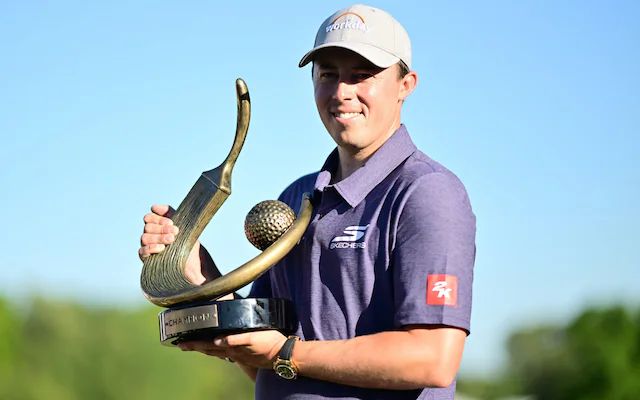
But the beauty of the PGA Tour’s Florida Swing is that the next opportunity is always just a short drive down the I-4. On Sunday at Innisbrook Resort, the universe offered a rewrite. Standing on the 18th green of the fearsome Copperhead Course, Fitzpatrick faced a 14-foot birdie putt to win. This time, there was no hesitation. The ball tracked true, disappearing into the heart of the cup. With an emphatic fist pump and a roar that echoed through the surrounding pines, Fitzpatrick secured a one-shot victory, capturing his third PGA Tour title and—more importantly—his peace of mind.

Fitzpatrick secured a one-shot victory, capturing his third PGA Tour title.

Navigating the Snake Pit

The Copperhead Course at Innisbrook is a different beast than the stadium-style flash of Sawgrass. It is a grinding, claustrophobic test of nerves defined by the “Snake Pit”—the treacherous three-hole closing stretch that has ended many a Sunday charge. Fitzpatrick arrived at the 16th tee on Sunday afternoon locked in a dead heat with David Lipsky, with a hungry pack of pursuers including Xander Schauffele and a surging Jordan Smith breathing down his neck.

While his rivals wrestled with the firm, “sunbaked” greens and swirling winds, Fitzpatrick played a brand of golf that was surgically precise. He didn’t just survive the final round; he dismantled it. In a display of extreme discipline, the 2022 U.S. Open champion didn’t card a single bogey all day. While 54-hole leader Sungjae Im struggled to find his rhythm, shooting a disappointing 40 on the front nine, Fitzpatrick remained the calm center of a chaotic storm.

The Duel in the Pines

The afternoon evolved into a high-stakes chess match between Fitzpatrick and Lipsky. For hours, neither man would blink. When Fitzpatrick finally broke a string of pars by draining a miraculous 30-foot birdie putt on the par-3 15th, it felt like the knockout blow. But Lipsky, playing in the group behind, showed veteran steel, answering with a clinical birdie on the 14th to keep the score knotted.

As the shadows lengthened over the 18th fairway, the tension was palpable. Fitzpatrick had been here before—just seven days prior—with the weight of a tournament on his shoulders. This time, the execution was flawless. He threaded a drive down the middle of the narrow 18th, then stuck a wedge from 118 yards to within “gimme” range for a man of his putting caliber.

“The big thing was I felt I was playing well,” Fitzpatrick said, reflecting on the turnaround from the previous Sunday. “I wanted to continue that and felt like I had the confidence in myself to do so. To do that for four rounds on a course this difficult was special.”

Fitzpatrick is projected to climb back into the top 10 of the world rankings.

A Winner’s Return

When that final putt dropped, the relief was visible. The victory doesn’t just add a trophy to his mantle or a $1.6 million check to his bank account; it re-establishes Fitzpatrick as one of the most dangerous closers in the game. By navigating the “Snake Pit” without a scratch, he proved that his collapse at The Players was a fluke, not a trend.
The golf world now looks toward Augusta National, and Fitzpatrick heads there as one of the hottest players on the planet. He is projected to climb back into the top 10 of the world rankings and currently sits third in the FedEx Cup standings. But for Fitzpatrick, the metrics matter less than the moment.

One week ago, he was the runner-up with a thousand questions. Today, he is the Valspar champion with all the answers. The “Copperhead” may have fangs, but Matt Fitzpatrick proved he’s the one who knows how to strike when it counts.

The air at TPC Sawgrass has a way of thickening when the sun begins to dip behind the moss-draped oaks on Championship Sunday. It is a heavy, pressurized atmosphere that has broken the resolve of the world’s greatest golfers for decades. But as the 2026 Players Championship reached its fever pitch, Cameron Young didn’t look like a man burdened by the weight of the “best player without a major” tag that had followed him for years. Instead, he looked like a man who had finally found the key to the most difficult lock in golf.
In a duel that will be remembered as a modern classic, Young outlasted England’s Matt Fitzpatrick in a back-nine shootout that transformed the daunting Stadium Course into a private arena for two of the game’s purest ball-strikers. When the dust settled on the 18th green, Young stood alone—a Players Champion, a multi-time PGA Tour winner, and officially the new face of American golf.
Players Champion: Cameron Young’s masterclass at the Stadium Course

The Shadow of the Past

To understand the significance of Young’s triumph, one must look at the scars he carried into the week. Since bursting onto the scene, Young had become synonymous with “close but not quite.” With a string of runner-up finishes at major championships and elite elevated events, the narrative had become exhausting: great swing, elite power, but could he close?

Fitzpatrick, conversely, arrived at the first tee on Sunday with the steely resume of a U.S. Open champion. He is a tactician, a player who treats a golf course like a math equation to be solved. As they traded birdies on the opening narrow stretches of the front nine, it felt like a collision of philosophies—Young’s raw, explosive power against Fitzpatrick’s meticulous, grinding precision.

The Turning Point

The leaderboard at Sawgrass is notoriously volatile, and for the first two hours of the afternoon, it looked like a four-way car crash. Ludvig Åberg, the overnight leader, seemed to have the tournament in his grasp until the par-4 11th. In a shocking lapse of judgment, the Swede found the water, and then found it again on the 12th. In the span of twenty minutes, the door didn’t just crack open; it was kicked off its hinges.

Young and Fitzpatrick, playing in the penultimate group, sensed the shift instantly. While the rest of the field struggled with the swirling winds that make the back nine at Sawgrass a psychological minefield, these two found a different gear.

Young’s surge began on the par-5 11th, where he reached the green in two with a towering iron shot that seemed to hang in the air forever. The resulting birdie pulled him level with Fitzpatrick. From there, the two became a two-man breakaway. It wasn’t just about the scores; it was the body language. Every time Fitzpatrick rolled in a clutch ten-footer to save par, Young responded by sticking an approach shot inside the shadow of the flagstick.

The Gauntlet: 16, 17, and 18

The finish at TPC Sawgrass—the par-5 16th, the island-green 17th, and the brutal 18th—is the most terrifying three-hole stretch in the sport. It is where dreams go to drown.

On the 16th, Fitzpatrick played the hole to perfection, laying up and pitching to three feet for a clinical birdie. Young, refusing to play safe, went for the green in two. His ball cleared the water by a mere yard, settling in the fringe. He scrambled for birdie to keep pace, but the momentum seemed to be leaning toward the Englishman. Then came the 17th.

The Island Green is less a golf hole and more a psychological experiment. With the stadium crowd roaring, Fitzpatrick played a safe, conservative shot to the fat part of the green. The pressure shifted entirely to Young. If he missed, the tournament was over. Instead, Young pulled a 57-degree wedge and played a shot so aggressive it silenced the gallery. The ball skipped twice and checked up just six feet from the hole.

When Young poured in the birdie putt, the roar was heard all the way back in Jacksonville. They were tied going to the last.

A Drive for the Ages

The 18th at Sawgrass is a hole that demands a draw over a lake that looks like an ocean. Most players aim for the right-center and hope for the best. Cameron Young, however, produced the single most impressive physical feat of the season.

He unleashed a drive that registered 124 mph of clubhead speed. The ball tracked perfectly over the corner of the water, catching the downslope of the fairway and rolling out to a staggering 375 yards. It was the longest drive on the 18th hole in the history of ShotLink tracking. It turned the hardest par-4 on the course into a pitch-and-putt.

Fitzpatrick, forced to press, pushed his tee shot into the pine straw on the right. From a difficult lie, he could only hack his approach to the front edge of the green. When Fitzpatrick’s par effort slipped past the low side of the cup, the stage was set. Young had two putts from 15 feet to win.

He only needed one.

The Aftermath

As the final putt dropped, Young didn’t offer a wild celebration. There was no hat toss or fist pump to the heavens. Instead, he took a long, deep breath and shared a lingering embrace with his caddie. The look on his face wasn’t just joy; it was relief.

“I’ve been in this position enough times to know that nothing is guaranteed,” Young said afterward, clutching the gold Tiffany-designed trophy. “To do it here, against a player like Matt, on a course that tests every single part of your soul… it’s hard to put into words. I think I just proved to myself that I belong.”

For Fitzpatrick, it was a bitter pill to swallow, but he was gracious in defeat. “I didn’t lose it,” he remarked outside the scoring hut. “Cameron won it. That drive on 18… I don’t know many people on the planet who can hit that shot under that kind of pressure.”

A New Era

The 2026 Players Championship will be remembered for the record-breaking $4.5 million purse and the technical brilliance of the golf played, but more importantly, it signaled a shift in the hierarchy of the PGA Tour. With this victory, Cameron Young moved to No. 4 in the world rankings. He is no longer the “nearly man.”

As he walked off the 18th green toward the clubhouse, the “stadium” atmosphere he had mentioned earlier was still buzzing. Young had faced the most intimidating closing stretch in golf and emerged not just unscathed, but emboldened. The monkey is off his back, and if his performance at Sawgrass is any indication, the rest of the major championship season should be very, very worried.

In a commanding final-round performance, Jeongeun Lee6 surged to victory at the IOA Golf Classic, claiming her second professional title and first since her breakthrough 2019 U.S. Women’s Open triumph.

Entering Sunday in a three-way tie for the lead alongside Haylee Harford Sanchez and Liqi Zeng, the 29-year-old from the Republic of Korea battled early nerves amid ongoing swing adjustments following the loss of her LPGA Tour card after the 2025 season. Undeterred, Lee6 delivered a brilliant 6-under-par round featuring one eagle and seven birdies, finishing at the top of the leaderboard by a single stroke.

She started strong with birdies on two of her first three holes but briefly faltered with bogeys on No. 6 and No. 9, turning at 2-under. Regaining momentum, she birdied No. 12 before exploding on the par-5 13th with a stunning eagle. Lee6 sealed the win on the closing holes, most notably with a precise full pitching wedge from 116 meters to two feet on the final hole, which she calmly converted for birdie.

“I’m still feeling uncomfortable with my swing, but I tried to focus on what I had to do today, and it worked well,” Lee6 said. Reflecting on the decisive shot, she added, “Yes, if I made a birdie, I can win. I knew that. But it was 116 meters, so I was thinking a controlled nine or full pitching wedge. I changed to the pitching wedge, hit a full shot, and made it.”

Fellow Republic of Korea native Jiwon Jeon also staged a significant charge on Sunday, starting the day in a tie for 13th, at 4-under par total. The LPGA and Epson Tour veteran quickly got to work dropping back-to-back birdies on holes two and three and again on eight and nine to make the turn 4-under. The University of Alabama alumnae got to work and two birdies and an eagle on the back nine, to sign for a bogey-free 8-under, bringing her to 12-under total for the tournament and claiming a solo second finish.

“I mean, it feels amazing, Jeon expressed, “My golf game has been a little off the last couple of years, and I worked really hard during off season and am trying to get my game back and the confidence back on the golf course. That worked out pretty well. I’m very proud of myself shooting 8 under today.”

With this win, Lee6 is now sitting at No. 1 in the Race for the Card standings, with week one winner Isabella Fierro being the second athlete to claim the top of the leaderboard this 2026 season.

Mariel Galdiano started the day one shot back of 36-hole leaders Haylee Harford Sanchez, Liqi Zeng, and Jeongeun Lee6, ultimately finishing in solo third at 11-under total. Galdiano put up a good fight, finding a mix of eagles, birdies, and bogeys for a final round of 5-under. The Hawaii native now has eight top-10 finishes throughout her Epson Tour career and is looking forward to carrying this momentum into the final event of the Florida swing with hopes of securing her first professional win.

When the day began, Amari Avery was in a tie for 26th at 1-under par, before lighting it up in her final round on Championship Sunday. Avery rounded the turn with a strong 2-under 33 on the front nine. The University of Southern California native did not stop there, making four more birdies, highlighted by three consecutive on holes 12-14, ultimately signing for a 6-under, 65, to finish the tournament in a tie for eighth. With this top finish, Avery now sits at No. 13 in the Race for the Card standings and looks to hold her position as the remainder of the season gets underway.

As the first weeks of the 2026 season continue, the Epson Tour will head off to Lakeland, Fla., for the inaugural playing of the Orlando Health Championship from March 20-22 at the Grasslands Golf & Country Club.

Epson Tour Video: Jeongeun Lee6

Fresh off a victory on the Epson Tour, Jeongeun Lee6 wasted no time proving she still had momentum to spare.

Less than 24 hours after capturing the title at the IOA Golf Classic in Longwood, Fla., Lee6 boarded a red-eye flight, arrived in California in the early morning hours, and teed it up in the Monday Qualifier for the Fortinet Founders Cup, where she earned one of the two coveted spots in the field. There was no rest, no reset, and barely any sleep.

“I went straight to the housing, my friend’s house, and then arrived maybe at 4:20 a.m. I took a shower in hot water. I needed that,” Lee6 said. “Then I didn’t sleep because if I slept, I’d be more tired, I think. So, I didn’t sleep, stretched a little bit, and then I had breakfast, and then went straight to the tee box.”

Press release: Epson Tour Communications, Carly Haines – Digital Content Producer for the Epson Tour

Stop second-guessing your yardage and start committing to every strike with a repeatable process for preparation and reflection.

In the high-stakes world of professional golf, the difference between a champion and the rest of the field often lies in the “six inches between the ears.” While fans marvel at 300-yard drives, the true science of the game is found in the repetitive, almost meditative rituals known as the pre-shot and post-shot routines. These are not mere habits; they are psychological anchors that allow players to perform under extreme pressure by turning a chaotic environment into a controlled, predictable process.

The Pre-Shot Routine: The Science of Preparation

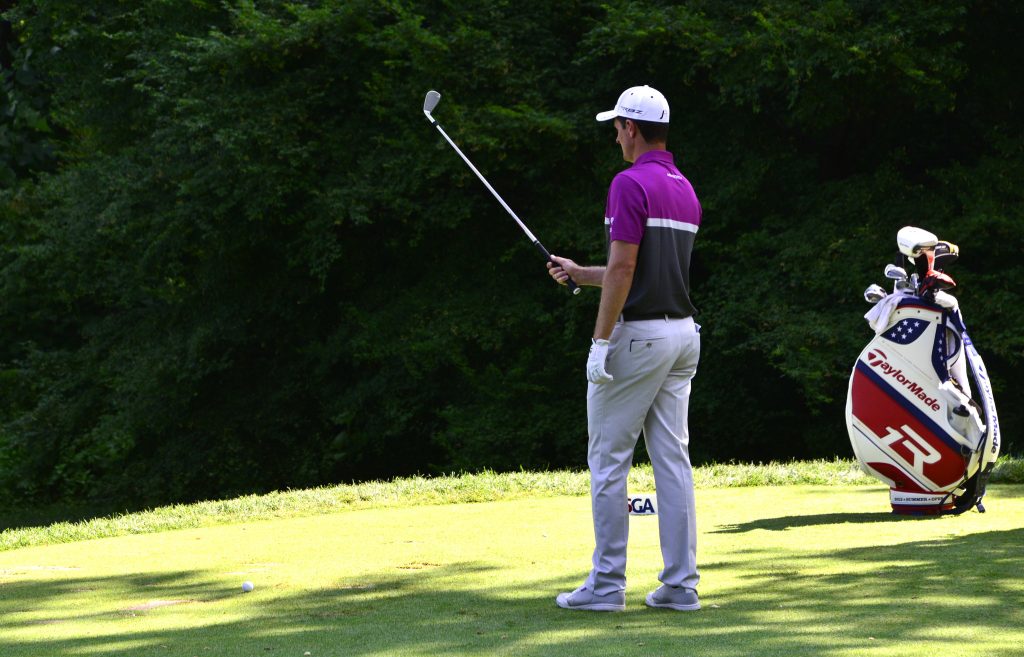
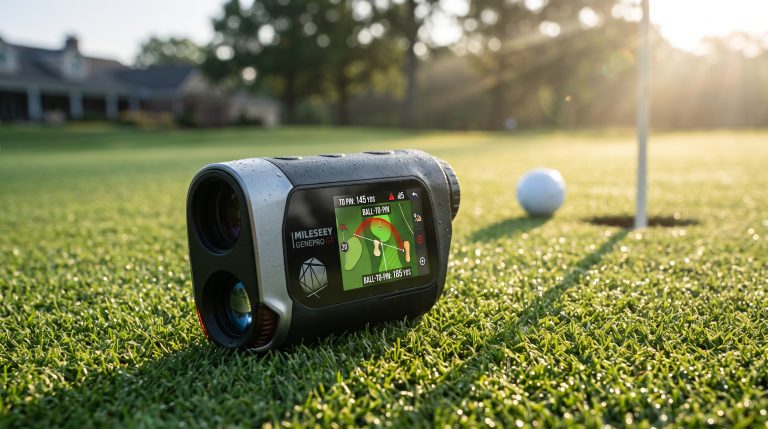
For a professional, the pre-shot routine is a transition from the analytical “Thinking Box” to the athletic “Play Box”. In the Thinking Box—usually a few steps behind the ball—the golfer gathers data: wind speed, elevation, lie, and precise yardage. Once a decision is made and the club is pulled, the routine shifts. By the time they step into the Play Box, the thinking is over. The goal is to quiet the mind and let muscle memory take over.

The pros practice this religiously because it builds a “force field” against nerves. For instance, legendary golfer Annika Sorenstam’s routine was famously timed at exactly 24 seconds, rarely varying by more than a single second over a 14-year career. This extreme consistency ensures that whether a player is on the first tee or facing a championship-winning putt on the 18th, the physiological state of their body remains the same. Without this ritual, players often speed up when nervous, leading to the “collapses” seen when a leader’s routine becomes erratic under Sunday pressure.

Finding a Pre-Shot Routine That Works for You

Creating your own routine isn’t about mimicking a pro’s specific “waggle” or “foot-step,” but about following universal principles of focus.

Establish a Decision Zone: Start every shot 2-3 steps behind the ball. Use this space to make your “contract” with the shot. Once you decide on a target and club, commit to it 100%.

Identify Your Visual and Physical Cues: Some players need to see the ball’s flight (visualization), while others need to feel the “weight” of the club or the rhythm of a practice swing. Find a physical trigger—like a deep breath or a specific club adjustment—that signals to your brain, “it’s time to go”.

Keep it Brief and Purposeful: A routine should generally last between 15 to 25 seconds. If you stand over the ball too long, tension and doubt will inevitably creep in.

The Post-Shot Routine: The Art of Letting Go

While the pre-shot routine prepares you for the strike, the post-shot routine protects your mental state for the next one. Its primary purpose is to process the outcome—good or bad—and then “store or reject” it.

A solid post-shot routine involves a brief period of reflection—roughly 10 seconds—where you ask if you were fully committed to the shot. If the shot was poor, you might take one “corrective” practice swing to feel the right motion, then physically signal the end of that shot by cleaning your club and putting it back in the bag. This ritual prevents a single bad swing from spiraling into a bad round, ensuring that by the time you reach your ball for the next shot, your mind is neutral and ready to start the process again.

Summary:

The pre-shot and post-shot routines are the invisible framework that holds a golfer’s physical game together. By mastering the science of the Thinking Box and the Play Box, professional golfers ensure their mechanics remain sharp even when nerves are fraying. While the pre-shot routine builds the commitment necessary to execute a high-level swing, the post-shot routine provides the emotional discipline to leave the last result behind and focus entirely on the next opportunity. For any golfer looking to shave strokes off their handicap, these mental rituals are just as vital as any technical swing change.

Take Action:

Ready to take your mental and physical game to the next level? Don’t leave your performance to chance. Become a Golf Tips Premium Member today to gain exclusive access to tried-and-true methods, deep-dive drills, and professional secrets designed to transform you into a more consistent, confident player.

Join here: golftipsmag.com/register

From Georgia’s hidden lakes to the wild coasts of New Zealand, these are the year’s premier pairings of championship turf and five-star sanctuary.

In 2026, the elite golf getaway has shed its “check-the-box” reputation in favor of something far more soulful. It is no longer enough to simply play eighteen holes; the modern traveler demands a total sensory immersion where architectural masterpieces meet hyper-personalized hospitality. From the dramatic, salt-sprayed cliffs of Los Cabos to the storied, mist-covered manor houses of the Scottish Highlands, this year’s premier retreats are defined by their ability to weave local culture and cutting-edge luxury into the fabric of the game.

These destinations represent the new gold standard of “Stay & Play,” where the transition from the final green to a world-class spa or a Michelin-starred table is seamless. Whether you are chasing the high-tech precision of next-gen practice facilities or the quiet solitude of a remote coastal links, these hotspots offer more than just a tee time. They provide a curated sanctuary for those who view golf not just as a sport, but as a gateway to the world’s most exclusive landscapes.

The Domestic Titans: U.S. Icons

Reynolds Lake Oconee (Greensboro, Georgia)

Reynolds Lake Oconee

Reynolds Lake Oconee has emerged as a premier 2026 destination, blending elite golf with a refined, active lifestyle centered around The Ritz-Carlton Reynolds, Lake Oconee. The experience features the recently restored Great Waters course and the “Kingdom of Golf” for high-tech fitting, seamlessly pairing championship-level play with lakeside relaxation.
Long overshadowed by the shadow of Augusta, Reynolds Lake Oconee has emerged as 2026’s most sophisticated golf sanctuary. It’s a place where the Georgia pines meet a sprawling, tranquil shoreline, offering a laid-back elegance that feels both expansive and intimate.

The Play: While the community is home to seven world-class championship courses (with an eighth, Fenmoor, arriving in late 2026), the crown jewel remains Great Waters. This Jack Nicklaus Signature course was meticulously restored to highlight its stunning lakefront views, demanding precision while offering some of the most scenic greens in the Southeast

The Stay: The Ritz-Carlton Reynolds, Lake Oconee perfectly captures the “lakeside luxury” aesthetic. You can spend your mornings at the Kingdom of Golf for a data-driven, high-tech club fitting, and your evenings unwinding with artisanal s’mores by the fire pit as the sun dips below the water.

The 2026 Vibe: This is the ultimate “sport-and-splash” lifestyle. The trend here is the seamless transition from turf to surf—completing a brisk morning round on the links just in time to spend the afternoon wakesurfing or paddleboarding across the glass-calm lake.

For more details, visit: https://www.reynoldslakeoconee.com/

Bandon Dunes Golf Resort (Bandon, Oregon)

Bandon Dunes Golf Resort

No American golf bucket list is complete without this purist’s pilgrimage to the rugged Oregon coast. In 2026, Bandon remains the ultimate “off-the-grid” destination, where the connection between the player and the raw, untamed elements of the Pacific Northwest is absolute.

The Play: While Sheep Ranch and Bandon Trails are the year’s must-score tee times, Pacific Dunes remains the heavy hitter, constantly rivaling Pebble Beach for the top public ranking in the country. It is a masterpiece of coastal dunes and emerald fairways that feels less like a manicured course and more like a gift from the landscape.

The Stay: The Lodge at Bandon Dunes offers an elegantly understated retreat designed specifically for the dedicated player. There are no distractions here—just cozy, refined accommodations positioned so you can wake up, walk straight to the first tee, and lose yourself in the game.

The 2026 Vibe: This is “soul of the game” territory—unplugged, walking-only, and beautifully rugged. The trend for 2026 is a return to simplicity, where the only things that matter are the wind in your face, the firm turf under your feet, and the company of your group.

For more details, visit: https://bandondunesgolf.com/

The International Heavyweights

Quivira Golf Club (Los Cabos, Mexico)

Quivira Golf Club

Perched at the true “Land’s End” of the Baja Peninsula, Quivira has solidified its status as the most dramatic tee time of 2026. It is a high-altitude adrenaline rush where the desert meets the deep blue of the Pacific in a way that feels almost otherworldly.

The Play: The Jack Nicklaus Signature course is a masterclass in cliffside engineering. You’ll navigate massive dunes and granite cliffs, but the real showstoppers are the par-3s hanging over the ocean. In 2026, the mid-round comfort stations remain legendary, serving up gourmet sliders and tequila shots with a side of breaching whales in the distance.

The Stay: Pueblo Bonito Pacifica Golf & Spa Resort offers a sophisticated, adults-only sanctuary. The 2026 luxury standard here is defined by The Towers, featuring 24-hour butler service and private terraces that allow the sound of the crashing surf to be your constant soundtrack.

The 2026 Vibe: This is “High-Octane Hospitality.” The trend is moving toward the ultimate multi-sensory experience—where the thrill of a world-class shot is immediately followed by a five-star culinary moment. It’s golf at its most glamorous and visually spectacular.

For more details, visit: https://www.quiviraloscabos.com/golf

St Andrews & The Kingdom of Fife (Scotland)

St Andrews & The Kingdom of Fife

In 2026, a pilgrimage to the “Home of Golf” is no longer just about the history books; it is a masterclass in balancing ancient tradition with a vibrant, modern energy. The town of St Andrews continues to serve as the beating heart of the game, offering an unmatched atmospheric blend of medieval ruins, cobblestone charm, and the world’s most iconic linksland.

The Play: The Old Course remains the ultimate bucket-list target, with the daily ballot still the most thrilling lottery in sports. However, 2026 sees the Old Course Reversed—an annual three-day event in April where the links are played in their original 15th-century clockwise routing—becoming one of the most coveted experiences in golf travel. For those looking beyond the town, the Kingdom of Fife offers coastal gems like Kingsbarns and the dramatic Dumbarnie Links, which provide a world-class “pure links” alternative.

The Stay: The Old Course Hotel, Golf Resort & Spa offers the quintessential five-star experience, complete with views overlooking the infamous 17th “Road Hole” and the award-winning Kohler Waters Spa for post-round recovery. For a more boutique, high-energy vibe, Rusacks St Andrews occupies an iconic 1800s building literally steps from the 18th green, featuring the rooftop restaurant 18—led by Michelin-starred talent—which serves up the best views in the village.

The 2026 Vibe: “Heritage with a Pulse.” The trend this year is the extended stay-and-play, where golfers base themselves in St Andrews for a week to soak in the local culture—think post-round drams at the Jigger Inn and evening walks across the Swilcan Bridge. It’s an immersive dive into the game’s roots, enhanced by 2026’s focus on high-end culinary scenes and luxurious “wellness-first” accommodations.

For more details, visit: https://www.standrews.com/

The “Wildcard” Destination

Te Arai Links (New Zealand)

Te Arai Links

Set along the pristine coastline of the North Island, Te Arai Links has rapidly ascended to the top of the global “must-play” list for 2026. This isn’t just a golf resort; it’s a breathtaking conservation project that offers a pure, sand-based links experience that many are calling the “Bandon Dunes of the Southern Hemisphere.”

The Play: The resort boasts two modern masterpieces: the South Course, a Bill Coore & Ben Crenshaw design characterized by its wide fairways and dramatic ocean views, and the newer North Course by Tom Doak, which weaves through towering dunes and coastal forest. Both courses are designed to be played along the ground, celebrating the firm, fast, and windy conditions of traditional links golf.

The Stay: The accommodations at Te Arai are a masterclass in “Coastal Minimalism.” The Luxury Cottages and Suites are tucked into the landscape to ensure privacy and unobstructed views of the Pacific. Expect a refined, quiet luxury where the focus is on natural materials, deep soaking tubs, and floor-to-ceiling glass that blurs the line between the indoors and the wild outdoors.

The 2026 Vibe: “Remote Refinement.” The 2026 trend here is the ultimate escape—a journey to the edge of the world where the Wi-Fi is ignored in favor of the stars. It’s about the “apres-golf” culture at the Ricochet bar, where players gather to recount their rounds over local Northland wines as the sun sets over the Pacific.

For more details, visit: https://tearai.com

Pro Traveler Tip for 2026: Book the “Shoulder Season.” With golf’s popularity at an all-time high, the “sweet spots” are now late May or early October. You’ll find better tee time availability and significantly lower room rates at these five-star properties. For more great travel destinations be sure to visit our travel section at golftipsmag.com.

Why your partner needs a cheerleader, not a swing consultant.

Golf is billed as the “ultimate game for a lifetime,” but for couples, it’s basically an outdoor escape room where the only way out is through four hours of testing your partner’s sanity. Played well, it’s a scenic rolling date; played poorly, it’s just a very expensive way to walk four miles in angry silence. If you want to keep your relationship out of the literal and metaphorical bunker, you have to stop worrying about the scorecard and start worrying about making it to the 19th hole in the same car.

Be a Partner, Not a Pro

The golden rule? Your job is to be a cheerleader, not a swing consultant. When your partner sends a ball screaming into the neighboring zip code, your role is to provide a sympathetic “Tough break, you’ll get the next one” or a very optimistic “Well, at least it’s findable!”

The fastest way to turn a sunny afternoon into a cold war is unsolicited advice. Even if you can clearly see their swing looks like a person fighting off a swarm of bees, do not try to “fix” it on the 6th tee. Instead, be helpful with the boring stuff: rake the sand, hunt for their lost ball in the weeds, and keep the snacks coming.

Why the “Spouse Lesson” is a Death Trap

It’s a tale as old as time: a husband tries to fix his wife’s grip, and suddenly they’re arguing about something that happened in 2014. The emotional baggage of your marriage makes “keep your head down” sound like a personal attack. However, when a PGA Pro says the exact same thing, it’s “brilliant expertise.”

Save your marriage and hire a professional. A pro offers:

Look, unless your last name is Leadbetter, you have no business telling your spouse how to rotate their hips. Trying to coach your partner is the fastest way to end up eating dinner in separate rooms. Do yourself a favor and outsource the criticism to a professional. A Golf Pro isn’t just a coach; they’re a highly-trained marital mediator with a bucket of range balls.

Here is why paying a stranger to judge you is the best investment you’ll ever make:

The Emotional Shield (An Objective Eye): A pro doesn’t have skin in the game. They don’t care that you left the wet towels on the floor or that your mother is coming to stay for a week. When they tell your spouse their swing is “a bit over the top,” it’s a technical correction. When you say it, it sounds like you’re questioning their entire lineage. A pro provides a “Safe Zone” where a slice is just a slice, not a symptom of your failing communication skills.

The Great Equalizer (Neutral Ground): Taking a joint lesson turns you back into a team. Instead of one person playing the “Wise Sensei” while the other seethes with resentment, you both get to be clueless novices together. There is something strangely bonding about watching your partner also struggle to hit a stationary object while a guy in a polo shirt patiently sighs at both of you. It’s much harder to be smug when you’re both chunking it into the same bunker.

The “No-Cry” Zone (Customized Growth): Professionals have seen it all—the tears, the thrown clubs, the broken spirits. They know how to give you drills that actually work without triggering a mid-round existential crisis. They can tailor the torture to your specific physical limitations, ensuring you both progress at your own pace without one person feeling like they’re the “project” while the other is the “pro.” Plus, you’re much less likely to snap, “I’m trying, Linda!” at a man you’re paying $80 an hour.

Make it an Actual Date

Unless there’s a green jacket on the line, stop playing like it’s the Masters. Use the “9 and Dine” strategy: play nine holes (or until you’re tired of each other’s jokes) and head straight to the clubhouse for margaritas. If one of you is a stick-striker and the other is a dirt-shoveler, play a Scramble. Both of you tee off, pick the ball that didn’t hit a house, and play from there. It turns the game into a team effort rather than a competition. You can even add stakes: the loser of the putting contest picks the movie, or the person who hits the most trees has to load the dishwasher.

Ultimately, couples golf is about the walk, the gossip, and the shared trauma of losing six balls in one pond. Leave the coaching to the pros and the ego in the trunk. The fairway is a great place to grow closer—as long as you stay out of each other’s swing path.

0
0
Your Cart
Your cart is emptyReturn to Shop