October 16, 2026

Ted Odorico

CEO, iGolf Sports Network LLC Editor, Golf Tips Magazine Producer/Host, Golf Talk Live & Women of Golf Show Golf Instructor & Corporate Coach for 32+ years

Golf GPS speakers are not a new concept, but they have historically suffered from one massive design flaw: they anchor your data to the golf cart. If you are playing a “cart-path-only” hole, you are stuck guessing your yardage from across the fairway or draining your phone battery using a clunky backup app.

The MILESEEY GeneSonic Pro completely shatters that mold. Retailing at $299.99, this device introduces a clever, two-piece modular design that might just make it the smartest piece of course tech I have tested all year.

Key Features

  • Detachable 3-Inch Handheld: The color touchscreen pops directly off the speaker base.
  • True Standalone GPS: An internal GPS chip talks directly to satellites without needing a phone or app.
  • 43,000+ Preloaded Courses: Works globally right out of the box with zero subscription fees.
  • 40W Audio Power: Equipped with a premium dual-band crossover system for rich, high-fidelity sound.
  • Dynamic Green View: Allows you to manually drag and drop pin locations for exact distance readings.
  • IP67 Waterproofing: Completely dustproof and submersible to handle sudden downpours.
  • What’s in the Box – MILESEEY GeneSonicpro Golf Speaker comes with extensive accessories kit: Speaker Lanyard ×1, Handheld Carabiner×1, Cleaning Cloth ×1, USB-C Charging Cable ×1, Quick Guide ×1, User Manual ×1.

Setup and Ease of Use

Out of the box, setup is a breeze. Connecting the Bluetooth to my phone took under five seconds, which is all you need to do to get your music playlist rolling.

The actual GPS side requires absolutely no cellular data or companion app pairing. When you arrive at the first tee, you simply tap the golf icon on the touchscreen. It takes about two minutes to secure a satellite lock, automatically recognizes your course, and displays your yardages. It is highly intuitive, even for the most tech-averse golfers.

Pros & Cons

Pros

  • The Detach Factor: On cart-path-only days, you just slip the 3-inch handheld into your pocket or clip it to your belt with the included carabiner. Your music stays playing at the cart while you bring your yardages directly to your ball.
  • Zero Subscription Fees: Unlike heavy hitters in this category that hide advanced features behind annual paywalls, MILESEEY is a one-time purchase.
  • Exceptional Sound: The 40W system pumps out crisp highs and genuinely deep bass that easily fills the fairway without distorting at high volume.
  • Dual Control Points: You can control track skips and audio volume from both the speaker base and the detached handheld remote.
  • Brawny Magnets: The magnetic mount is incredibly secure. It stayed locked to the cart strut even while driving over aggressive bumps and rough terrain.
Cons
  • Slight Screen Pixelation: The 3-inch color screen is perfectly readable in direct sunlight, but it lacks the ultra-high resolution of modern smartphones.
  • Crowded Interface: With hazards, dynamic green views, and stat-tracking toggled on, the small screen layout can look a bit cluttered until you customize it.
  • Scratch-Prone Display: The housing has reinforced bumpers, but the screen glass itself can pick up minor surface scuffs if tossed carelessly into a bag with tees and keys. I highly recommend adding a screen protector.

Ted’s Editorial Verdict

The MILESEEY GeneSonic Pro achieves something few tech products do: it genuinely solves a recurring on-course headache. While competitors like the Bushnell Wingman HD have dominated the market, MILESEEY has significantly outpaced them in pure utility with this standalone, detachable design. If you are looking for an all-in-one device that respects your phone’s battery life, delivers premium sound, and gives you elite flexibility on the course, this is an absolute winner. It has officially earned a permanent spot on my game-day cart.

Grasping the fundamentals from the onset is vital to building a golf swing that will last.

So, you have a future golfer on your hands but don’t know where to start? The first six months of any new golfer’s development will define their progress and tendencies. Many things must be taken into consideration. Instruction that allows the golfer to grasp the fundamentals from the onset is vital to building a golf swing that will last.  People often overlook equipment, too, especially when it comes to junior golfers. The common mistake I see parents make is giving children hand-me-down clubs they might grow into but that simply don’t fit right now. I get it! I’m a parent, too, but new golfers create compensating movements based on their equipment being too long and heavy.  

So, you have the right equipment but don’t know what step to take next. Don’t fall into the trap of taking your junior to the range and teaching them your experiences. The rules you follow for your swing will probably not apply to theirs. It’s human nature to overcoach others. We desperately want the best for our kids, but that sometimes leads to coach desperation. I see this a lot when it comes to parent/child situations on the range. If the first thing doesn’t work, let’s try this instead. Before you know it, you have run out of ideas and frustration is at its highest.  Regardless of someone’s ability to swing a golf club, you should always take a building block approach and not cut any corners. Stick to the PGA approach of posture, grip, alignment before even considering having someone hit a golf ball. Posture defines the shape of the swing and how much the body will pivot and rotate throughout the golf swing. Grip will influence most of the golf ball’s direction, and alignment determines whether the ball can stay on target. A breakdown in any of these areas will void a golfer of any consistency.

Ball Position

With two alignment sticks and four different-colored golf balls, create a practice station that highlights where the feet should be placed in relation to the golf ball. Your two alignment sticks should be placed on the ground, creating a letter “T.” Put both feet an equal distance on either side of the stick and toes parallel to their target. Place four different-colored balls in a row, starting from the middle of the stance and staggered toward the front heel. This will help identify the ball positions within the stance with different clubs. 

As illustrated, the soccer ball position in the middle of the stance should be for any wedge, 9 and 8 iron, orange for a 7, 6, 5 and hybrid, yellow for fairway woods and red for a driver. Having different-colored golf balls creates a lasting memory for the new golfer and creates a systematic approach for the foundation of the golf swing.

Pivot Setup

To fully grasp what happens in the golf swing, you have a feel for what the body does and how it creates the correct sequence. Within the practice station, align your feet so that the alignment stick is toward the back inside heel. Make sure your weight is 50/50 as you cross your arms and place a golf club on the top of the shoulders. Posture should feel athletic and ready to move.

Pivot Back

Maximizing the body’s rotation in its backswing is key to distance and power within the golf swing. In order to feel it, the golfer needs to rotate their body so that their weight shifts slightly in their inside back heel. At the resting point of the top of the backswing, the club across the shoulders should align up to the alignment stick between their feet. Spine angle should remain the same throughout the transition from address position to full backswing position.

Pivot Impact

Following the correct sequence will cause the weight to shift toward the opposite foot at impact. This weight shift starts from the ground up. Lead with the hips first, slightly rotating the opening toward the target. The shoulders will rotate back toward the target, too. 

Pivot Finish

Complete the swing by completing the hip and shoulder rotation. The majority of the weight will be on the front foot, while the back foot “shows some shoe”—pivots to its toe. If done correctly, this position should be held for approximately five seconds.

Throughout the golf swing, there are key basic positions every level of golfer should know and recognize. Some theories have up to 16 positions, but for the average golfer, that’s way too many positions. Keep it simple and limit those positions to just four.

Y Setup

Stay with the practice station setup previously created, with both feet an equal distance on either side of the alignment stick on the ground. Weight should be evenly distributed while creating an athletic posture. While holding the golf club in the center of the body, notice how the arms and shaft of the golf club create a letter “Y.”  

L Position Back

At the top of the backswing, the left arm should remain straight while the right arm folds at the elbow. The right forearm and golf club form a letter “L.” Creating this position demonstrates that the wrists have fully hinged on the backswing.

Impact – Brush the Grass

New golfers tend to avoid hitting the ground for fear of hurting themselves. Golf clubs, for the most part, are designed to lessen the club’s impact and not cause any harm. Weight at the moment of impact should be on the front foot, and the right arm straightens to help the club’s shaft angle lean forward through impact. Remember: No ground means no right arm extension; ground before the ball means no weight shift toward the front foot.

Stick the Finish and Show Some Shoe

The swing isn’t finished when you hit the ball! At the end of the swing, most of the weight will be on the front foot. The back foot should have pivoted to its toe, and the heel is off the ground. The old saying “belt buckle to the target” is a simple reference to knowing if you fully finished the swing or not. I’m a big believer that new golfers decide whether they are going to stick with golf or not in the first few months. It takes a lot of dedication and discipline because golf is a difficult sport, period! Make sure that you give that new golfer in your life the right start and, as always, keep it fun.

The “Tough Two”: When the Ball is Above and Below Your Feet.

Think back to your last round—how many times did you actually have a perfectly level stance? If you’re like most golfers, you can probably count them on one hand. Golf is a game of slopes, yet we spend hours practicing on level ground. To truly take your game from the range to the course, you must understand how to work with gravity, not against it, by adjusting your setup for every incline. Understanding what may or may not happen from these uneven lies and making the necessary set-up adjustments are extremely important to executing the shot and minimizing the BIG mistakes.

When executing any of the uneven lies, use these three steps to help.

Step 1: Take several practice swings to get a feel for the slope
Step 2: Swing at 75% tempo
Step 3: Use a three-quarter length swing

Here we’ll discuss the two toughest uneven lies: Ball above your feet and ball below your feet.

Uneven Lies: Ball Above Feet

Uneven Lies: Ball Above Feet

Option 1: Action-Oriented Flow

“To execute this shot correctly, start by choking down slightly on the grip for better control. You’ll want to aim just right of your target to account for the ball’s flight path while shifting your weight toward your toes to keep the movement dynamic. Complement this by adopting a more upright posture at address, and consider using less club than usual; this helps take some speed off the swing and effectively reduces the risk of a hook.”

Option 2: Casual & Direct

“When setting up, try shortening your grip and aiming a bit to the right to give yourself some room to work. Keeping your weight on the balls of your feet and maintaining a taller, more upright stance will help stabilize your plane. Finally, reach for less club—it’s one of the easiest ways to kill that unwanted hook and keep your ball on a straighter line.”

Key Adjustments Included:

. Choking down: Improving control.
. Aiming right: Counteracting a hook.
. Weight on toes: Promoting balance and athletic movement.
. Upright posture: Creating a more repeatable swing plane.
. Less club: Reducing swing speed to minimize excessive curvature.

SWING – The more lofted club you use for this shot, the further the face will point to the left. Using a lower lofted club will point closer to the target at address and reduce the amountof hook on the shot. This lie shifts the ball closer and higher to you than normal, which will steepen the swing plane, causing you to hit too much ground. At impact, feel the club just brushing the top of the grass. The slope, and a flatter swing plane, will create a right-to-left flight.

Uneven Lies: Ball Below Feet

Uneven Lies: Ball Below Feet

Option 1: Technical & Instructive Flow

“To properly address the ball and guard against a slice, start by gripping up on the club to utilize its full length for maximum leverage. Set your alignment by aiming slightly left of your target, which helps square the face at impact. At address, shift your weight toward your heels and increase your knee flex to create a deeper, more stable base. Finally, opting for a club with more loft is a simple but effective equipment tweak that reduces the side spin responsible for a slice, keeping your ball flight straighter.”

Option 2: Casual & Action-Oriented

“Setting up for success starts with your hands—grip further up the club to gain a bit more extension and power. You’ll want to aim to the left of your final destination to account for any natural curve, while sitting back with your weight on your heels and adding a bit more bend in your knees. This grounded stance, combined with the extra help of a higher-lofted club, will work together to kill off that slice and keep you in the fairway.”

Key Adjustments Included:

. Grip up: Maximizing club length for leverage.
. Aim left: Offsetting the left-to-right curvature of a slice.
. Weight on heels: Promoting a more stable, grounded foundation.
. Increase knee flex: Lowering your center of gravity for balance.
. More loft: Reducing the axis of side spin to straighten out ball flight.

SWING – This is by far the hardest of the uneven lies. Why? In this situation, your swing needs to be more upright than normal WITHOUT changing your posture or knee flex duringthe backswing. Opposite of the other lie, the ball is now further away, making is easier for you to thin or top the shot. Keep your chest down and keep your knee flex throughout the swing, including the finish. Use a club with more loft to help increase backswing on the ball which will reduce the amount of slice. Play for a left-to-right shape and stay down.

Summary

To wrap up these techniques, it’s all about understanding how small setup tweaks can completely alter your ball flight. The first shot requires a more athletic, “tall” posture with the weight forward to help you hold off a hook and maintain precision. Conversely, the second shot focuses on creating a deeper, more stable foundation with a lower center of gravity to help square the face and eliminate a slice.

By mastering these opposing adjustments, you gain the ability to troubleshoot your swing flaws in real-time and keep your ball on the intended line.

Phase One Delivers New Dining Venues, Culinary Upgrades, and Refreshed Amenities; Course and Practice Facility Enhancements Underway for Fall 2026 Completion.

Evans, Georgia (April 23, 2026) — Champions Retreat Golf Club—the only property in the world featuring individually designed courses by Jack Nicklaus, Arnold Palmer, and Gary Player—has completed the first phase of a multi-million-dollar campus transformation. Phase One delivers reimagined dining, social, and hospitality spaces. including three newly conceived venues within the Grille House. Phase Two golf course and practice facility upgrades are underway and targeted for completion this fall.

Acquired by Arcis Golf in 2023, Champions Retreat is taking a significant step forward in enhancing the member and guest experience while honoring the club’s deep connection to championship golf and Southern hospitality.

“With this first phase of renovations, we’re not just updating spaces—we’re creating a sense of place that honors our heritage and elevates every moment on property,” said Blake Walker, Founder, Chairman, and CEO of Arcis Golf. “This is only the beginning, as we look ahead to even greater enhancements in the months to come.”

At the heart of the recent renovations is the Grille House, reintroduced as three distinct and imaginatively designed venues.

  • The upstairs of the Grille House has been reborn as Three Kings, a members-only speakeasy honoring Nicklaus, Palmer, and Player. Designed to evoke a classic, prohibition lounge, Three Kings is approached via a hidden stairway entrance. This gathering place is designed to promote post‑round conversation and camaraderie.
Three Kings, a members-only speakeasy honoring Nicklaus, Palmer, and Player
  • A newly renovated Private Dining Room will serve as an intimate extension of the main dining area in the Grille House. The space features custom-built wine displays, showcasing extraordinary collections of wine, plus increased seating.
  • Downstairs, the Champions Room now serves as the primary dining and bar area. The fully reimagined Champions Room is themed around the club’s rich architecture and heritage, with custom-designed trophy display cabinets lining the walls.
Downstairs, the Champions Room now serves as the primary dining and bar area. (Dining & Bar area)

  • Nearby, The Barn has been redecorated with furnishings and an atmosphere that can accommodate any special occasion with a variety of exciting culinary options. The Barn kitchen remodel will commence this summer, and upon completion will offer an open space “culinary laboratory” and a new bar in the pre-function and private dining spaces.

Beyond dining, a new concierge and cottage check‑in area in the Locker House welcomes arriving members in a luxury setting, befitting a private club with both local and national members. Champions Retreat opens to the public one week each spring, offering outside guests a rare opportunity to play its golf courses and partake in distinctive hospitality.

For most of the year, club life revolves around the Foursquare, a collection of well-appointed cottages and gathering spaces. The club offers 84 rooms in 14 unique cottages consisting of four- and eight-bedroom ensuite configurations for use by members and guests.

Phase Two

While the current renovations mark a major milestone, Champions Retreat’s evolution is far from complete. Phase Two extends beyond the clubhouse, focusing on the golf course, practice facilities, and expanded outdoor amenities to enhance daily member play and championship-hosting capabilities. Course updates include bunker renovations across all three nines; major improvements to the practice facility and short‑game area; and the addition of new putting greens, including a warm‑up putting course north of The Barn.

Golfers can also look forward to a Trackman‑equipped driving range with covered hitting bays, a new halfway house serving both on‑course players and practice‑facility guests, and an indoor racquet sports facility. Together, these investments underscore Champions Retreat Golf Club’s ongoing commitment to honoring the game’s traditions while continually delivering southern hospitality in a superior setting for members and guests.

To learn more about Arcis Golf, visit arcisgolf.com.

About Arcis Golf

Arcis Golf is a premier owner and operator of 88 private, resort, and daily fee courses in the United States. Arcis Golf continues to transform its portfolio of clubs into inclusive, lifestyle hubs with dynamic programming and unrivaled amenities. Golf and country clubs are elevated to levels of excellence designed to exceed the needs and expectations of families, friends, members, and guests of all ages. The Company is also known for innovative management, with a best-in-class leadership team committed to enhancing service levels and reinventing the modern club experience. Headquarters: 8343 Douglas Avenue, Ste. 200, Dallas, TX 75225. Phone: (214) 722-6000. Website: arcisgolf.com.

Press Release by: Karen Moraghan, Hunter Public Relations

email: kmoraghan@hunter-pr.com

Pure Michigan Golf: Five Michigan Golf Properties/Destinations Earn National Recognition in USA TODAY 10BEST Awards

LANSING, Mich. – The State of Michigan, widely regarded as America’s Summer Golf Capital with more than 650 top courses and award-winning resorts, has had five of the state’s top golf properties and destinations awarded among USA Today’s 10BEST Golf Destinations, 10BEST Golf Resorts, and 10BEST Public Golf Courses in the country.

The annual 10BEST Awards highlight the finest experiences across the country, with nominees selected by a panel of industry experts and editors, then voted on by the public.

“Michigan continues to be recognized as a top-tier golf destination in the U.S.,” said Kelly Wolgamott, Vice President of Pure Michigan, part of the Michigan Economic Development Corporation. “With more than 650 public courses, there is a golf experience for every level of play. From the historic and esteemed courses of Metro Detroit to the forests of the Upper Peninsula and the scenic beauty of northern Michigan with sweeping views of the Great Lakes, there’s no place like Pure Michigan for a truly memorable golf vacation.”

Leading the way is Michigan’s Upper Peninsula, which earned the No. 1 ranking among the 10BEST Golf Destinations. Anchored by destinations such as Island Resort & Casino and Bay Mills Resort & Casino, the Upper Peninsula features acclaimed layouts, including Sweetgrass Golf Club, Sage Run Golf Course, Greywalls at Marquette Golf Club, Bay Mills Golf Club, as well as The Jewel and Wawashkamo on Mackinac Island. These courses are known for their dramatic terrain, thoughtful design, and immersive experiences that blend championship golf with the region’s untamed wilderness.

Long celebrated for its rugged natural beauty and better known for outdoor pursuits like hunting, snowmobiling, and its signature pasties, the Upper Peninsula has quietly emerged as one of the nation’s most compelling golf getaways.

Upper Peninsula – Sweetgrass Golf Club

Also earning national recognition is the Petoskey Area, ranked No. 5 among the 10BEST Golf Destinations. Situated along the shores of Little Traverse Bay in Northern Michigan, the region offers a rich collection of 17 courses that cater to players of all skill levels. Among its highlights is Bay Harbor Golf Club, one of the most visually striking courses in the country, featuring holes that run along Lake Michigan’s shoreline, through a quarry, and hardwood forests. Additional standout courses in the Petoskey Area include Belvedere Golf Club, Dunmaglas, Charlevoix Golf & Fitness, Hidden River Golf & Casting Club, Chestnut Valley Golf Club, to name a few, as well as a collection of courses at The Highlands—part of the renowned BOYNE Golf portfolio.

“We are extremely excited that the Petoskey area was recently recognized as one of the 10 Best Golf Destinations in the country”, said Jim Powell, Executive Director of the Petoskey Area Visitors Bureau. “It’s no surprise, with 17 world-class courses located within a 30-minute drive, the Petoskey area needs to be on every golfer’s bucket list. Located on Lake Michigan’s Little Traverse Bay, this region has a long history of golf, starting with the development of some of the first resort courses in Michigan to the award-winning portfolio of courses curated by BOYNE Golf. In addition to golf, the region is well known for its easy access to natural beauty and selection of vibrant communities, including Petoskey, Harbor Springs, Bay View, Bay Harbor, and the Boyne Valley.”

Petoskey Area – Belvedere Golf Club

Among the 10BEST Golf Resorts category, BOYNE Golf stands as Michigan’s sole resort representative. One of North America’s largest golf resorts, BOYNE Golf encompasses three premier lodging properties and 11 championship courses across Northern Michigan. For 60 years, the organization has been a leader in destination golf, offering a blend of award-winning layouts and upscale hospitality.

At the center of its portfolio is Bay Harbor Golf Club, widely recognized as one of the most iconic public golf experiences in the United States. The 27-hole facility features the Links, Quarry, and Preserve courses, each offering a unique landscape—from dramatic lakeshore cliffs to rugged quarry terrain and serene forest settings. The Highlands features five distinct layouts, including The Heather, Arthur Hills, The Moor, Donald Ross Memorial, and the recently introduced Doon Brae par-3 course, offering a diverse and complete golf experience. The third BOYNE Golf property, Boyne Mountain, has two fantastic 18-hole layouts – the Monument and Alpine courses offering outstanding mountainside golf and some of the most spectacular panoramas in the state.

Complementing the golf experience are BOYNE Golf’s premier lodging options, including The Inn at Bay Harbor along Lake Michigan, the Mountain Grand Lodge and Chalet Edelweiss at Boyne Mountain, and the recently transformed Main Lodge at The Highlands. The latter has been reimagined as a boutique hotel inspired by the charm of an English country estate, blending timeless elegance with modern comfort.

“These awards prove why Michigan is known nationally and internationally for offering great golf experiences. It’s an honor to be recognized by USA Today 10BEST, alongside the best golf resort properties in the country,” said Josh Richter, PGA, Senior Vice President of Golf Operations for BOYNE Golf. “Our ranking as the #3 Golf Resort in the United States is a testament to our BOYNE Golf team’s efforts, along with lodging, food, and beverage, who ensure that our guests have the best golf experience when visiting BOYNE Golf.”

Michigan also earned recognition in the 10BEST Public Golf Courses category, with two standout golf courses making the national list. The Cardinal at Saint John’s Resort, located in Plymouth, was ranked No. 6. Designed by Ray Hearn, the course represents the Detroit region’s first high-end public golf development in more than two decades, transforming a former 27-hole layout into a modern championship experience set across 200 acres. Joining it is Black Lake Golf Club, ranked No. 7. Designed by renowned architect Rees Jones and owned by the United Auto Workers, the course is set within a pristine 1,000-acre forest along the shores of Black Lake.

The USA TODAY 10BEST rankings reinforce Michigan’s standing as one of the premier golf destinations in the country. With its diverse collection of courses, award-winning resorts, and unforgettable landscapes—from the shores of the Great Lakes to the forests of the Upper Peninsula—the state offers an unmatched golf experience that appeals to both casual players and seasoned enthusiasts alike.

Visit https://www.michigan.org/golfing

Press release by: Kevin Frisch – Kevin Frisch PR

Ever feel stuck in the same place, wondering how some people seem to level up effortlessly?

Here’s the raw truth: Growth begins when uncomfortable becomes your new normal

If you’re comfortable, you’re not evolving — you’re just repeating. That’s exactly what keeps most players and coaches stuck in a loop, hitting great shots in practice but crumbling under pressure on the course.In this post, I’ll cut through the shiny surface and reveal why embracing discomfort is the game-changer. Whether you’re a golfer struggling to transfer practice to the course or a coach hungry to push your players beyond their limits, this is for you. Let’s dive into why being uncomfortable is the secret to real progress — and how to harness it.

Why Growth Comes From Discomfort — Not Comfort

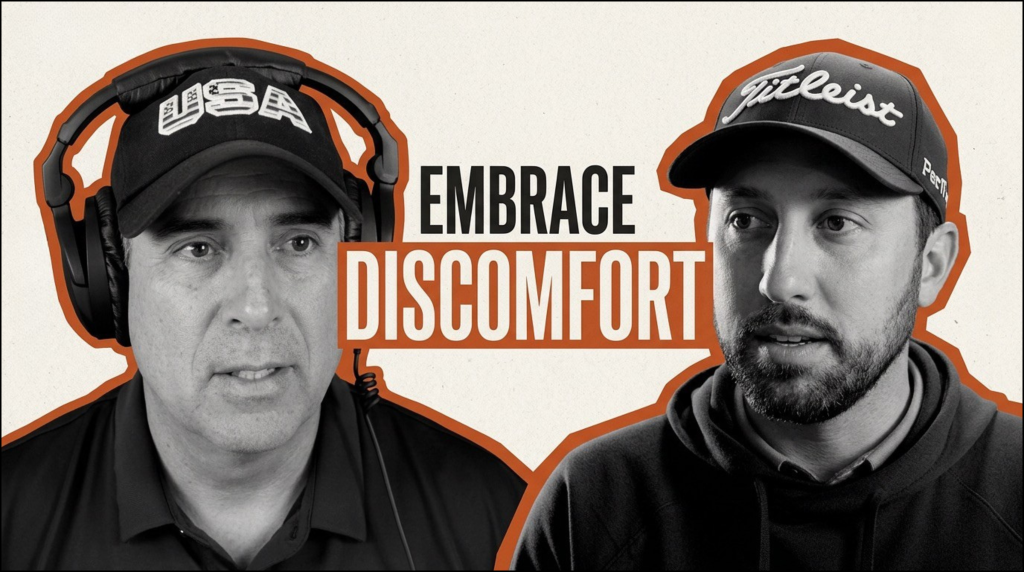
When I spoke with golf coach Michael Wheeler on a recent Coaches Corner segment of my podcast Golf Talk Live, he dropped a truth bomb: “Growth begins when uncomfortable starts.” Think about this—when was the last time you truly pushed yourself outside your comfort zone? To see how embracing discomfort can truly change your game, watch the full conversation here:

The problem: Most people like being comfortable because it feels safe. But safety doesn’t lead to progress; it breeds stagnation. Growth happens when you challenge yourself, push past doubts, and face the uncomfortable realities of what it takes to improve.

Coach Wheeler emphasizes: “Your job isn’t to make someone comfortable; it’s to make them uncomfortable — that’s how you grow.” Whether it’s in golf swing mechanics or mental toughness, the discomfort is where the magic occurs.

The key takeaway: If you want to grow, you must get comfortable being uncomfortable.
How to Embrace Discomfort and Accelerate Your Progress

Change doesn’t happen by wishing for it. It demands action — specifically, action that pushes your boundaries.

Here’s how to flip the script:

1. Shift Your Mindset on Challenges: Instead of avoiding discomfort, see it as a sign you’re on the right track. Like a coach told me, “The best players don’t shy away from the tough shots — they seek them out.” Every mistake, every missed shot, is a stepping stone, not a failure.

2. Seek Out Your Limits: Get intentional about putting yourself into uncomfortable situations. On the golf course, this could mean practicing under simulated pressure or trying shots that scare you. Off the course, it’s about pushing mental boundaries — like staying present during high-stakes moments.

3. Learn to Appreciate the Discomfort: Discomfort is a signal that you’re growing. Instead of resisting it, lean into it. The more you do, the more resilience you build — resilience that translates into all areas of life.

4. Make It a Habit: Consistently put yourself in uncomfortable settings. Whether it’s a tough practice drill or high-pressure situations, discipline creates growth. Remember: “Building a swing is one thing; transitioning into a player requires facing your fears and uncertainties.” Pro tip: The more often you step into discomfort, the less intimidation it holds over you.

From Practice to the Real Deal — Making the Transfer

Here’s the real challenge: it’s one thing to be a “range rat” hitting fantastic shots, but how do you bring that same confidence to the first tee? Coach Wheeler nails it: “Building a golf swing is one thing. Becoming a player is another.” The difference? “Transferability”

Practice should mirror the real game, and that’s where discomfort comes in again. It’s about replicating pressure, unpredictability, and stakes during practice so you’re not thrown off when it counts.

Practical Tips:

  • Simulate course conditions during practice.
  • Practice under pressure — time yourself, add stakes.
  • Reflect on failures and embrace them as learning opportunities.
  • Train your mind to stay calm amid discomfort.

Remember: the more you get used to feeling uneasy, the better you’ll handle stress and uncertainty on the course, where it matters most.

Final Thought: Growth is Uncomfortable — Get Used to It

If you’re serious about getting better, you must accept that discomfort is part of the journey. It’s like the coach said, “You need to put yourself in uncomfortable positions — that’s when you start to grow.” Every successful athlete and golfer has faced moments of doubt, fear, and discomfort. The difference maker? They kept going.

So ask yourself: Are you avoiding discomfort — or leveraging it to level up? The path to mastery isn’t paved with comfort zones. It’s built through challenge, resilience, and the willingness to face what makes you uneasy.

Ready to Embrace Discomfort and Grow?

Start today: Seek out the uncomfortable, push your limits, and watch yourself transform. Growth begins where comfort ends. Will you take the leap?

Frequently Asked Questions:

  • Why is discomfort necessary for growth? Discomfort signals that you’re stepping outside your current limits. Without it, you risk stagnation because real progress requires challenging what’s familiar.
  • How can I get comfortable with feeling uncomfortable? Start small. Wear the uncomfortable cloak intentionally: try new drills, take on pressure scenarios, or push yourself just beyond your usual boundaries. Over time, discomfort becomes familiar.
  • What if I fail during uncomfortable situations? Failure in discomfort is a vital part of growth. It teaches resilience and helps you refine your approach. Embrace mistakes as lessons, not setbacks.
  • How does discomfort help in golf or sports? It prepares you for high-pressure moments, builds mental toughness, and transfers the skills from practice to performance. The more uncomfortable situations you train in, the more prepared you’ll be when stakes are high.

Remember: Growth doesn’t happen in comfort — it happens when you rise above your fears, face discomfort head-on, and keep moving forward. Are you ready to grow?


McILroy joins Nicklaus, Faldo, and Tiger as the only back-to-back Masters champions.

AUGUSTA, GA — The air beneath the towering Georgia pines at Augusta National has always been heavy with history, but on Sunday at the 90th Masters Tournament, it hummed with something rarer: the birth of a dynasty. As the sun began to dip behind the clubhouse, a roar erupted from the 18th green—a sound so primal and resonant it felt as though it could be heard all the way in Holywood, Northern Ireland.

For Rory McIlroy, the journey to this moment was never going to be a simple stroll down Magnolia Lane. Coming into the week as the defending champion, the weight of expectation was suffocating, yet he answered the call by surviving a final-round dogfight that tested every ounce of his resolve. By fending off a relentless charge from the world’s elite and navigating a heart-stopping finish, McIlroy has done the unthinkable.

With this victory, he moves beyond the stars of today and into the pantheon of the immortals, becoming just the fourth player in the century-long history of the tournament to successfully defend his title. Joining the exclusive company of Jack Nicklaus, Nick Faldo, and Tiger Woods, Rory didn’t just win a golf tournament today; he cemented his legacy as the undisputed King of Augusta.

Highs, Lows, and a Heart-Stopping Finish

McIlroy’s final round was anything but a victory lap. Starting the day tied with Cameron Young, the Northern Irishman’s quest for a second Green Jacket was a roller coaster of emotions.

. The Highlight: After briefly losing his lead earlier in the round, Rory took control on the back nine. He carded a dazzling birdie on the par-3 12th and followed it up with a clutch long-range birdie on the par-5 13th. His touch around the greens was legendary, specifically a sensational par save on the 17th from the rough that preserved his one-stroke cushion.

. The Low Point: Disaster nearly struck on the 18th hole. With the title within reach, McIlroy sent his final drive deep into the trees. While the gallery held its breath, he navigated the trouble to secure a bogey 5, finishing at 12-under par—just one shot ahead of a charging Scottie Scheffler.

From Dominance to Doubt

The week began as a coronation. Rory opened with a wire-to-wire mentality, posting a dominant second-round 65 to build a massive six-shot lead. By Friday night, it looked like he was playing a different game than the rest of the field.

Rory shakes hands with Cameron Young on the 18th green after securing the win.

However, “Moving Saturday” lived up to its name. McIlroy stumbled with a 1-over 73, allowing Cameron Young, Scottie Scheffler, and Sam Burns to erase the deficit and turn Sunday into a wide-open brawl. The field sensed blood, but the defending champion found his “fresh sense of patience” just in time.

A Place in the History Books

By securing his second green jacket, McIlroy has moved beyond mere greatness and into the realm of sporting immortality. His performance at the 90th Masters didn’t just earn him a trophy; it rewrote the record books in three distinct categories:

. The Exclusive Back-to-Back Club: Rory cements his name alongside the absolute titans of the game. He joins Jack Nicklaus (1965-66), Nick Faldo (1989-90), and Tiger Woods (2001-02) as the only men in history to successfully defend a Masters title at Augusta National.

. Major Milestones: This victory marks Rory’s sixth major championship, a number that elevates him into an elite bracket of legends. He now sits tied with Phil Mickelson, Nick Faldo, and Lee Trevino for the 12th-most major titles of all time, officially surpassing icons like Brooks Koepka and Byron Nelson.

. The Earnings Race: The financial rewards of his dominance are equally historic. With a record-breaking $4.5 million winner’s check, McIlroy’s career on-course earnings have surged to within $6.3 million of Tiger Woods’ all-time record, making the pursuit of the top spot a realistic goal for the 2026 season.

This is Rory’s sixth major championship. He now sits tied with legends Phil Mickelson, Nick Faldo, and Lee Trevino for the 12th-most majors of all time.

The “burden of the Grand Slam” that once haunted every step of Rory’s journey through Amen Corner has finally been lifted, replaced by the indomitable foundation of a dynasty. For years, the question was when he would finally join the elite; today, the question is how high his ceiling truly goes.

As the final putt dropped and the tension of the 18th-hole drama evaporated into the humid Georgia air, McIlroy walked off the green not just as a champion, but as a father and a husband, falling into the emotional embrace of his family. The scene served as a poignant reminder that while the history books will record the back-to-back titles and the $4.5 million check, the man behind the clubs has found a “fresh sense of patience” that makes him more dangerous than ever.

With six major championships now to his name and the all-time earnings record of Tiger Woods squarely in his sights, the golfing world is no longer watching a player chasing ghosts. Instead, they are witnessing a master in his prime, a player who has mastered the mental gymnastics required to conquer Augusta National twice in as many years. As the green jacket was draped over his shoulders for the second consecutive time, the message sent to the field was unmistakable: The King of Augusta has claimed his throne, and he has no intention of abdication anytime soon.

This might sound like a stupid question but do you want to hit the ball further? Well, there are many things that can go right or wrong during the golf swing, but one thing is for sure, the golf ball really cares about what happens at the moment of impact. It is at that precise moment the golf ball is given all its flight data from the golf club. It really doesn’t care about what your swing looks like. Even on the PGA Tour today there are different styles of golf swings. Some people might consider Matt Wolfe to have a very upright swing plane, Matt Kucher flat arms at the top of his swing, or Adam Scott just picture perfect. Is one swing better than another? To be honest, all the golf ball cares about is that the clubface angle is square to its intended target, the club is traveling on the correct plane, and that you make a divot after the golf ball with all your clubs except a driver and of course, a putter.  

A lot of the golfers I see want to hit the golf ball further. More often than not they aren’t being efficient at impact. Common issues I see with amateurs at impact are: weight is on their back foot, their hands are behind the ball, and the left wrist (for a right handed golfer) is cupped. Not only is their ball striking not crisp, but the contact on the club face is not centered. Ultimately the club is ascending into the ball and there is a significant loss of distance.

In order to improve your ball striking and impact you first have to “educate the hands and arms” to be in the right position. If you are a right handed golfer your left hand specifically controls the club face. If your grip isn’t fundamentally sound you’re unlikely to have a square clubface at impact. Your right hand and arm influences the plane angle of the swing as well as shaft lean at impact. The right arm is a major sauce of power in your golf swing because of the levers in your right wrist and elbow. The concept of leading with the left arm and letting the right arm go along for the ride simply doesn’t hold true. You have to use your dominate arm as much as you can in the golf swing.

There are certain drills that can over correct a problem but this impact drill will have you hitting your shots better and maximizing your golf swings efficiency.

Setup: Make sure that your fundamentals are in place and you haven’t cut any corners

Before you proceed with the 2×4 impact drill, make sure that your setup fundamentals are in place and you haven’t cut any corners. Using a short iron, place the 2×4 approximately one foot behind the ball, perpendicular to your toe line. The golf ball should be positioned in the middle of your stance. Your setup should look like you are getting ready to make a full swing.

The Take Back: Take the golf club back until your left arm is parallel to the ground and the shaft is set at a 90 degree angle.

When you’re focusing on improving your impact position in the golf swing, start by making slow half swings. Take the golf club back until your left arm is parallel to the ground and the shaft is set at a 90 degree angle. To ensure that your clubface remains square, make sure that your left wrist remains flat and the right wrist is fully cocked. Your right arm should feel relaxed and soft like a wet noodle and you should have little to no tension in your left arm.

The Down Shift: To start your down swing you have to start transferring your weight toward your front heel.

As you start your down swing you have to start transferring your weight toward your front heel. If you don’t shift you are likely to hit the 2×4 before you get back to the golf ball. Make sure that you are keeping your wrists fully cocked while at the same time making sure that left wrist is flat. All this will ensure that you avoid releasing the club head early and casting. Remember, your hands will lead the charge back towards the golf ball.

The Moment of Truth: Feel like your right arm is extending and driving the club head through the ball and into the ground.

As the club continues to travel on a descending path towards the ball you should feel like your right arm is extending and driving the club head through the ball and into the ground. The most critical moment at impact is when the club reaches the low point in the swing arc and bottoms out. Your low point at impact should be in line with your left heel (approximately 4 inches past the ball) and will be identified as the end point of your divot. It is the only position in the swing that both left and right arms are fully extended at the same time. Other key points to recognize at impact are that your left wrist is still flat and right wrist is bent. The majority of your weight is on your left foot and your right heel is slightly raised.  

Stick the Landing: Your weight is on your left leg, you should be able to maintain a balanced abbreviated finish position.

As you continue to rotate your body into the swings finish position, maintain extension in both arms to avoid the dreaded “Chicken Wing Left Arm”. As long as your right arm pushed down through impact and your weight finished on your left leg, you should be able to maintain a balanced abbreviated finish position. Remember these two key points; if you hit the 2×4 on your down swing it was because your weight remained behind the golf ball. If you were unable to take a divot it is because your right arm didn’t drive the club head into the turf. 

In my 32+ years as a golf professional, I’ve seen countless gadgets promise to “shave strokes” off your game. But if you’ve followed me or read my work here at Golf Tips Magazine, you know I’m a firm believer in the “Decision Zone”—that 15-to-25-second window behind the ball where you make a 100% commitment to your shot. To commit, you need the right data.

That’s where the Bushnell Tour V7 Shift comes in. Released in February 2026, the Tour V7 Shift isn’t just a minor iteration; it’s a significant leap forward in how we visualize the course.

The Standout Features:

The headline here is the new Dual-Color OLED Display. While previous models used a single-color LCD, the V7 Shift utilizes a brilliant red-and-green system. Your standard line-of-sight distance appears in red, while your slope-adjusted “plays like” yardage is displayed prominently in bright green. This “Slope First” approach removes the split-second of mental math often required under pressure, letting you “see the red, trust the green”.

Another major addition is LINK-Enabled Technology. By pairing the device with the Bushnell Golf app, you can integrate data from your launch monitor to receive personalized club recommendations directly in the viewfinder. For those of us who obsess over “bag optimization,” this is a game-changer for filling those tricky yardage gaps.

The “Patriot Pack” edition adds even more value to this premium setup, typically including a protective carry case, a CR2 battery, and a Folds of Honor ball marker—a portion of the proceeds supporting military families.

Performance on the Course:

  • Precision and Speed: True to the Bushnell heritage, the V7 Shift locks onto flags from over 500 yards with 1-yard accuracy. The Visual JOLT technology—a vibrating pulse accompanied by a flashing red ring—provides immediate, tactile confirmation that you’ve hit the pin and not the trees behind it.
  • Ease of Use: The BITE Magnetic Cart Mount remains one of the most practical features in golf. It’s strong enough to stay secure even over the bumpiest cart paths. Additionally, the new Yardage Range Recall allows you to quickly see your last recorded distance with a simple tap of the mode button—perfect for when you’ve stepped away from your bag and forgotten the number.

Pros:

  • Intuitive Display: The green slope-adjusted numbers are incredibly easy to read in all lighting conditions.
  • Build Quality: It features an IPX6 weather-resistant rating, meaning it can handle a heavy downpour without missing a beat.
  • Tournament Legal: The external Slope-Switch allows you to quickly disable slope for competitive play, ensuring you stay within USGA rules.

Cons:

  • Magnification: At 6x magnification, it’s excellent, but it lacks the 7x power found in the top-tier Bushnell Pro X3+ LINK.
  • Eye Relief: Some users may find the eye relief (how you align your eye with the viewfinder) takes a few rounds to get used to compared to larger models.

The Verdict

The Bushnell Tour V7 Shift Patriot Pack is currently priced at $399.99. For the serious golfer, this is the “smart buy” of 2026. You’re getting the same core performance and connectivity as the $600 flagship models but in a more compact, value-driven package. It provides the clarity and confidence needed to commit to every swing, helping you bridge the gap between “one small feel” and a total breakthrough on the scorecard. Visit: Bushnellgolf.com

Why Mastering the End of Your Swing Fixes the Start.

Welcome to the finale of our four-part transformation. Over the last three days, we’ve built a rock-solid foundation, wound your core into a high-tension spring, and mastered the “Gravity Drop” that delivers the club with professional sequencing. You’ve done the hard work of rebuilding the machine. Now, it’s time to learn how to stick the landing. Have you ever wondered why the best players in the world—from Tiger Woods to Nelly Korda—look like they’re posing for a bronze statue after every shot? They hold that finish, chest high and eyes on the ball, until it disappears into the horizon. It’s not vanity. It’s not for the cameras. A balanced, held finish is the ultimate “receipt” for a perfect swing.

If you find yourself stumbling forward toward the ball, “walking” after your shot, or falling back toward your heels, it is a definitive sign that your swing path was a mess long before impact. Your finish is the diagnostic tool for everything that happened in the previous two seconds. Today, we’re closing the loop. We’re going to focus on the end of the swing to fix the beginning.

The Finish as a Mirror: Diagnosing Your Faults

In golf, the “result” isn’t just where the ball goes; it’s how your body ends up. Your brain is an incredible compensation machine. If you swing too much from the outside (the slice path), your weight will naturally pull toward your toes to keep you from falling over. If you swing too much from the inside, you might find yourself falling back toward your heels.

By forcing yourself into a specific, balanced finish position, you are actually “reverse-engineering” your swing. When you commit to a pro-level finish, your brain subconsciously self-corrects your swing path and tempo mid-stream to make that balance possible. You cannot hold a perfect finish if your transition was violent or your path was crooked. To own the finish is to own the fairway.

The Drill: The “Three-Second Freeze”

This drill is the ultimate lie detector. It’s easy to fake a good swing for a split second at impact, but you can’t fake balance once the club has stopped moving.

The Mission: To prove your swing was in total equilibrium and that you used your “foundation” from Day One correctly.

1. The Setup: Head to the range or your backyard net. Grab a mid-iron, like a 7-iron, and go through your full routine: the Wall-Butt hinge, the Shoulder-to-Chin load, and the Step-In transition.

2. The Action: Swing through and make contact. But here’s the catch: You are strictly forbidden from moving your feet, dropping the club, or “stepping out” of the swing until the ball hits the ground (or for at least three seconds if you’re hitting into a net).

3. The Checkpoint: While you are “frozen” in your finish, run through this mental checklist:

. The Chest: Is your shirt buttons (or chest) facing directly at the target or even slightly left of it?
. The Weight: Is 95% of your weight on your lead leg? You should feel like you could stay there all day.
. The Trail Foot: Is your trail shoe completely vertical, with only the very tip of the toe touching the turf?The Spine: Are you standing tall, or are you “crunching” over?

4. The Payoff: If you can’t hold this for three seconds without wobbling, you’re swinging “out of your shoes.” It means you’re trying to generate speed with effort rather than with the sequencing we’ve built this week.

Did you notice any specific wobbles during your first few Three-Second Freezes, or were you able to stay rock-solid right away?

Efficiency Over Effort

The “Three-Second Freeze” teaches you the difference between forced power and efficient power. When you swing within your balance, you create a more consistent strike. A center-face hit at 80% effort will always out-drive a toe-hit at 100% effort.

The finish is where you prove you stayed “connected.” If your arms and body finished together, you’ll be as stable as a tripod. If your arms raced ahead or your body outran your hands, the “statue” will crumble. By mastering the finish, you’re training your nervous system to maintain control through the most violent part of the swing.

Summary: The Receipt of Success

The finish is where you diagnose your game. It’s the final grade on your four-day exam. When you commit to a full, balanced follow-through, you remove the “hit” impulse and replace it with a “swing” motion. You’ve now completed the circle. You started with a foundation that allowed for movement, you built a turn that created tension, you mastered a transition that used gravity, and now you’ve learned to hold it all together until the very end.

The Final Word

You’ve gone from a shaky, “Rubik’s Cube” setup to a pro-level finish. You have the blueprint in your hands: Posture, Load, Transition, and Balance. The instruction phase is over. Now, it’s time to stop reading and start swinging. The transformation won’t happen sitting on the couch; it happens in the dirt. Grab your bag, head to the first tee, and show your playing partners what a four-part transformation looks like. Your skyscraper is built—now go see how far the penthouse can hit it.


Need more help? You’ll find it here at golftipsmag.com

0
0
Your Cart
Your cart is emptyReturn to Shop